
The Story
Why it exists.
The beginning
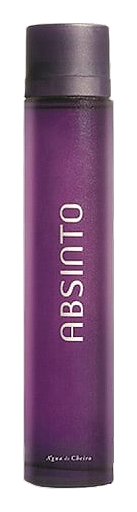
Absinto emerged from Magali Lara's studio in 1987, a Brazilian perfumer working at a moment when the country's fragrance culture was still finding its own vocabulary. The name alone carries weight: absinthe, the green fairy of European art and literature, reimagined through a Brazilian lens. Where absinthe once meant something sharp and slightly unhinged, Absinto the fragrance means something warmer, sweeter, an invitation rather than a challenge. Lara worked with three notes only, tuberose, anise, vanilla, building a composition that functions as a study in contrast. The sharp and the sweet. The expected and the actual. A name that promises one thing, a scent that delivers another.
The intrigue of Absinto lies in what it doesn't do. No massive sillage. No theatrical projection. Just three notes doing unexpected things together. The anise is the surprise, not green or harsh, but softened by vanilla into something almost cozy. Tuberose arrives late, refusing to dominate, letting the sweet anise and warm vanilla create the foundation first. It's the kind of minimalism that takes confidence. Three notes that could easily collapse into something boring, but instead create something worth knowing.
The evolution
The opening is tuberose, creamy and sweet, nothing indolic or challenging. The anise appears almost immediately, but softened, warmed by the vanilla waiting underneath. For the first hour, there's a gentle tension: sweet anise and creamy vanilla pulling in different directions. Then the tuberose steps back, and the anise-vanilla pairing takes over. The drydown is warm and intimate, vanilla dominant, anise as a whisper, the whole composition settling close to the skin. On most skin types, it lasts 4-6 hours. Moderate sillage means it stays with you, not the room. The next morning, there's a faint warmth on the wrist, the ghost of vanilla, the memory of something sweet.
Cultural impact
Absinto belongs to a moment in Brazilian fragrance history when houses like Água de Cheiro were establishing their own vocabulary. The 1987 launch placed it in a period of experimentation, where three-note compositions felt like a statement rather than a limitation. It's the kind of fragrance that rewards attention, a small, specific thing that does exactly what it sets out to do.