The Story
Why it exists.
The beginning
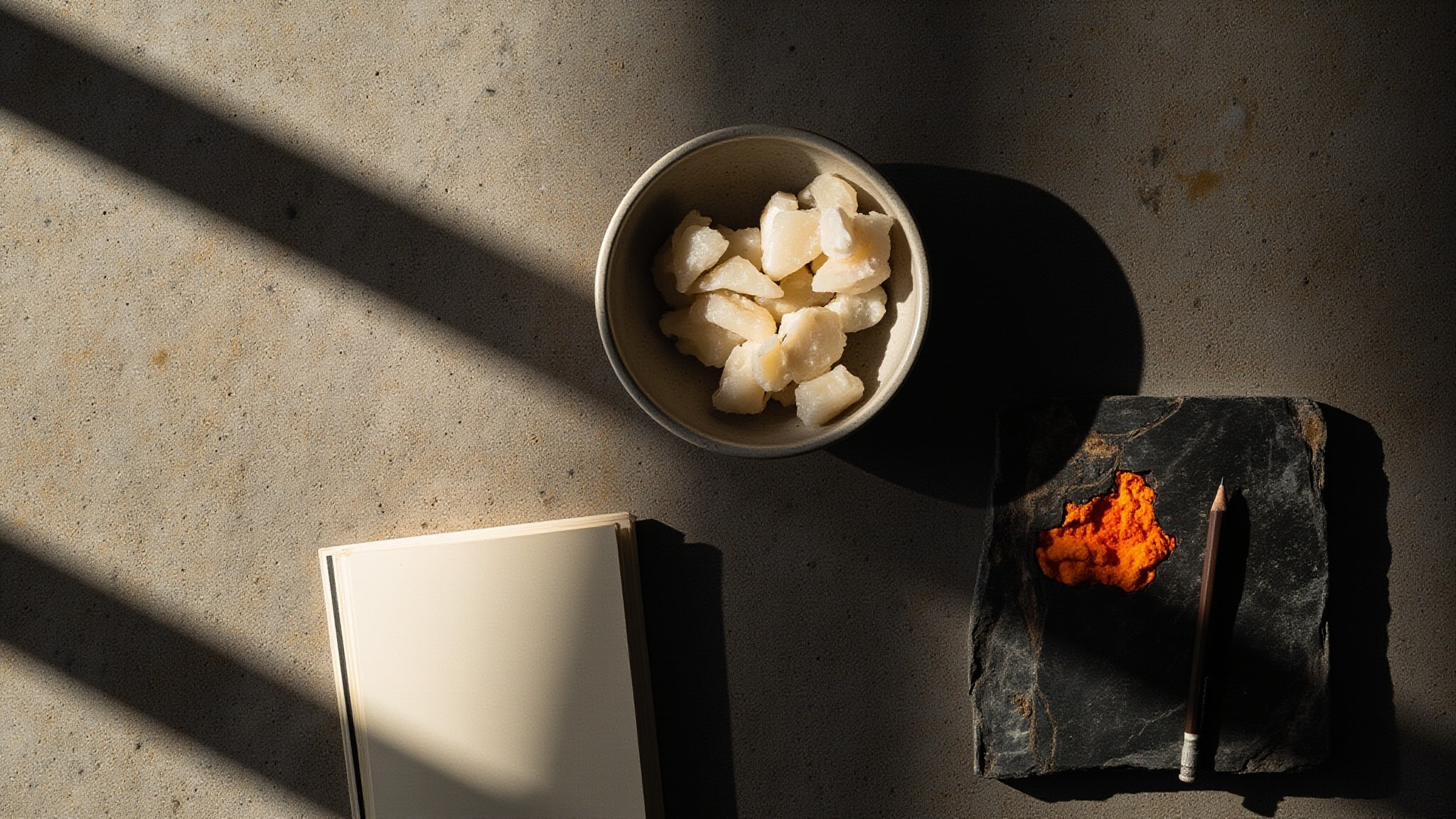
Oud Luban takes its name from Théophile Gautier's Clarimonde, the story of a priest who falls in love with a courtesan, and the collision of austerity with desire that follows. Luban is the Urdu word for frankincense, meaning "the milk," referring to the color of the finest quality frankincense, the milky tree sap. Mandy Aftel wanted the smell of a church, the density of resin smoke and old wood and devotion. The challenge was that oud, the other half of the name, is dark, infected Aquilaria heartwood, the most expensive essence in perfumery. Morally complicated, dense, animalic, not always friendly. The creative direction involved combining these two elements in a way that honors both their distinct qualities.
What results is a composition that uses citrus as architecture rather than decoration. The blood orange note is unusually precise, not a generic freshness but a specific tartness that reads almost acidic against the oud's darkness, the way late-afternoon light cuts through shadow. The Hojari frankincense from the Dhofar desert carries its own brightness, a terpenic quality that acts as a bridge between the two: crushed pine needles, lemony-green, clean rather than sweet. Elemi adds a slightly peppery resin note that extends this aromatic quality.
The evolution
The opening is the lightest the fragrance ever gets, citrus and terpenic freshness, a brief window where blood orange and frankincense read almost green. The oud arrives quickly but doesn't explode. It's present from the start, a smoky undertone that gives the brightness something to press against. Within the first hour the composition deepens. The citrus relaxes. The oud expands into its resinous, slightly animalic character, dark without being aggressive, smoky without overwhelming. Benzoin and opoponax add a sweet balsamic warmth that keeps the darkness from becoming harsh. By the third hour the fragrance has fully committed to its base. The smoke softens into something more aromatic, almost powdery in places. Patchouli anchors everything with an earthy depth that lingers close to the skin. The drydown reveals a warm resin, not projecting, not loud, just there.
Cultural impact
Oud Luban presents a different approach to oud composition, grounding a complex blend in frankincense rather than the sweeter, more accessible oud bases popular in various markets. The use of Hojari frankincense from the Dhofar desert brings a distinct brightness to the composition. The blood orange and elemi resin contribute complementary qualities, Elemi's citrus and frankincense's terpenic character, creating a blend that balances depth with accessibility.