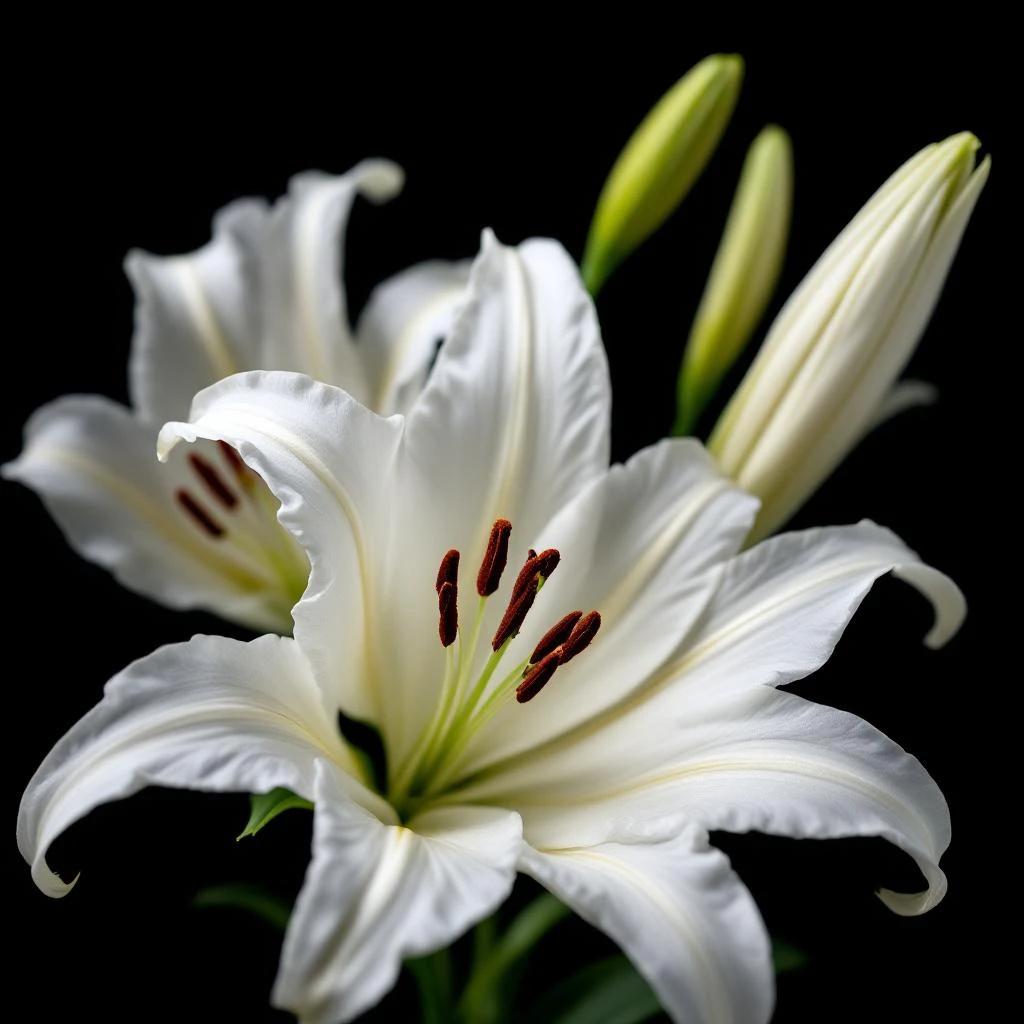
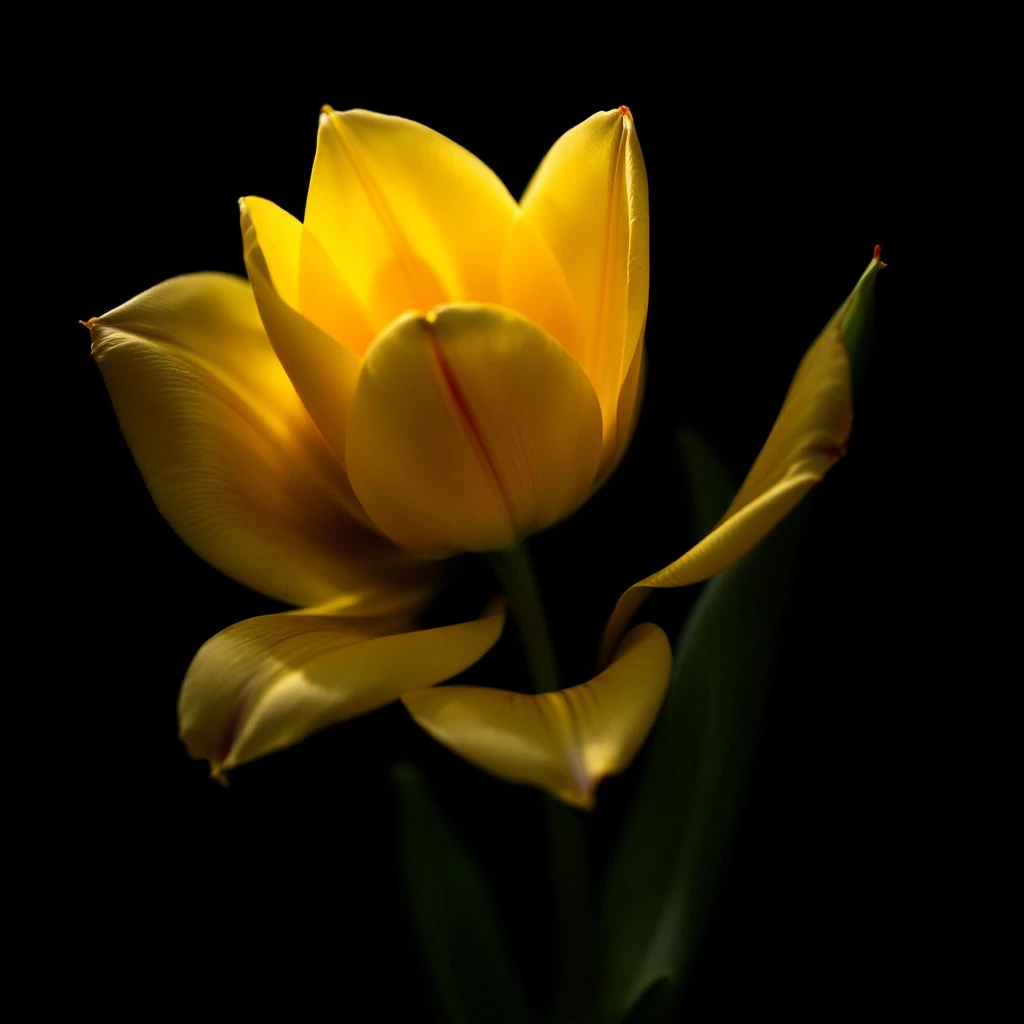
Yellow Tulip
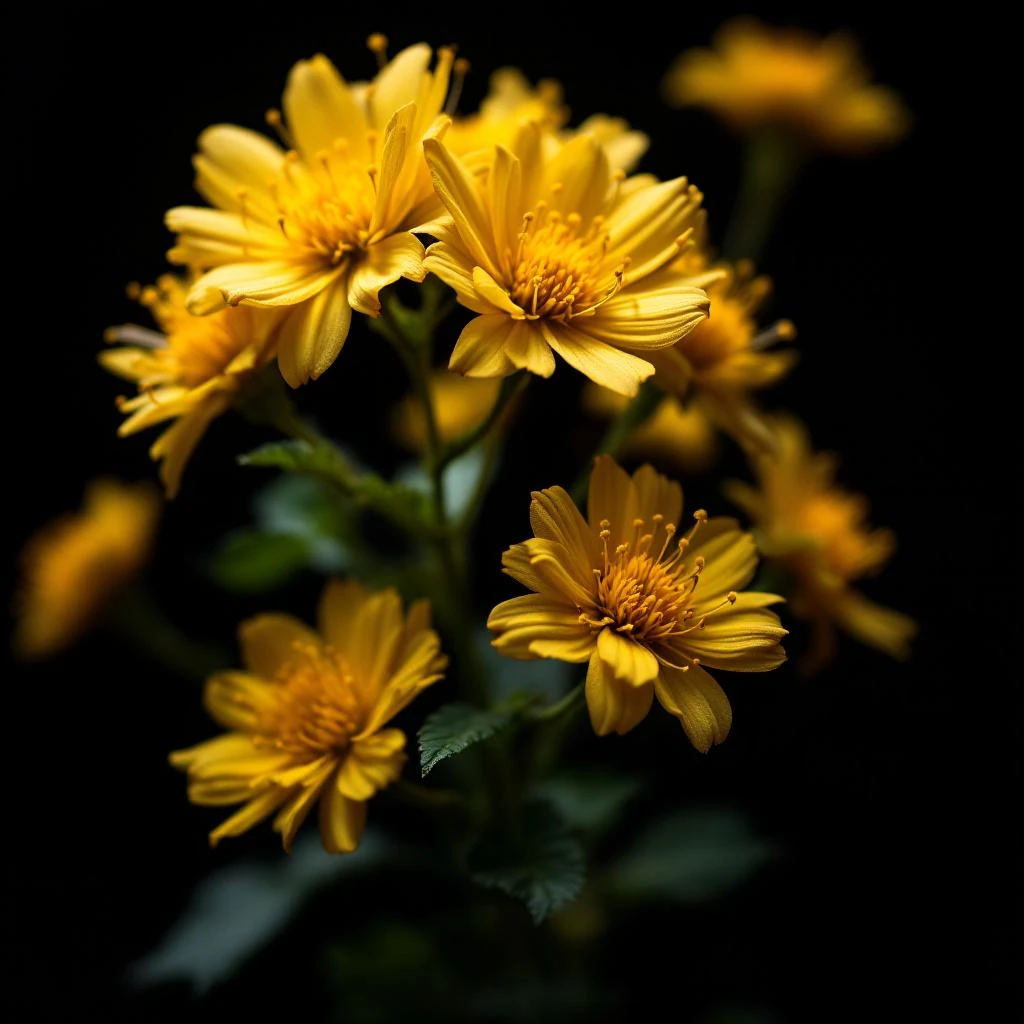
A delicate botanical note that captures the subtle, green-floral character of fresh-cut yellow tulips. This ingredient brings a fresh, slightly honeyed sweetness to fragrance compositions, evoking the quiet beauty of spring gardens.
Character
How it smells
Fresh-cut petals with a honeyed green bloom.
During Dutch Tulip Mania in the 1630s, a single bulb of the Semper Augustus variety sold for 10,000 guilders, roughly equivalent to a skilled craftsman's annual wage.
Pairs beautifully with

Origin
Netherlands
Tulips trace their origins to the mountainous steppes of Central Asia, where wild species grew across present-day Kazakhstan, Kyrgyzstan, and Uzbekistan. Turkish gardeners began cultivating tulips during the Ottoman Empire, developing hundreds of varieties by the sixteenth century. Ottoman sultans planted them in palace gardens, and envoys carried bulbs to Vienna, introducing the flower to European horticulture.
The Dutch obsession with tulips during the seventeenth-century Tulip Mania represents the flower's most famous cultural moment, when speculation drove bulb prices to extraordinary heights. The yellow tulip specifically became associated with cheerful thoughts and sunshine in Dutch flower language. Botanical texts from the nineteenth century first documented the fragrance qualities of tulips, describing their scent as delicate and pleasant but less pronounced than other garden flowers.
Modern perfumery adopted yellow tulip as a note in the late twentieth century, typically through reconstructed aromatics since natural extraction remains impractical on a commercial scale.
Wears it best
Fragrances featuring Yellow Tulip
Brands
Brands known for Yellow Tulip
Good to know
Questions, answered
The essentials on Yellow Tulip in perfumery: how it smells, where it comes from, and how it behaves on skin.
Is yellow tulip a natural or synthetic ingredient?
Yellow tulip exists primarily as a reconstructed synthetic. Natural extraction yields are too low for commercial viability, so perfumers recreate the scent using aromatic molecules that mirror the flower's green, slightly sweet profile.
What does yellow tulip smell like?
Yellow tulip carries a fresh, green scent with subtle honeyed sweetness. Think cut stems, fresh petals, and a delicate floral undertone reminiscent of spring morning air.
Why is yellow tulip so rare in perfumery?
Tulip petals contain minimal aromatic compounds compared to jasmine or rose. Extracting enough material for commercial use would require an impractical quantity of fresh blooms.
Can you steam distill tulip petals?
Steam distillation damages tulip fragrance molecules, which are heat-sensitive. Solvent extraction better preserves the delicate aromatic profile of the petals.
What fragrance families use yellow tulip?
Yellow tulip appears in green, floral, and chypre compositions. It works well in modern designer fragrances seeking a fresh, garden-forward character.
Is yellow tulip absolute expensive?
Pure yellow tulip absolute commands premium pricing due to low natural yields. Most perfumers use reconstructed versions for consistency and cost efficiency.
When did tulips enter perfumery?
Botanists documented tulip fragrance in nineteenth-century texts, but the ingredient did not appear in commercial perfumery until the late twentieth century.
What molecules recreate yellow tulip scent?
Perfumers combine green notes like cis-3-hexenol with sweet molecules such as linalool and phenylacetaldehyde to build a convincing yellow tulip reconstruction.