Powdery Violet
One of perfumery's most cherished illusions. The violet flower yields almost no scent through traditional extraction, yet its powdery, romantic character has shaped countless fragrances since the 1890s.
Character
How it smells
The mute flower that speaks volumes.
Violets are considered mute because their scent compounds resist steam distillation. The flowers contain trace volatile oils, making extraction impractical. By the 1890s, synthetic chemistry solved this problem.



Origin
France
The late 19th through early 20th century earned a fitting name: the Violet Era. Violet fields bloomed in Grasse for the first time in 1867, and the flower rapidly became ubiquitous in both perfumery and confectionery across Europe. Yet perfumers faced a persistent frustration: violet absolute, obtained through solvent extraction of petals and leaves, proved expensive and limited in quantity.
The real breakthrough came through chemistry rather than cultivation. Tiemann and Krüger's synthesis of ionone in 1893, refined by 1898, fundamentally changed how perfumers accessed violet's signature character. This discovery occurred while they pursued the elusive Veilchenduft, the scent that had captivated European sensibilities for decades. Ionones proved so effective at recreating violet's powdery warmth that they replaced natural extraction almost entirely in commercial perfumery.
The Violet Era eventually gave way to other trends, but the ionones discovered through this pursuit remain among the most important materials in fragrance chemistry. Their sweet, powdery quality appears across countless compositions, from delicate florals to modern chypres, a legacy of a flower that refused to share its secrets through conventional means.
Wears it best
Fragrances featuring Powdery Violet
Good to know
Questions, answered
The essentials on Powdery Violet in perfumery: how it smells, where it comes from, and how it behaves on skin.
Why is violet called a mute flower in perfumery?
Violet is mute because its scent compounds resist extraction through conventional methods. Steam distillation yields virtually nothing, and enfleurage proved impractical at scale. By the 1890s, synthetic ionones solved this problem, allowing perfumers to recreate the powdery violet character chemically.
Who discovered the ionones used to recreate violet scent?
Tiemann and Krüger synthesized the first ionones in 1893, with refined success by 1898. They created ionone through a reaction between citral isolated from litsea cubeba and acetone, producing the compounds that replicate violet's powdery, sweet character.
Does violet extraction exist as a natural ingredient?
Violet absolute from petals and leaves exists but remains rare and expensive. The violet note in modern perfumery relies almost entirely on synthetic ionones. Natural violet absolute is cost-prohibitive for most fragrance formulations.
Where were violet fields first cultivated for perfumery?
Grasse, France became the center of violet cultivation for perfumery in 1867. Perfumers there first used enfleurage to extract the flower's fresh, powdery scent. Grasse remains the benchmark origin for violet materials in fine fragrance.
What is the difference between violet absolute and ionones?
Violet absolute offers a complete natural violet scent profile from petals and leaves. Ionones specifically recreate the powdery violet character. Modern perfumery uses ionones because natural violet absolute is prohibitively expensive and scarce.
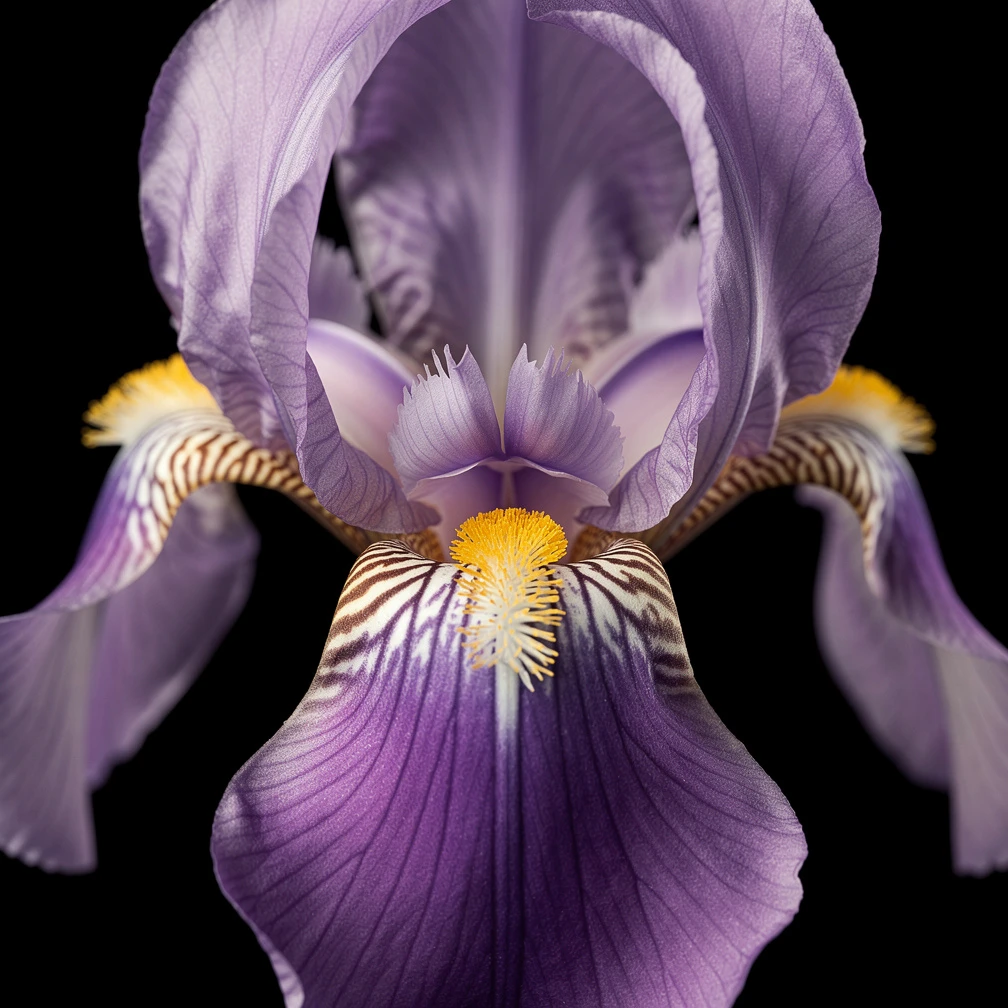
How do iris and violet share powdery characteristics?
Both iris and violet present powdery qualities, though they derive from different chemical families. Violet's powdery signature comes from ionones, while iris relies on irones. Both notes share an elegant, powdery aesthetic in perfumery.
What fragrance families use ionones beyond violet compositions?
Ionones function as both primary and supporting notes across powdery, floral, and chypre families. They layer well with iris, sandalwood, and other florals, adding depth and a characteristic powdery warmth to various fragrance compositions.
Why did Grasse become significant for violet in perfumery?
Grasse, France established violet fields for perfumery in 1867, pioneering enfleurage techniques to capture the flower's delicate scent. This region remains the historic benchmark origin for violet materials in fine fragrance.