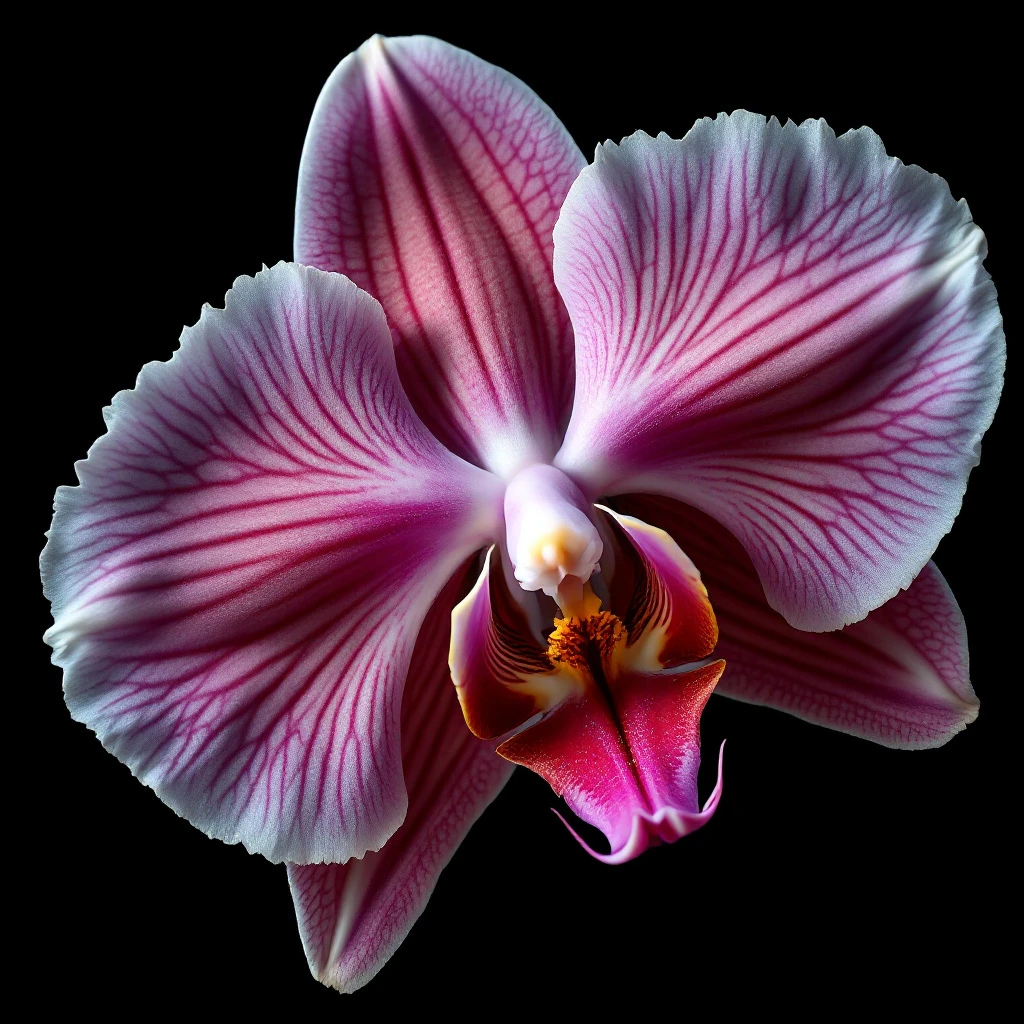
Costa Rican Orchid
Costa Rica's rare orchids yield some of perfumery's most coveted fragrance materials. These cloud forest blooms produce a complex scent that blends green freshness with creamy white florals and subtle tropical warmth.
Character
How it smells
Tropical elegance from the cloud forest canopy.
Some Costa Rican orchid species lure male bees with scent alone, without offering nectar. The bees collect and redistribute these volatiles.
Pairs beautifully with

Origin
Costa Rica
Costa Rica harbors one of the world's highest concentrations of orchid species, with over 1,400 documented varieties growing within its borders. Indigenous peoples of the region recognized these flowers long before European contact, using certain species in ceremonial contexts and appreciating their remarkable beauty. The Spanish colonizers documented the abundance and diversity of tropical orchids they encountered, but perfumery applications remained unexplored for centuries.
The real turning point came in the 20th century when fragrance houses began systematically studying tropical florals as sources of novel ingredients. Costa Rica's commitment to conservation created ideal conditions for researchers. The establishment of protected cloud forest reserves preserved pristine habitats where orchid species evolved their complex chemical defenses, including the volatile compounds that now intrigue perfumers.
By the late 20th century, ethical sourcing partnerships between fragrance houses and Costa Rican conservation organizations began supporting sustainable harvesting of select species. Today, Costa Rican orchids represent a bridge between biodiversity conservation and the art of perfumery, with responsible采集 practices ensuring these extraordinary flowers remain available for future generations of fragrance creation.
Wears it best
Fragrances featuring Costa Rican Orchid
Brands
Brands known for Costa Rican Orchid
Good to know
Questions, answered
The essentials on Costa Rican Orchid in perfumery: how it smells, where it comes from, and how it behaves on skin.
Is orchid in perfume natural or synthetic?
Most orchid fragrance materials come from natural extraction or headspace capture. Some synthetic orchid molecules exist, but they rarely replicate the full complexity of natural orchid scent profiles.
What does Costa Rican orchid smell like?
The scent combines green, slightly aquatic top notes with creamy white floral heart notes. The overall effect reads as sophisticated tropical florals with a clean, modern character.
Are orchids harvested from the wild in Costa Rica?
Wild harvesting is uncommon. Responsible perfumery sources orchid material from cultivated specimens or ethical wildcrafting programs that support conservation efforts.
How much orchid material goes into a bottle of perfume?
Orchid absolute appears in trace amounts, typically as a supporting note. It reinforces other florals rather than serving as the primary ingredient.
Why does orchid cost so much in perfumery?
The flowers are delicate, cultivation requires specific conditions, and extraction yields remain low. Headspace technology adds equipment costs but captures the complete scent profile.
Which perfume families use orchid most often?
White floral, oriental, and modern gender-neutral fragrances feature orchid most frequently. The note adds sophistication without dominating a composition.
Does orchid smell different depending on the species?
Absolutely. Different species produce distinct scent profiles. Some lean greener, others creamier, and some carry spicy or animalic undertones.
Can orchid notes be detected easily in a fragrance?
Orchid typically functions as a supporting heart note rather than a dominant element. It enriches the composition rather than announcing itself on first sniff.





