Cinnamaldehyde
The warm, spicy backbone of oriental fragrances since the 19th century. Cinnamaldehyde gives perfumes their characteristic cinnamon warmth and rich, resinous depth.
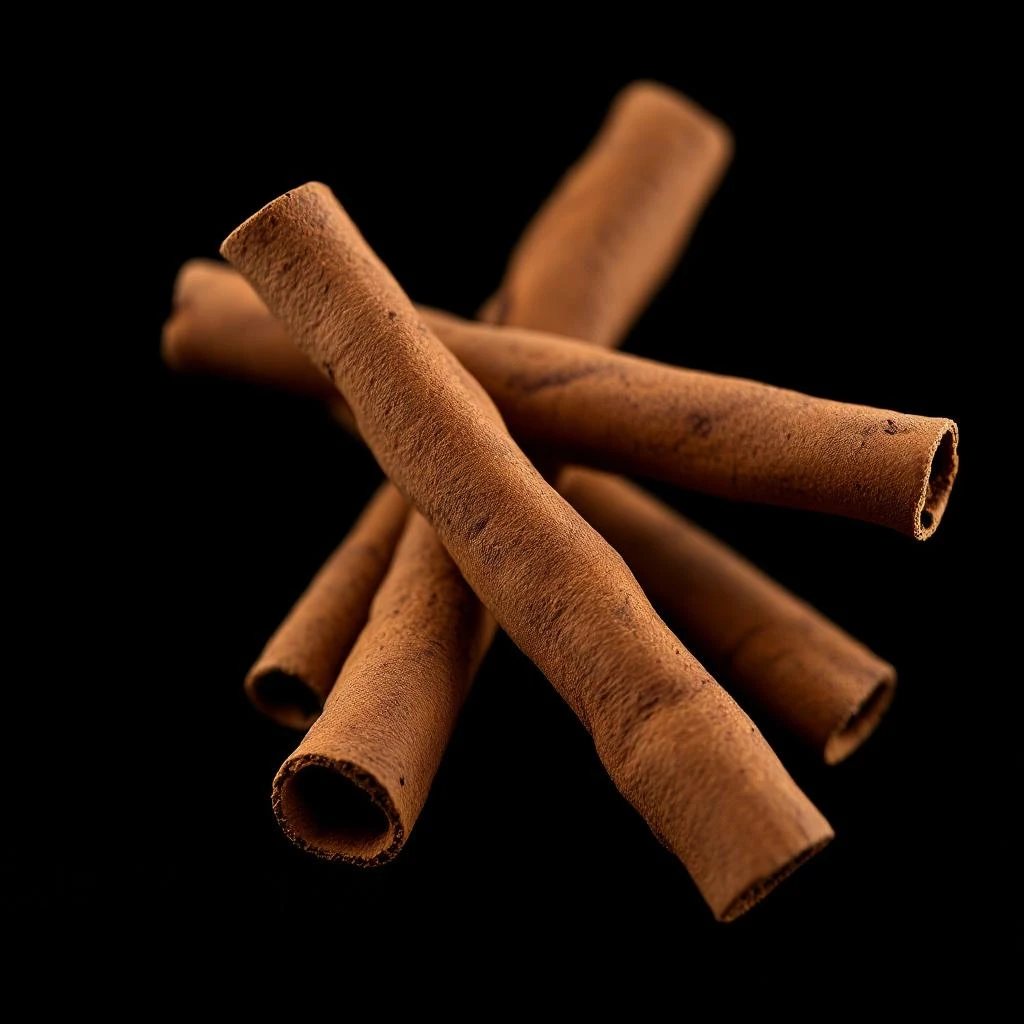
Character
How it smells
History's first synthetic fragrance ingredient
First synthesized in 1854, cinnamaldehyde predates Chanel No. 5 by over half a century


Origin
India
Cinnamaldehyde holds a unique place in fragrance history as one of the first aromatic compounds deliberately synthesized in a laboratory. Scientists first isolated it from cinnamon essential oil in 1834, identifying the source of cinnamon's distinctive warmth. Italian chemist Chiozza achieved laboratory synthesis of cinnamaldehyde in 1854, twenty years before the landmark creation of Chanel No.
5. This early synthetic represented a turning point for perfumery, demonstrating that lab-created molecules could replicate and enhance natural aromatic materials. The availability of synthetic cinnamaldehyde freed perfumers from complete dependence on natural cinnamon sources, enabling consistent supply and controlled pricing.
Applications spread rapidly beyond fine fragrance into soaps, cosmetics, and food flavorings. Today, cinnamaldehyde remains essential in oriental fragrance families, valued for its ability to create warmth and depth without the intensity of actual spice.
Wears it best
Fragrances featuring Cinnamaldehyde
Brands
Brands known for Cinnamaldehyde
Good to know
Questions, answered
The essentials on Cinnamaldehyde in perfumery: how it smells, where it comes from, and how it behaves on skin.
What is cinnamaldehyde in perfumery?
Cinnamaldehyde is the aromatic compound responsible for cinnamon's warm, spicy scent. It serves as a key ingredient in oriental fragrances, providing warmth, depth, and a characteristic spice note. Synthesized in 1854, it was among the first laboratory-created fragrance materials.
Where does natural cinnamaldehyde come from?
Natural cinnamaldehyde derives primarily from the bark of cinnamon trees through steam distillation. Ceylon cinnamon bark contains up to 90 percent cinnamaldehyde in its essential oil, while Cassia varieties contain slightly lower concentrations.
Is cinnamaldehyde synthetic or natural?
Both forms exist. Natural cinnamaldehyde is extracted from cinnamon bark via steam distillation. Synthetic cinnamaldehyde is produced through aldol condensation of benzaldehyde and n-heptanal. Both have identical molecular structures and scent profiles.
What does cinnamaldehyde smell like?
Cinnamaldehyde has a warm, spicy aroma reminiscent of ground cinnamon with sweet, slightly woody undertones. The trans isomer is the primary form found in nature, delivering the characteristic warmth associated with cinnamon spice.
Why was cinnamaldehyde historically significant for perfumery?
Its 1854 laboratory synthesis predates most modern synthetic fragrances. This breakthrough proved that artificial aromatic compounds could rival natural materials, launching the era of synthetic fragrance chemistry that transformed the industry.
What fragrances use cinnamaldehyde?
Cinnamaldehyde appears primarily in oriental and spicy fragrance families. It adds warmth to amber bases, enhances woody compositions, and provides the characteristic cinnamon warmth found in many warm spice fragrances.
What other compounds are derived from cinnamaldehyde?
Alpha-amyl cinnamaldehyde, synthesized from benzaldehyde and n-heptanal by aldol condensation, is a related fragrance material. It offers similar warmth with added floral complexity, commonly used in soap and cosmetic applications.
Does cinnamaldehyde occur in any plants besides cinnamon?
While cinnamon bark is the primary source, cinnamaldehyde also occurs naturally in the camphor tree in smaller concentrations. The shikimate pathway in plants biosynthesizes this phenylpropanoid compound.