Candied Osmanthus
Candied osmanthus captures the sweet, apricot-like warmth of Osmanthus fragrans flowers preserved in sugar syrup. A confectionery note that brings edible, honeyed depth to floral compositions, evoking preserved fruits and golden autumn harvests.
Character
How it smells
Apricot jam meets golden blossoms
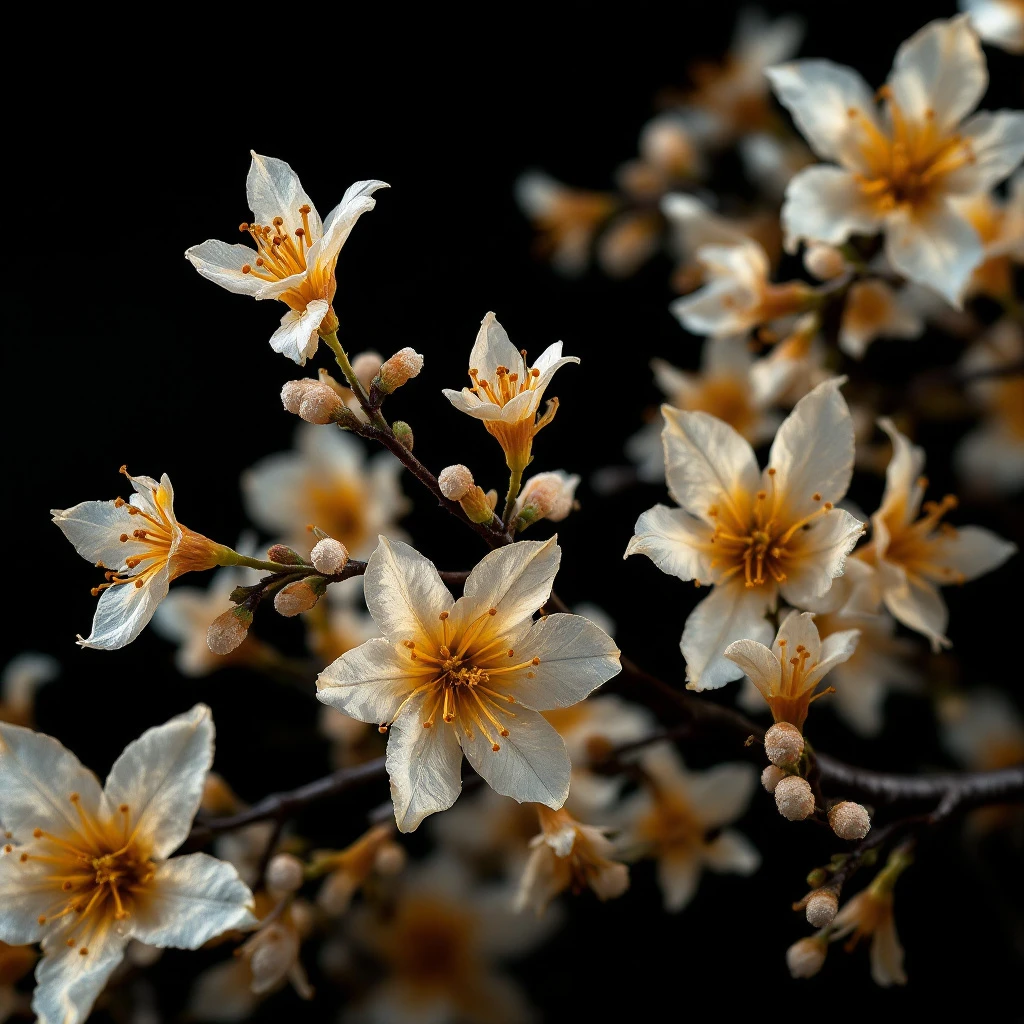
The real flowers behind this note release their scent so powerfully that one Chinese osmanthus tree can perfume an entire garden block, yet extracting that aroma for perfumery requires thousands of hand-picked blossoms per kilogram of concrete.
Pairs beautifully with


Origin
China
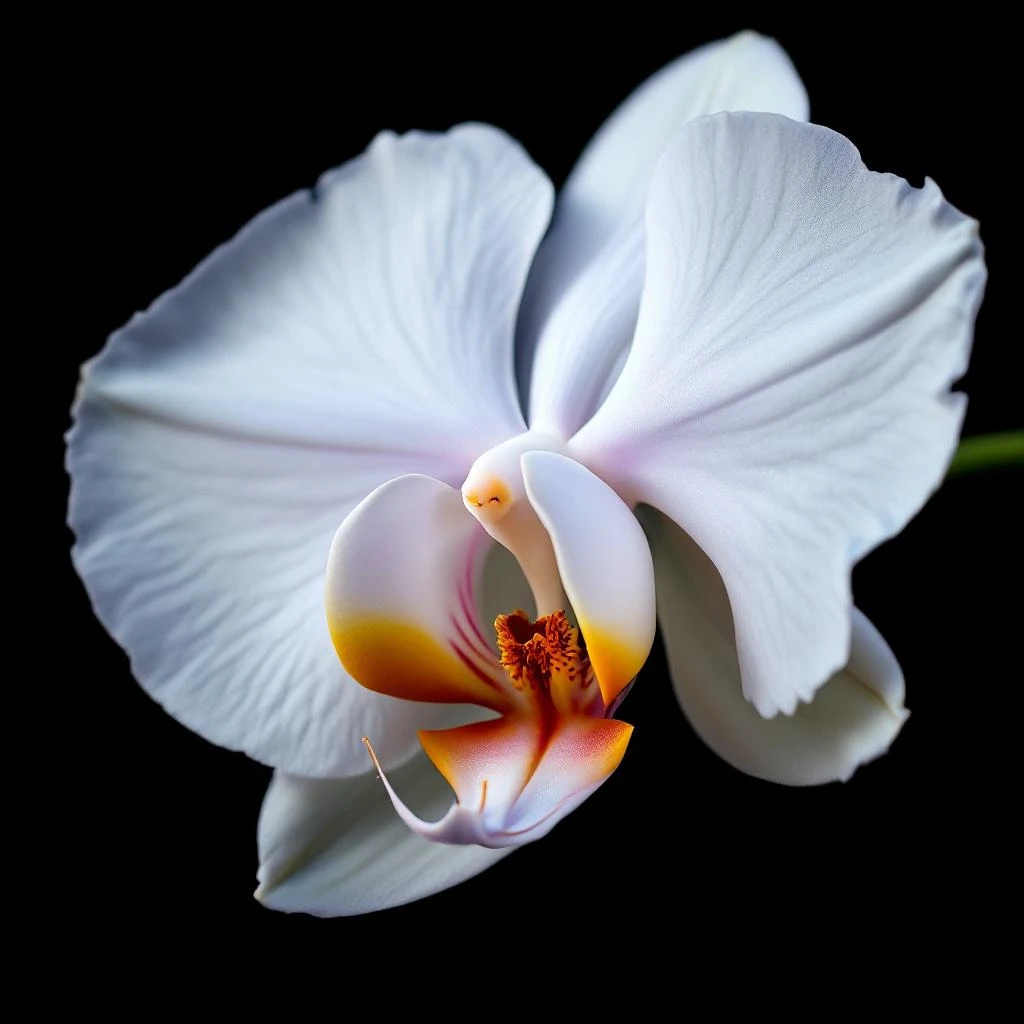
Osmanthus fragrans has been cultivated in China for roughly 2,500 years, appearing in poetry, tea blends, and culinary preparations long before it reached Western perfumery. The flowers hold deep cultural significance, associated with the Mid-Autumn Festival and symbolizing love, romance, and the harvest season. Traditional Chinese medicine and cuisine have long valued both fresh and preserved osmanthus, with candied versions appearing in pastries, teas, and sweet soups for over a millennium.
The flower reached Europe in the late eighteenth century as an ornamental plant, but its aromatic potential remained unexplored by Western perfumers for nearly 200 more years. Osmanthus first appeared as a perfumery ingredient in Jean Patou's 1972 fragrance "1000," created by perfumer Jean Kerléo, marking a breakthrough moment when the West finally recognized what Asian cultures had known for centuries.
Today, Guilin remains the only significant producer of osmanthus concrete for international perfumery, making this one of the most geographically restricted natural materials in modern fragrance. The candied interpretation specifically draws on the Chinese tradition of guìhuā gāo, an osmanthus flower jam that has sweetened teas and desserts for generations, bridging ancient food culture with contemporary scent design.
Wears it best
Fragrances featuring Candied Osmanthus
Brands
Brands known for Candied Osmanthus
Good to know
Questions, answered
The essentials on Candied Osmanthus in perfumery: how it smells, where it comes from, and how it behaves on skin.
What does candied osmanthus smell like?
Candied osmanthus smells like dried apricot, honey, and suede with a sweet, jam-like warmth. The sugar preservation process amplifies the flower natural fruit-and-leather character, adding caramelized depth that distinguishes it from fresh osmanthus.
Is candied osmanthus a natural or synthetic note?
It can be both. Natural versions use osmanthus absolute (solvent-extracted from Chinese flowers) blended with natural sugar accords, while synthetic interpretations reconstruct the candied quality using aroma chemicals like gamma-decalactone and maltol.
Where does osmanthus for perfumery come from?
China is the only commercial source. Guilin in Guangxi province dominates production, with the region humid subtropical climate producing flowers with the highest concentration of aromatic compounds.
How is osmanthus absolute produced?
Fresh hand-picked flowers undergo solvent extraction, producing a waxy concrete. Further alcohol washing yields the absolute, a golden-brown concentrate capturing the flower fruit-and-leather scent profile.
When did osmanthus first appear in Western perfumery?
Osmanthus debuted in Western perfumery in 1972 with Jean Patou fragrance "1000," created by Jean Kerléo. Despite the flower reaching Europe as an ornamental in the late 1700s, perfumers ignored it for nearly two centuries.
Why is osmanthus so rare in perfumery?
Geographic restriction drives rarity. China remains the sole producer of osmanthus concrete, and the flowers require precise autumn harvesting conditions, making large-scale extraction difficult and supply inconsistent.
What fragrances feature candied osmanthus?
Niche houses like Serge Lutens, Tom Ford, and Giorgio Armani have featured osmanthus prominently, often in oriental or gourmand compositions where the fruit-honey character complements amber, tea, and spice accords.
Is candied osmanthus safe for skin?
When properly diluted as a fragrance component, osmanthus absolute poses no significant risk. The material has a long history of culinary use in China, suggesting low toxicity, though individual sensitization is always possible with natural extracts.