Açucena Lily
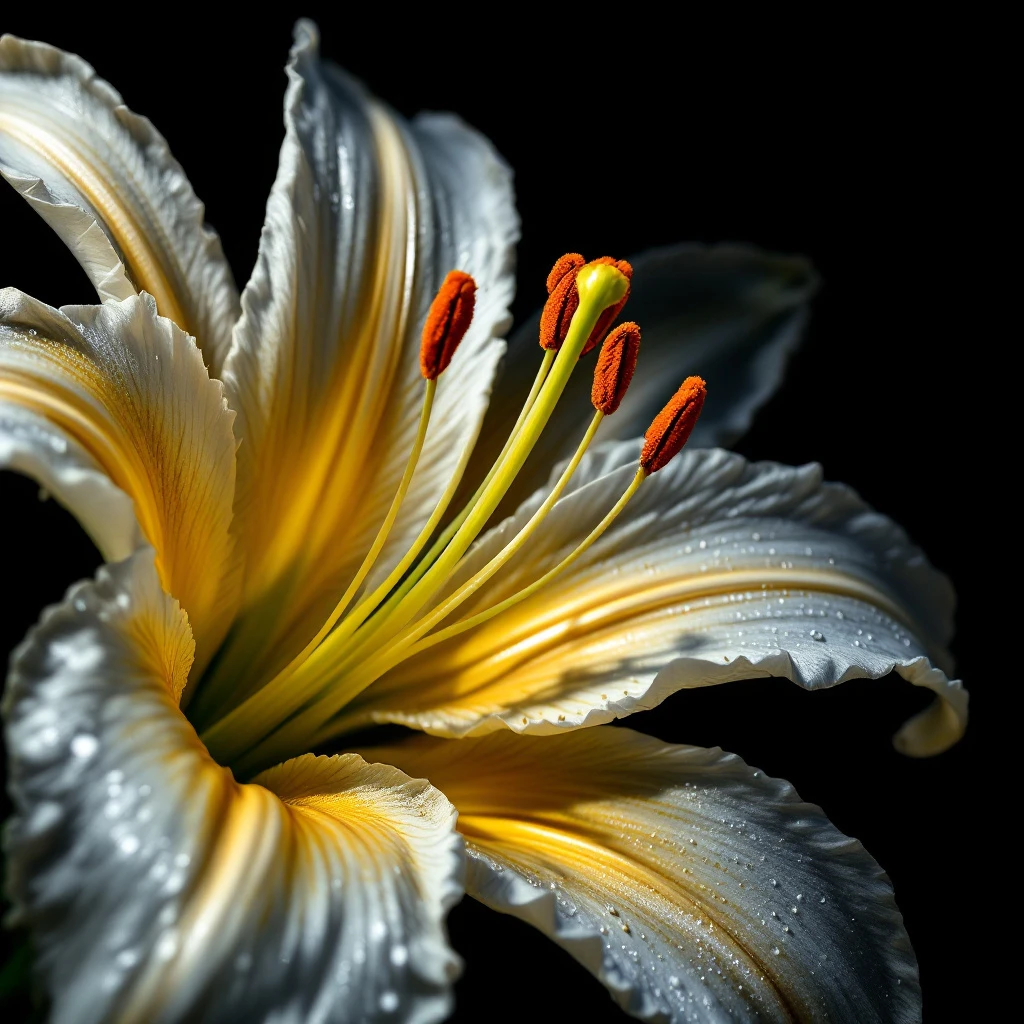
Açucena lily brings a dewy, green-white floral character to perfumery, evoking the cool freshness of petals at dawn. This note captures the flower’s crisp, watery brightness rather than a heavy indolic sweetness.
Character
How it smells
Dewy whites with cool, green-edged clarity.
No true essential oil or absolute of true lily exists for perfumery; the açucena note in fragrances is built almost entirely from synthetic aroma chemicals.
Pairs beautifully with
Origin
France
Lilies have appeared in decorative and ceremonial contexts since antiquity, but the açucena lily as a modern perfumery note is a product of twentieth-century chemistry rather than agricultural tradition. The genus Lilium has been cultivated across the Mediterranean, East Asia, and the Americas for ornamental and symbolic purposes for centuries, yet perfumers struggled for generations to capture its scent. Unlike jasmine or rose, which yield rich oily concretes through solvent extraction or enfleurage, açucena lily flowers contain too little volatile material for any practical extraction method.
Early attempts at enfleurage and steam distillation produced negligible yields. The breakthrough came with the synthesis of hydroxycitronellal in the early twentieth century, widely credited as the first credible synthetic lily of the valley material. Chemists at houses in Switzerland, Germany, and France expanded on this foundation through the mid-twentieth century, adding new aldehydes and indolic modifiers to build fuller floral accords.
By the 1960s and 1970s, açucena-style lily notes had become standard in white-floral and soliflore compositions, giving perfumers a reliable way to express the flower’s cool, dewy character without depending on natural harvests.
Wears it best
Fragrances featuring Açucena Lily
Brands
Brands known for Açucena Lily
Good to know
Questions, answered
The essentials on Açucena Lily in perfumery: how it smells, where it comes from, and how it behaves on skin.
What does açucena lily smell like in perfume?
Açucena lily smells fresh, watery, and green-white, with cool dewy facets and a subtle fruity sweetness. It reads cleaner and lighter than indolic white florals like tuberose, offering a crisp petal impression rather than dense creaminess.
Is açucena lily a natural or synthetic note?
Açucena lily is a synthetic reconstruction in perfumery. True lilies yield too little volatile oil for practical extraction, so perfumers build the note from aroma chemicals including hydroxycitronellal, lilial substitutes, and traces of indole.
Why can't açucena lily be extracted naturally?
Lily flowers contain very low concentrations of volatile oils, and their delicate aroma compounds degrade quickly under heat. Steam distillation and solvent extraction produce negligible yields, making commercial natural extraction economically unviable.
Which aroma chemicals recreate açucena lily?
The açucena accord typically combines hydroxycitronellal, cyclamen aldehyde, lilial substitutes, and small amounts of indole or methyl anthranilate. Green modifiers like stemone and supporting florals such as linalool add the dewy, petal-like lift.
Where are lily aroma chemicals produced?
The primary producers of lily aroma chemicals are major fragrance houses and chemical companies based in Switzerland (Givaudan), Germany (Symrise), and France (Firmenich), where compounders blend them into standardized floral accords.
How does açucena lily differ from lily of the valley?
Açucena lily suggests a fuller, more indolic white petal impression with green freshness, while lily of the valley (muguet) reads cooler, more watery, and greener. Both are reconstructed synthetically, but they use different chemical palettes to evoke distinct flowers.
When did synthetic lily notes first appear in perfumery?
Synthetic lily notes emerged in the early twentieth century with the development of hydroxycitronellal. By mid-century, expanded aldehyde palettes allowed perfumers to build more nuanced açucena and muguet accords across white-floral compositions.
Is açucena lily used in classic or modern fragrances?
Açucena lily appears across both classic and modern compositions, particularly in white-floral and soliflore styles. Its synthetic nature makes it accessible and consistent, allowing perfumers to evoke the flower’s character without seasonal harvest constraints.





