
The Story
Why it exists.
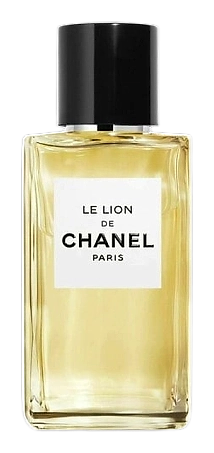
In 2020, Olivier Polge reached for the emblem, not the animal. The lion that anchors Chanel's visual identity, Coco Chanel's own celestial sign, became the conceptual spine of Le Lion. Not a roaring beast. The symbol. The authority. The weight of an icon that doesn't need to prove itself. Polge translated that restraint into scent: amber, labdanum, warmth that arrives without announcement. The Les Exclusifs line has always been Chanel's laboratory for compositions that operate outside the numbered line's shadow. Le Lion joined that lineage as a statement piece, luxurious, warm, carrying the confidence of someone who doesn't need a room to notice them.
If this were a song
Community picks
Feeling Good
Nina Simone
The Beginning
In 2020, Olivier Polge reached for the emblem, not the animal. The lion that anchors Chanel's visual identity, Coco Chanel's own celestial sign, became the conceptual spine of Le Lion. Not a roaring beast. The symbol. The authority. The weight of an icon that doesn't need to prove itself. Polge translated that restraint into scent: amber, labdanum, warmth that arrives without announcement. The Les Exclusifs line has always been Chanel's laboratory for compositions that operate outside the numbered line's shadow. Le Lion joined that lineage as a statement piece, luxurious, warm, carrying the confidence of someone who doesn't need a room to notice them.
What makes Le Lion unusual is how the amber note functions as both structure and character. Most fragrances deploy amber as a closing move, the reward after florals or woods have had their turn. Here, amber opens and never fully cedes the stage. Labdanum, with its resinous, slightly animalic depth, reinforces that warmth throughout the heart. The vanilla and sandalwood in the base don't soften the composition so much as add dimension, cream and warmth that make the amber feel personal rather than performative. The bergamot and lemon in the opening serve a specific purpose: to cut through the richness with something bright and immediate, so the amber that follows registers as layered, not heavy.
The Evolution
The opening is quick and purposeful, bergamot, lemon, a citrus sparkle that reads almost sharp before it settles. Thirty minutes in, labdanum arrives with the amber, and the composition deepens into something warmer and more resinous. There's a leathery quality buried in the labdanum that becomes more apparent as the citrus recedes, not animalic, exactly, but present. The vanilla and sandalwood arrive together around the two-hour mark, bringing cream and softness that wrap around the patchouli still holding underneath. The drydown is where Le Lion lives longest. Vanilla, sandalwood, a soft powder from the musk, amber that glows warm and close to the skin. On most, it holds for four to six hours. On dry skin, the patchouli comes forward more prominently, adding earthiness that balances the sweetness. The next morning, there's still something there, amber and a trace of vanilla, intimate and worn-in, like a cologne that decided to stay.
Cultural Impact
Le Lion de Chanel, released in 2020, entered the fragrance world at a moment when amber compositions were experiencing renewed interest among collectors. The fragrance arrived as part of Chanel's Les Exclusifs line, a collection that has long operated as the house's laboratory for artistic statements outside mainstream commercial offerings. The lion emblem connects to Chanel's personal symbolism, chosen by Gabrielle Chanel herself as a celestial marker tied to her zodiac sign and sense of self. This biographical connection gives the fragrance cultural weight beyond its olfactory merits, positioning it as a wearable artifact of Chanel house mythology.
The House
France · Est. 1910
The house that gave the world N°5 remains the definitive name in luxury fragrance. Founded by Gabrielle "Coco" Chanel, its perfume division pioneered the use of aldehydes and abstract composition, forever separating modern perfumery from the purely floral tradition. From Les Exclusifs to the iconic numbered line, Chanel represents the intersection of haute couture and olfactory art.
If this were a song
Community picks
Warm amber and soft vanilla create something that feels like the hour after midnight, intimate, confident, the kind of warmth that doesn't need to announce itself. The bergamot opening cuts through like a bright note in a quiet song, then gives way to something deeper and more sustained. Music with restraint and weight fits here. Jazz with soul, not show. Ballads that know when to pull back. The mood is sophisticated warmth, the sound of something worn and personal rather than performed.
Feeling Good
Nina Simone