
The Story
Why it exists.
The beginning
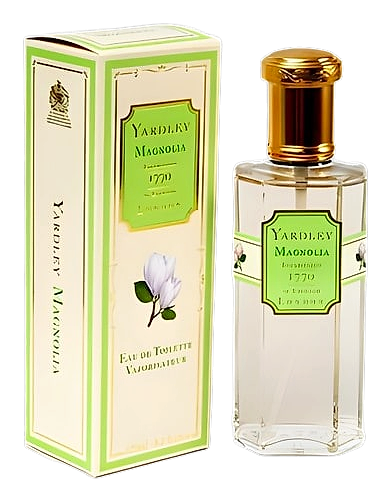
The name says everything. Magnolia by Yardley, launched in 1970, built around a single flower and two companions that knew when to take a back seat. Yardley had been making British fragrance since the 18th century, soaps, toiletries, and eventually perfumes that felt less like luxury objects and more like reliable friends. By 1970, the house had developed a clear philosophy: accessible refinement, garden-derived florals, no pretension. Magnolia arrived as part of that tradition. Not a statement fragrance. Not a trend chaser. A composition built around what magnolia actually smells like, creamy, slightly citrusy, with a green undertone that keeps it grounded. The hyacinth and lily were chosen not to complicate but to support, each one bringing something the magnolia needed without competing for attention. It was made to be worn, not analysed.
What's quietly impressive about the Magnolia, Hyacinth, Lily combination is how three florals with a reputation for being heavy are kept light. Hyacinth carries a natural green, almost mineral quality, the smell of the bulb more than the bloom. Lily adds a clean, slightly sweet note that lifts rather than weighs. Magnolia provides the body, the recognisable creamy-white flower that most people can place on sight. Together they create something that reads as fresh rather than floral, morning dew on petals, not a vase of flowers on a table. The structure is clever without announcing itself: no single note dominates, no transition feels forced.
The evolution
The opening is hyacinth's moment. Bright, green, slightly vegetable, a sharp contrast to the creaminess that follows. Within a few minutes, magnolia arrives and softens everything. The transition isn't dramatic; it's more like the sun moving behind a cloud, the light changes quality, warmth replaces sharpness. Lily holds through the heart, keeping the floral accord from tipping into anything heavy. Two to three hours in, the composition settles. The green notes fade first, then the lily. What remains is magnolia on its own, slightly dried down, warmer and closer to the skin. Six to eight hours total on most people, with the final hour being intimate, detectable only to someone standing very close. On fabric, it can linger into the next day, faint and pleasant, like the ghost of a garden visited.
Cultural impact
Yardley launched Magnolia in 1970 as part of a broader movement toward accessible British florals, rejecting the opulent chypres and heavy orientals that dominated the preceding decade. The fragrance arrived during a cultural shift when British perfumery was reasserting garden-inspired simplicity after years of following French trends toward complexity. This 1970 release positioned Yardley as a counterpoint to the era's maximalism, offering a clean, naturalistic alternative that valued restraint over excess. The success of Magnolia and similar garden-inspired florals helped establish that British fragrance could be both understated and commercially successful, influencing how British perfumers approached floral composition for the next two decades.