
The Story
Why it exists.
The beginning
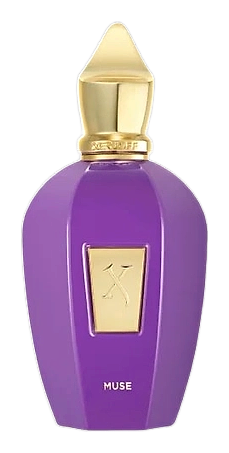
Xerjoff built its reputation on the idea that perfume is sculpture. Founded in Turin in 2007 by Sergio Momo, the house treats every fragrance as a complete sensory statement, not a scent to be casually worn. Muse fits that ambition perfectly. This is a fragrance named for an idea, not a place or a person. The muse. That enigmatic, seductive presence who walks into a room and becomes the room's only subject. The official description calls it a fruity floral with an air of mystery befitting of its name. That's accurate, but it undersells the ambition. Muse doesn't hint at sensuality. It announces it.
The note structure is where Muse earns its name. Plum and white flowers suggest something delicate, almost poetic. Then leather arrives, not as a supporting player but as a counterweight. The davana in the heart is an unusual choice. Extracted from an Artemisia species, it carries an aniseedy, herbaceous quality that most perfumers avoid. Here, it pushes the jasmine and labdanum into something animalic, almost intimate. The contradiction is intentional. Muse is meant to be two things at once: sweet and commanding, floral and leathery, approachable and mysterious. The raspberry in the base doesn't read as foody. It reads as tart, bright, and almost defiant against the amber and patchouli warmth beneath it.
The evolution
The opening announces itself immediately. Plum's dark sweetness hits first, followed by white flowers that smell like petals bruised rather than picked. The leather arrives fast, not sharp but warm, like the interior of a bag that's been carried everywhere. Twenty minutes in, the davana begins to shift. The jasmine and labdanum become animalic, almost sweaty in the best possible way. This is the fragrance's most controversial phase. Some wearers describe it as intimate. Others describe it as too much. The truth is somewhere in between. By the third hour, the leather softens. The amber and patchouli take over, with raspberry adding a tart brightness that keeps the warmth from becoming heavy. The drydown is where Muse earns its longevity rating. Eight to ten hours on most skin types, with a sillage that starts strong and settles into something skin-close but still present. The next morning, there's a faint trace of amber and patchouli on warm skin. Not loud. But definitely there.
Cultural impact
Muse sits in the Vibe collection, Xerjoff's most accessible line. It bridges the house's more avant-garde offerings and its core audience. The fragrance attracts wearers who want something distinctive without going fully experimental. The leather-animalic combination gives it a devoted following among those who prefer bold, sensuous compositions.