
The Story
Why it exists.
The beginning
Veni Vedi Vici takes its title from the Latin phrase meaning “I came, I saw, I conquered,” a direct, victorious reference that fits the fragrance’s classical framing without needing grand theatrical flourishes. The composition itself carries that idea in a quieter direction. Balsam fir, grass, hay, clary sage, lavender, blue cypress, white cedar, and tonka bean create a fresh aromatic fougère with a green current running through it. Balsam fir supplies a crisp evergreen lift, while grass and hay introduce drier, sun-warmed textures. Clary sage and lavender soften the opening with an herbal aromatic quality, and blue cypress and white cedar lend resinous wood to the composition. Tonka bean adds a rounded sweetness underneath.
The composition's most compelling detail is how its notes divide without losing their connection. Balsam fir and grass bring a crisp, outdoorsy lift, while hay makes the center feel dry and sun-warmed rather than purely dewy. Clary sage and lavender add an herbal, almost savory softness, with lavender rounding the sharper green edges into something gentler. Blue cypress and white cedar pull the composition toward resinous wood, giving the middle and later stages a firmer structure without obscuring the aromatic herbs.
The evolution
The first impression is compact and cool, with balsam fir giving the opening a pointed, evergreen quality. Grass and hay follow soon after, turning that brightness into something drier and more tactile, like sun-warmed vegetation underfoot. Clary sage and lavender bring the middle into focus, making the fragrance feel aromatic and composed while keeping that green edge intact. Their herbal softness sits beside the fir and grass rather than overwhelming them, allowing the opening to move from crisp greenery into a more nuanced aromatic center. As the scent settles, blue cypress and white cedar give it a firmer woody spine, and tonka bean rounds the edges with a subtle sweetness. By the later drydown, the profile feels less like a bright woodland clearing and more like clean skin, cedar, cypress, and a faint warm sweetness.
Cultural impact
Veni Vedi Vici places its classical name over a modern aromatic fougère, giving the composition a narrative frame built around language and imagery rather than spectacle. The title suggests conquest, while the scent itself is measured and composed. Balsam fir, grass, and hay create a fresh green opening; clary sage and lavender introduce herbal softness; blue cypress and white cedar add a wooded center; and tonka bean leaves a subtle sweetness in the drydown. Together, the notes make the fragrance approachable for everyday wear while inviting closer attention to the balance between greenery, aromatics, and woods.
The House
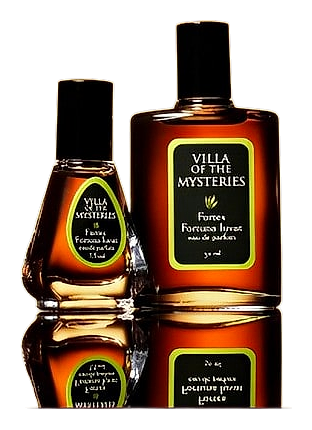
Villa of the MysteriesVilla of the Mysteries is an independent perfume house founded by Paula Pulvino in Brooklyn in 2015. Working from a brownstone studio, the house creates all-natural fragrances, a term it uses to describe its approach to perfumery. Its name refers to the ancient Roman villa outside Pompeii, whose surviving frescoes have become central to the house’s visual and narrative identity. Villa of the Mysteries presents perfume through a distinctly historical lens, connecting classical mythology, ritual, art, and transformation with contemporary fragrance composition.
The Creator
Paula PulvinoPulvino’s style is rooted in the aromatic vocabulary of Mediterranean fragrance making, with a particular focus on ingredients historically associated with perfumes and unguents. Her compositions favor a sense of material richness, drawing attention to spice, herbs, resins, oi…