


Heritage
A house, in its own words
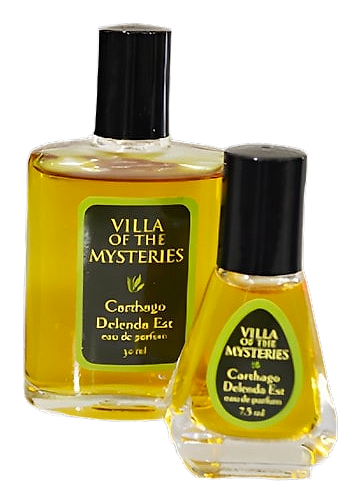
Villa of the Mysteries began in 2010 with the restoration of a perfumer’s mansion built in 1830, carried out by Vincent and Nicole. Their work transformed the property into a private vacation destination, but it also introduced the founders to the atmosphere and creative potential of an old house used for making perfume. This origin story sits behind the later perfume house, even though the villa business was not itself the Villa of the Mysteries label. In 2015, Paula Pulvino founded Villa of the Mysteries in Brooklyn, New York. The house has since developed a recognizable identity around the ancient Villa of the Mysteries at Pompeii. The archaeological site, built in the second century BC and expanded during the Augustan period, preserves one of the most substantial bodies of Roman wall painting. Its frescoes, generally dated between 70 and 40 BC, depict women in scenes often interpreted as connected with Dionysian or Bacchic ritual. Villa of the Mysteries uses this historical reference as a point of departure rather than attempting to reproduce one specific ancient fragrance. The house’s first major fragrance milestones include Delfina and Fortes Fortuna Iuvat in 2010, followed by Carthago Delenda Est and Veni Vedi Vici in 2015. The available record does not identify a linked perfumer, so the house’s authorship rests primarily with founder Paula Pulvino and the creative direction she established in Brooklyn. Its story combines nineteenth-century domestic architecture, twentieth-century perfumery practice, and the archaeology of Pompeii. Villa of the Mysteries approaches perfumery as an imaginative encounter with history, myth, and the senses. Its Roman reference gives the house a clear creative frame, one built around the Villa of the Mysteries frescoes and the cultural memory of Pompeii. The names of its fragrances extend this frame through Latin phrases and classical references, including Fortes Fortuna Iuvat, Carthago Delenda Est, and Veni Vedi Vici. These titles suggest that scent is being treated not as a simple decorative element, but as a way to open a larger narrative space. Paula Pulvino’s role as founder, perfumer, and central creative figure reflects a house built around a singular artistic point of view. The brand’s Brooklyn setting adds another layer to that identity. Rather than presenting classical references in a formal museum manner, the house places them within an intimate, lived-in brownstone studio. The resulting impression is of curiosity and ritual, where an encounter with a fragrance can feel personal, atmospheric, and connected to older stories of gods, transformation, mortality, and celebration. The house does not publicly identify a separate formal philosophy beyond its natural fragrance work and historical sensibility, so these themes are best understood as the creative character visible in its naming, imagery, and presentation.