The Story
Why it exists.
The beginning
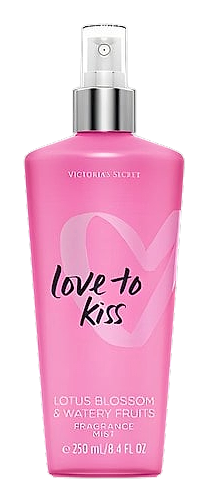
Love to Kiss arrived in 2012 as part of a Valentine's trio from Victoria's Secret. The brand released it alongside Love to Dream and Love to Flirt, a collection of body mists designed to capture that seasonal window when the air feels charged and the smallest gestures carry extra weight. Perfumer Olivia Jan composed the scent with a clear direction: lotus and watery fruits layered over a base that grounds the brightness. Nothing complicated, nothing cerebral. Just the smell of a first almost-admission, pressed into a 250 ml mist you can toss into a tote without a second thought. Valentine's seasonal launches from Victoria's Secret have always leaned into that accessible sweetness, and Love to Kiss sat firmly inside that tradition, uncomplicated and unapologetically girlish.
What's interesting here isn't complexity. It's restraint. Where most fruity florals pile on sweetness to the point of suffocation, Olivia Jan kept the composition almost weightless. Lotus brings a cool, green-watery quality that prevents the fruit notes from tipping into candy territory. The watery fruits reading adds juiciness without specifying which fruits, which keeps the scent abstract and easy to project onto. That ambiguity is the trick. You smell peach, someone else smells pear. The pyramid is short on paper, but the accord works because it doesn't try to do too much.
The evolution
The first 20 minutes are the loudest, and they know it. Watermelon-adjacent fruit opens with that bright, almost synthetic sweetness that body mists do so well, bright, uncomplicated, slightly fizzy. Then lotus eases in, cooling the fruit down like a glass of water poured over warm skin. There's no real base to speak of. This is a fragrance built for the first hour, not the sixth. By the two-hour mark, the fruity sweetness has softened into something warmer, almost powdery. It never truly disappears. Instead, it retreats to the skin, becoming a faint trace, the kind of thing only someone standing close would catch. On clothing, it lingers longer, sometimes showing up the next morning as a soft, almost laundry-fresh ghost. But on skin, it's designed to be ephemeral. That's not a flaw. That's the point.
Cultural impact
Love to Kiss carries the exact DNA of Victoria's Secret's body mist era: light, sweet, girl-coded, and priced so casually that throwing it in a gym bag feels fine. Body mists, sprays, and rollerballs dominated the racks during this stretch, and Love to Kiss slots into that lineage naturally. It's the kind of scent that doesn't try to be a signature. Instead, it exists as an accessory, something you grab because the bottle is pretty and the spritz is pleasant. Within the Victoria's Secret catalogue, it sits among other vanilla-pastel releases aimed at shoppers who want to smell pretty without committing to a heavy bottle of eau de parfum.
The House
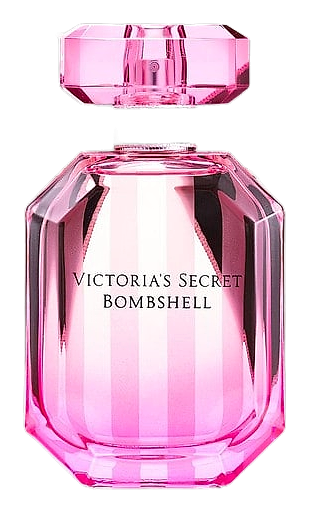
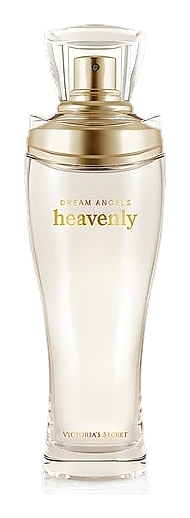
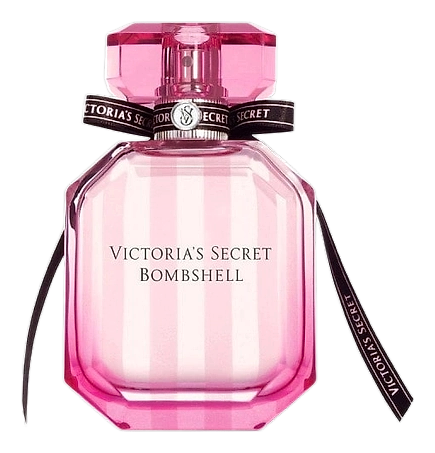
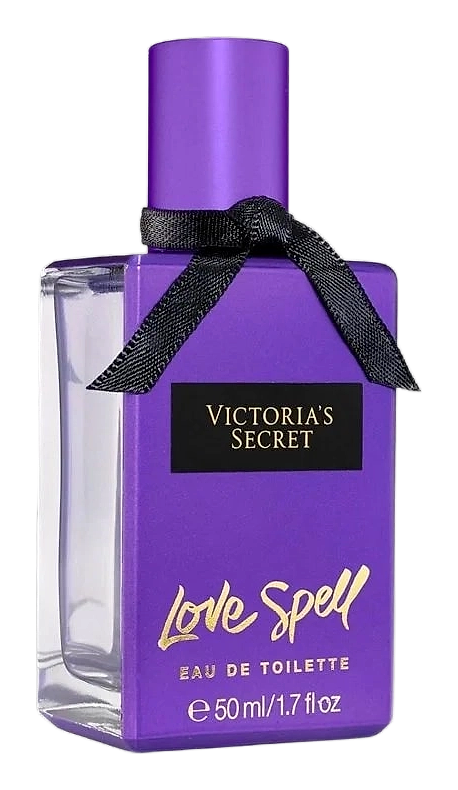
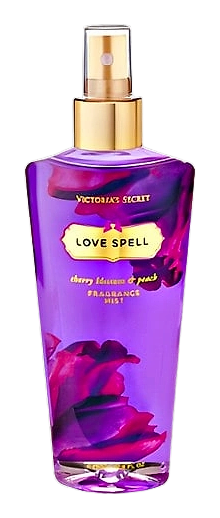
Victoria's SecretVictoria's Secret began as a San Francisco lingerie company founded in 1977 by Stanford graduate student Roy Raymond and his wife Gaye. The brand entered fragrance in 1989, launching its first perfume Victoria as part of a national magazine campaign. By the early 1990s, the company had grown to 350 stores nationwide with estimated sales of $1 billion. The beauty division grew substantially enough to generate nearly $1 billion in sales by 2006. Victoria's Secret fragrances are developed through Givaudan's Paris laboratory, the same fragrance house behind perfumes for Tom Ford, Prada, and Louis Vuitton. The brand works with a rotating roster of over 30 perfumers rather than a single in-house nose, creating scents for its Dream Angels, Very Sexy, Body, and Pink collections. Popular fragrances include Bombshell, Love Spell, Tease, and Heavenly, which ranked as the top-selling fragrance in the United States by both revenue and volume from 2005 to 2010. Victoria's Secret has won 20 Fragrance Foundation awards since 2001. The company offers fragrances alongside perfumed body care products including body mists, body lotions, and eau de parfum in various formats.
The Creator
Olivia JanJan's signature leans toward florals handled with clarity rather than opulence. She bridges the French tradition she absorbed at ISIPCA with the directness that American markets often demand, finding the middle ground where a rose does not need to smell expensive to smell true.