The Story
Why it exists.
The beginning
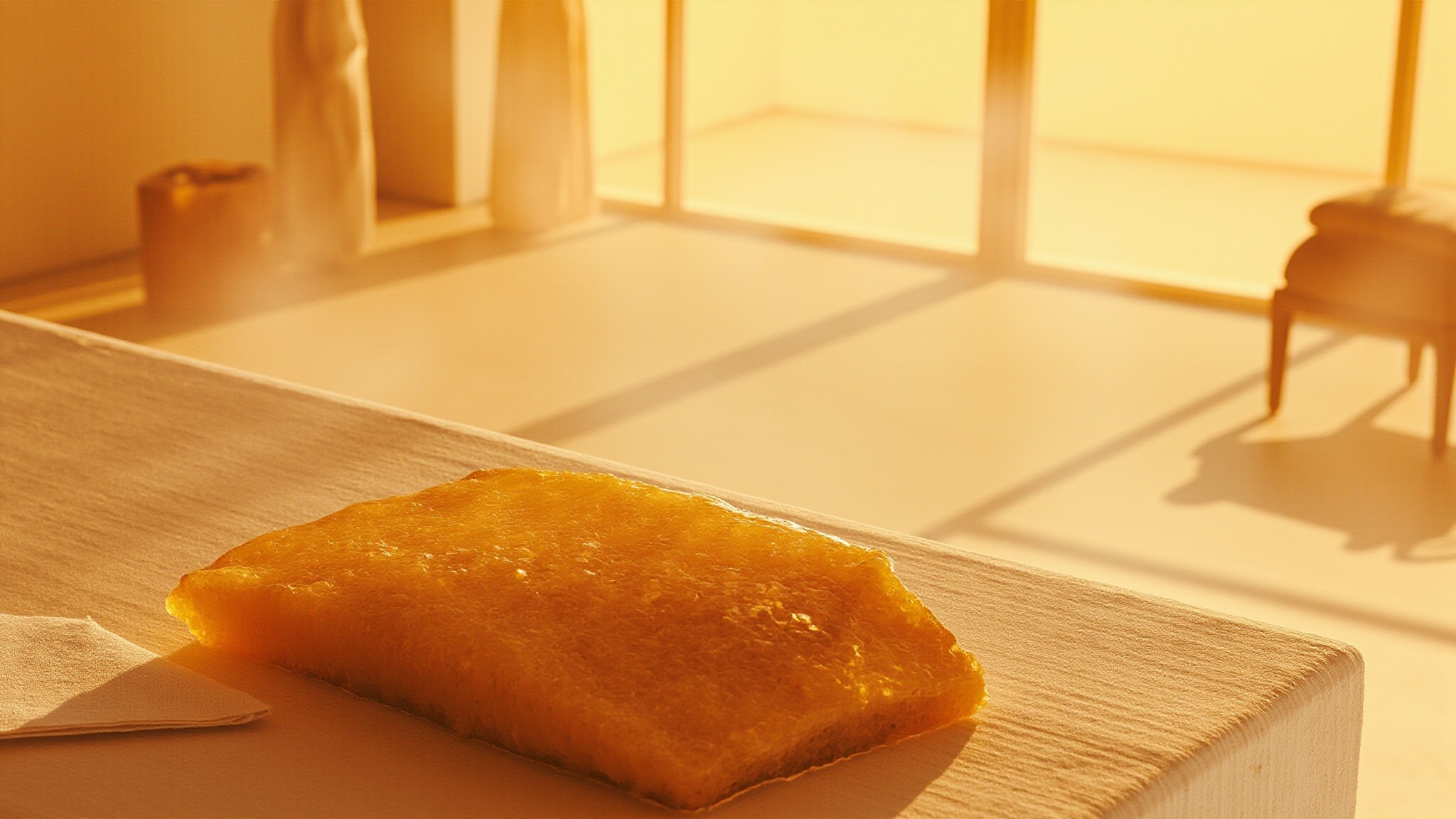
Mellifera is named for the honeybee, the creature that turns nectar into something the world keeps reaching for. James Barry built this fragrance around a simple constraint: use every part of the hive. Beeswax. Honey. Propolis. Pollen. The wax, the honey, the propolis, and the pollen. Every part of the hive becomes the brief. The result is a honey fragrance that earns its name rather than merely wearing it.
What makes this composition unusual is how it handles the honey note itself. Most fragrances treat honey as a single effect, sweet, syrupy, linear. Here, honey is a complete material, layered with beeswax and propolis to give it structure and dimension. The propolis opening, sharp, resinous, almost medicinal, isn't a flaw. It's the tell. That's the hive asserting itself before the sweetness arrives. The butter and apricot then round what could have been too sharp into something that reads as warm afternoon light rather than clinical sweetness.
The evolution
Propolis arrives first. Sharp, resinous, the kind of opening that announces itself before asking permission. Almost medicinal. That's the hive's immune system doing its job. Within thirty seconds, the honey arrives, warm, golden, inevitable. Butter and apricot slide in to soften the edges. The transition feels less like a formula and more like weather changing. The heart is where this lives. Honey absolute and beeswax absolute create a lactonic richness that sits close to the skin rather than projecting outward. Strawberry and apricot keep it from tipping into candle territory. This is the phase reviewers keep returning to, the one that makes them imagine bread with butter and honey, strawberries on a summer afternoon. The drydown doesn't abandon the honey. It settles. Sandalwood and vanilla arrive quietly, with a trace of animalic musk holding everything together in a skin-close finish. On some wearers, that musk lingers into the next day, faint, warm, the last breath of the hive.
Cultural impact
Mellifera arrives at a moment when the niche fragrance market is increasingly drawn to transparency and natural origin stories. Honey and beeswax have deep roots in perfumery history, used since antiquity, yet modern interpretations often sidestep their animalic complexity. By placing civet and musk at the center alongside the sweeter elements, Mellifera takes a position that challenges the sanitized honey fragrance trend. The house frames its work as storytelling, and this fragrance reads as a statement about authenticity over polish. In the broader cultural conversation around bees, ecology, and natural products, Mellifera occupies a thoughtful space that resonates beyond scent alone.