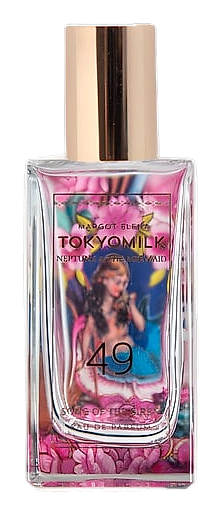

The Story
Why it exists.
The beginning
Margot Elena named this one for the contradiction at the heart of every siren song, beautiful and dangerous, the thing that pulls you in while warning you away. Song of the Siren arrived in 2017 as Tokyo Milk's take on the floral aquatic genre, but Elena chose a different path. Where most aquatics reach for synthetic ocean accord, she reached for rose water instead. The result is a marine fragrance that smells botanical rather than chemical, with the rose doing the work that salt usually claims credit for. It's a small rebellion against the genre's defaults, and exactly the kind of unexpected pairing Tokyo Milk built its catalog on.
Rose water as a primary note is the unusual move here. Most fragrances use rose as a heart or base, a supporting player in the composition. In Song of the Siren, it becomes the signature. The marine notes don't arrive as a synthetic wave. They arrive as salt on petals, as the mineral trace left behind when tide pulls back. It's an approach that rewards the wearer willing to lean in close, because the fragrance rewards proximity over projection. The mandarin in the top keeps it from tipping into melancholy, a flash of citrus brightness that says, not everything in the ocean is cold.
The evolution
The opening hits bright and coastal. Mandarin lifts the marine notes for the first few minutes, creating a sense of sea breeze rather than ocean immersion. Then the rose water arrives, and something shifts. The marine becomes salt on petals rather than salt on skin, softer, more floral, less literal. This transition is where Song of the Siren earns its name. The heart holds there, in that tension between coastal and botanical, for a couple of hours. Then the drydown arrives: mineral, quiet, intimate. The rose fades to a whisper. The marine stays. On most skin, expect 4-6 hours of presence, moderate sillage throughout. It doesn't announce itself. It stays close.
Cultural impact
Song of the Siren sits in a curious position, a floral aquatic that doesn't map easily to existing reference points. Where most aquatics lean into synthetic marine or citrus-aquatic territory, this one reaches for rose water instead. It's the kind of fragrance that rewards the wearer willing to find it rather than the one that announces itself from across a room. Tokyo Milk's numbering system places it at No. 49 of a catalog that spans 67+ scents, proof the house treats fragrance as a form of storytelling, not a category.