The Story
Why it exists.
The beginning
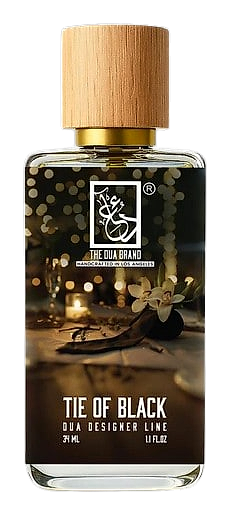
Some fragrances arrive with a fanfare. Others arrive with an answer. Tie Of Black landed in 2024 as a composition that earned attention for its orris-forward approach, a style long associated with refinement and considered taste. Celine's Black Tie set a high bar for that territory, a scent that wore like a perfectly knotted collar at midnight, dense with iris, velvet, and the kind of quiet authority that doesn't need to announce itself. The Dua Brand's interpretation takes that orris architecture and offers it in a new context, entering through the Inspired Expression collection.
What makes this composition worth the attention is how little it tries. Orris butter leads, but it doesn't shout. Tree moss sits underneath, doing the work most fragrances assign to heavier materials. Cedar provides the spine without leaning woody in any obvious direction. Vanilla arrives not as sweetness but as texture, like fabric softening over time. Musk anchors it. There's no oud flex here, no spice for the sake of complexity. Just five materials, each placed with the kind of restraint that makes you wonder why so many other fragrances feel overbuilt. This is composition as subtraction.
The evolution
The first hour is orris, but not the powdery kind you might expect. It reads cooler here, almost mineral, with the cedar threading through it like a low hum. Then moss arrives, and the temperature drops another degree. It's not a damp forest floor. It's more like the memory of one, the shadow it leaves on stone after rain. Vanilla enters around the second hour, and it doesn't sweeten the composition so much as soften its edges. The cedar rounds out. The moss recedes. By hour four, what's left feels closer to skin than to perfume. Musk takes over the base, and it does what good musk does: it doesn't announce itself, it simply holds everything in place. On clothing, it outlasts the next wash. On skin, it shows up the following morning still carrying that orris-vanilla thread.
Cultural impact
Tie Of Black earned its following because it delivered something specific: a composition that captured the orris-driven aesthetic without compromise, offering wearers an alternative that took the material seriously. For that audience, this wasn't a secondary option. It was a genuine expression. The fragrance sits alongside other orris-centered compositions that have built audiences through word of mouth and shared enthusiasm among collectors who value iris as a central character rather than a background note.