The Story
Why it exists.
The beginning
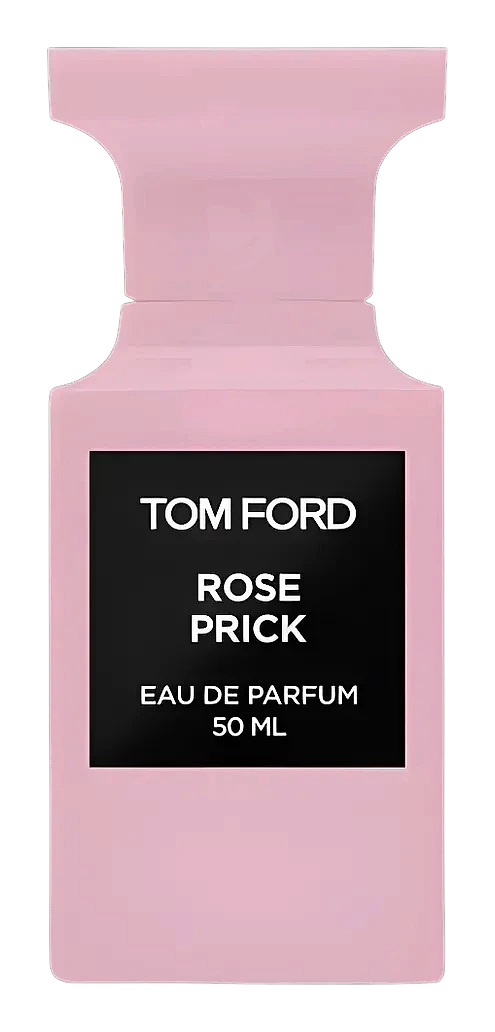
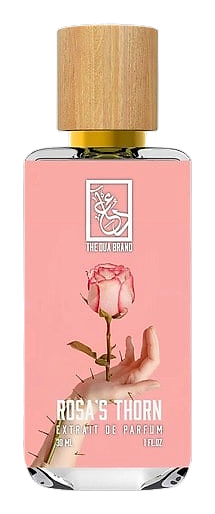
Rosa's Thorn arrived in 2020 as part of The Dua Brand's Inspired Expression collection, built as a reimagining of Tom Ford's Rose Prick. The brand's approach is straightforward: study a composition's architecture, then reconstruct it. No mystery, no pretense. Just the recognition that a well-built structure can be reproduced. The name itself is a small act of rebellion. Roses are polite. Thorns are not. Together they promise something floral that bites back, that doesn't sit quietly in a vase. The duality shows up in the scent itself: lush rose on one side, peppery heat and earthy base on the other. What makes the approach notable is its transparency.
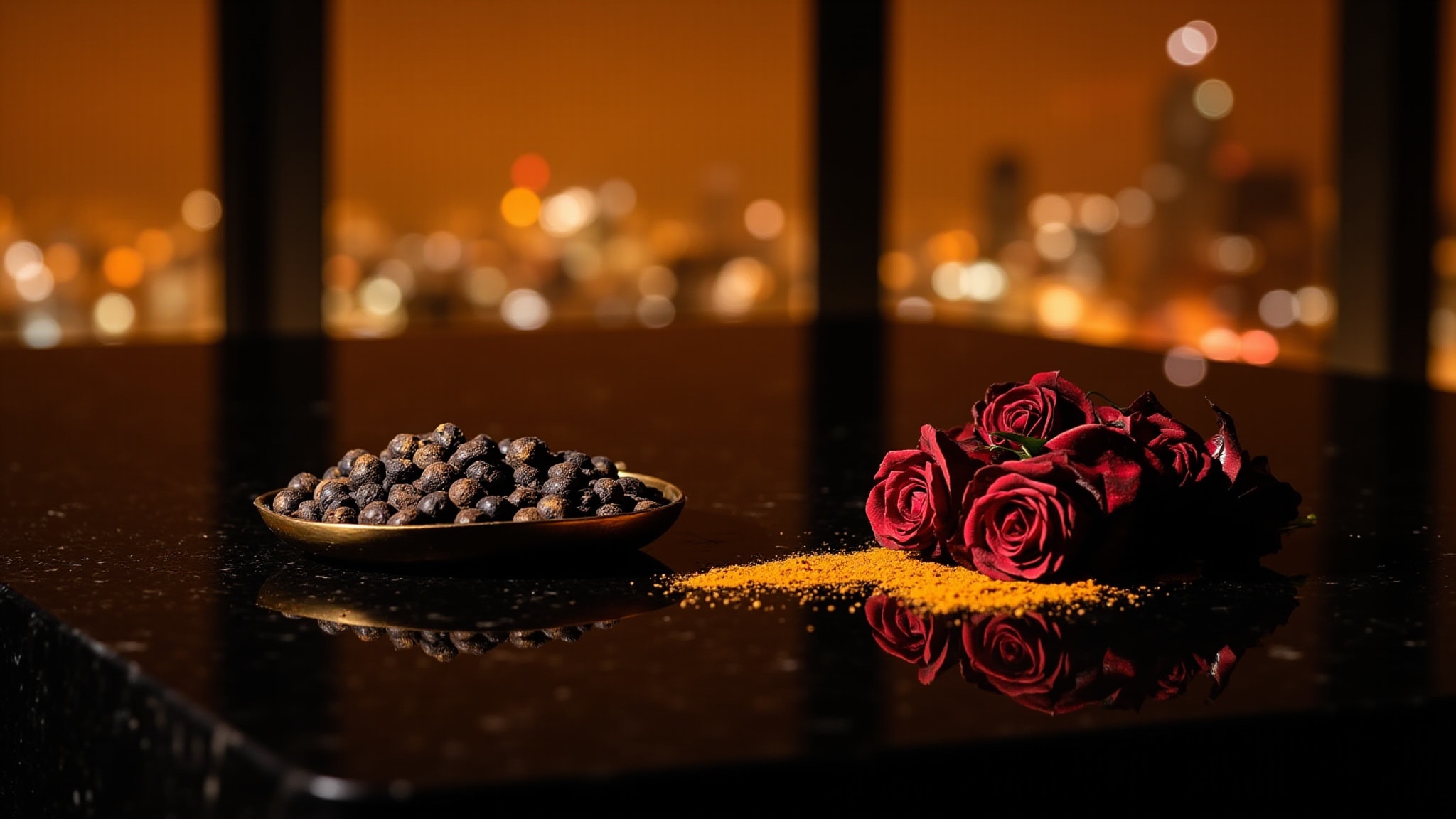
Three rose varieties anchor the composition, which is where Rosa's Thorn earns its keep. Bulgarian rose brings the deep, jammy sweetness. Turkish rose adds a green, almost herbal lift. Rose de Mai rounds it out with honeyed warmth, the rarer extraction that gives the blend its softer, more luminous edge. Most rose fragrances settle for one. Stacking three creates a rose that shifts through moods instead of repeating a single note. Sichuan pepper opens with that tongue-on-tin sensation, a sharp, buzzing heat that wakes the nose before anything floral gets a say.
The evolution
The opening belongs to Sichuan pepper, and it's not shy about it. That tingling, slightly metallic heat hits before anything floral has a chance to settle. Some people love the rude interruption. Others wait it out. Either way, the pepper phase burns bright and moves on quickly. Then the roses arrive properly. Three of them, stacked, and the composition finally feels whole. The Bulgarian brings jammy depth, the Turkish adds that green almost-herbaceous edge, and the third rose sweetens the whole thing without tipping it into dessert territory. Turmeric hums underneath, giving the floral a darker current. This is where Rosa's Thorn earns its reputation. As the fragrance settles, the patchouli comes in, and with it, the tonka bean's vanilla warmth. The rose doesn't disappear; it just changes register, from bright to something denser and more rounded.
Cultural impact
Rosa's Thorn sits in the Inspired Expression collection, and the fragrance's immediate reference is Tom Ford's Rose Prick. It doesn't hide that comparison. The relationship is openly acknowledged, which puts Rosa's Thorn in an unusual position: a fragrance that names its source material rather than obscuring it. For people who've smelled the original and wondered about the structure, this is a version worth smelling. The conversation around it tends to focus less on branding and more on how faithfully a known composition can be rebuilt. That's a different kind of proposition than most fragrances offer, and it changes what wearing it means.