The Story
Why it exists.
The beginning
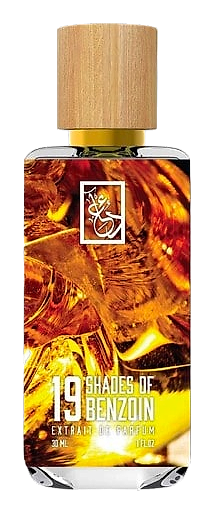
The Dua Brand launched 19 Shades of Benzoin in 2018 as part of a steadily expanding catalog of inspired expressions. Rather than chase a single benchmark head-on, the house widened the frame around a benzoin core, pulling in frankincense, cedarwood, amber, and musk to deepen the resin's natural sweetness without smothering it. The benzoin arrives as a warm, almost candied balsam, and the frankincense lends a bright, lemony incense counterweight that keeps things from collapsing into pure sugar. Cedarwood brings a dry, pencil-shaving grain underneath, while amber rounds the composition into something closer to golden syrup than anything sharp. Musk settles in at the base, giving the whole structure a soft, skin-like finish that lingers quietly through the drydown.
Benzoin is a balsamic resin with a vanilla-adjacent sweetness, but in concentration it tips cloying fast. Pairing it with frankincense pulls the sweetness toward something liturgical and smoky. Cedarwood adds structural backbone without the pencil-shaving sharpness of younger cedar. Musk binds. Amber rounds. The composition's quiet achievement is its restraint. Every note serves the resin. Nothing overplays. The oriental classification comes not from heavy base notes but from a slow, resinous accumulation on skin. It is a study in how few materials you actually need when the central one is generous.
The evolution
It opens like a struck match in a stone chapel, smoke first, then the resin rising underneath. Within minutes the frankincense cools the edges and the cedar grounds everything to wood. By the second hour, the benzoin has swallowed the smoke whole, leaving only warmth on skin. What was sharp becomes close. What was loud becomes yours. It does not announce. It settles.
Cultural impact
19 Shades of Benzoin is, at its heart, a love letter to resin-forward orientals. Benzoin takes center stage from the first spray, opening with that warm, sticky, vanillic character the resin is known for, and the surrounding notes build outward without ever pushing it aside. The frankincense adds a luminous, almost church-like incense quality that lifts the heavier sweetness, while cedarwood grounds the composition with a dry, woody austerity that prevents the blend from feeling overly syrupy.