The Story
Why it exists.
The beginning
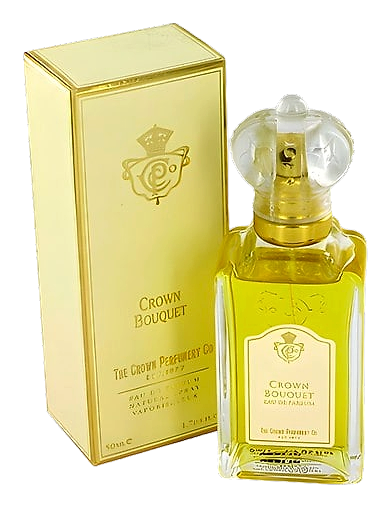
Crown Bouquet arrived in 1936 as part of The Crown Perfumery Co.'s ongoing project to bottle British experience in fragrance. Where other houses named their scents after foreign palaces and distant shores, Crown Perfumery worked from a different register, places closer to home, emotions with English names. Crown Bouquet captured something specific: the English garden at full bloom, but filtered through the chypre structure that defined the era's most sophisticated compositions. The perfumer understood that a great floral wasn't just about sweetness, it was about the tension between freshness and depth, between green stems and powdery air.
What makes Crown Bouquet unusual within its own house is the way it holds two opposing impulses in a single breath. The green notes, galbanum, hyacinth, arrive cool, almost astringent, the olfactory equivalent of morning air. Against this, the white florals (gardenia, tuberose, orange blossom) bloom warm and full. These shouldn't coexist easily, but the chypre base, earthy, powdery, gives them somewhere to meet. The result isn't a compromise. It's a composition that uses tension as its engine.
The evolution
The opening hits like cutting stems, galbanum's green bite over hyacinth's floral intensity. Twenty minutes in, the white florals take over: gardenia first, then tuberose rising through like heat. The orange blossom keeps everything slightly citrusy, preventing the lushness from going syrupy. By the hour, the heart settles into something powdery and warm, the earthy base doing the quiet work of grounding what came before. Crown Bouquet holds moderate sillage, present but not demanding. On fabric, it lingers into the next day as a soft, faded floral memory. The green never fully disappears. Even at the drydown, there's something stem-like in the drydown's undertow, a reminder that this started in a garden.
Cultural impact
Crown Bouquet occupies an interesting position among vintage British florals. Released in 1936, it sits at the tail end of the chypre era, a compositional style that would dominate women's perfumery for another three decades before evolving. Wearers who seek it out tend to be collectors of vintage scents or those drawn to green-florals with actual green in them, not just the marketing language of freshness. The fragrance's discontinuation only deepened its cult status; those who remember it speak of it in the particular register reserved for scents that can't be replaced.