
The Story
Why it exists.
The beginning
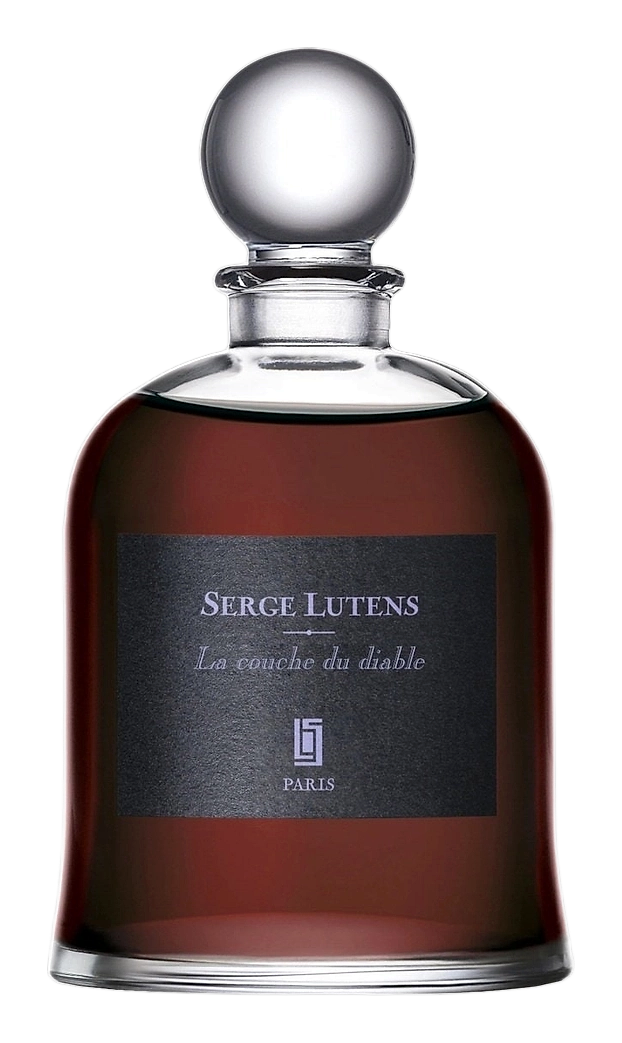
La Couche Du Diable arrived in 2019 as a question posed by Lutens and Sheldrake: what does sin smell like? Not as metaphor. As material. The name alone is a provocation, the devil's bed, a place of indulgence and consequence. Christopher Sheldrake, who has shaped nearly every Lutens fragrance since 1992, built this one around oud and labdanum as a dark alliance. Two materials that have no business being polite. The official copy asks: how can one attend the coronation of Satan without ever once having tasted sin? The fragrance is the answer. Or the evidence.
Oud and labdanum are not an obvious pairing. They are both dense, both resinous, both materials that demand something from the wearer. But they are not the same, oud carries smoke and a certain animal intensity, while labdanum brings a dry, almost leathery warmth that softens the edges. Saffron and cinnamon sit between them, adding a spiced heat that reads almost as boozy in the opening. Tangerine and orange arrive bright, acidic, cutting through the darkness for a moment before the whole composition settles into something warmer and more intimate. This is not a fragrance that explains itself. It builds.
The evolution
The opening announces itself quickly, a cinnamon-boozy accord with tangerine brightening the edges. The citrus doesn't linger. Within minutes, the oud and labdanum take over, and the character shifts from bright to dark, from spice to smoke. The heart phase brings rose and orange into a softer, sweeter register, but the woody and smoky base underneath never fully retreats. This is a fragrance that stays close, that builds slowly, that doesn't announce itself so much as it settles in. By the drydown, the amber and musk wrap around the oud in a way that is warm, long-lasting, and just slightly animal. The longevity is real. Eight to ten hours on most skin types, with a sillage that stays intimate rather than filling the room.
Cultural impact
La Couche Du Diable arrived in 2019 as one of the more divisive entries in the Lutens catalogue. Where many of Sheldrake and Lutens' collaborations favor intellectual complexity, this one is more visceral, oud and labdanum combined in a way that is warm, resinous, and deliberately confrontational. The fragrance sparks conversation precisely because it refuses to be safe.