
The Story
Why it exists.
The beginning
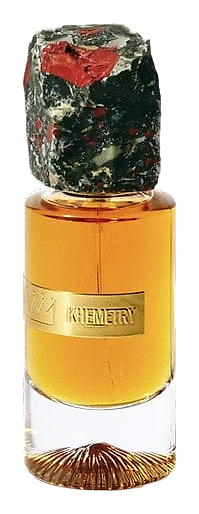
Khemetry draws its name from "Khemet," the ancient name for Egypt. Perfumer Chris Davis built it as a scented correction rooted in named oils with geographic ties to the continent. Moroccan cedar, Kenyan frankincense, African blue lotus, Egyptian musk. The composition itself leans woody and spicy, structured so that a softer floral facet rises late to relieve the resinous density, exactly the kind of drydown that suggests warmth cooling into skin rather than fading off it. The accord profile listed across warm spicy, woody, amber, powdery, and fresh spicy tells the same story from a different angle.
What's interesting about the construction is how many of the named ingredients work across both ends of the spectrum. Frankincense, cedar, sandalwood, clove, cardamom, and black pepper all carry both a top brightness and a deep, lingering warmth. The accord profile reflects it: warm spicy, woody, amber, powdery, fresh spicy. The Egyptian musk and African blue lotus add the floral relief the official description names, softening what would otherwise sit as a dense resin-forward composition. Clove reads warm rather than sharp when it has sandalwood beneath it.
The evolution
Khemetry opens with black pepper and cardamom stacked over frankincense and clove, a combination that reads sharp and immediately dry. Cedar is present from the early stages, lending a clean woodiness that keeps the spices from tipping into purely hot territory. The first movement of the fragrance feels architectural, every note placed with intention rather than layered for noise. Sandalwood arrives early in the wear to provide a cushioned base, giving the sharper top materials something to soften against. The transition into the floral register is gradual. Blue lotus and rose emerge quietly through the spice, the way candlelight replaces daylight rather than switching on. The drydown curves toward a powdery, musky warmth as the resins fade into the base.
Cultural impact
Khemetry occupies a specific lane within contemporary niche fragrance, one where geographic specificity in the ingredient list carries real weight. African blue lotus, Egyptian musk, Moroccan cedar, Kenyan frankincense; these aren't background notes, they're the architecture of the composition. For wearers familiar with African and Levantine perfumery traditions, the structure feels recognizable. The resins, the woods, the way the florals arrive late rather than early; it's a familiar blueprint. What's less common is seeing those traditions named this directly on the label rather than absorbed into generic oriental or woody classifications.