
The Story
Why it exists.
The beginning
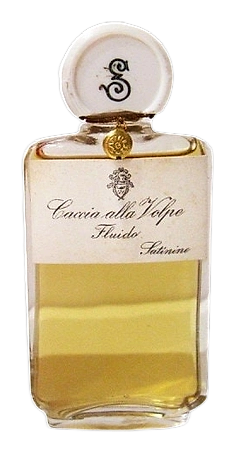
Satinine, founded in Milan in 1883, has built its reputation on formulas that carry the weight of the city's craft traditions. Lorenzo Usellini's original Caccia alla Volpe from 1932 was conceived during a period when animal extracts defined masculine perfumery. The original chased primal essence, capturing the raw intensity of the hunt through materials like civet and castoreum. Those early versions were assertions of dominance, scents meant to dominate a room and claim territory.
The decision to abandon traditional top and base notes reflects a philosophical shift in how Satinine interprets heritage today. Rather than recreating the 1932 formula's trajectory, the brand has crystallized the original's emotional core: the quiet that follows the chase, the stillness after the pursuit concludes. Musk, Frankincense, Vetiver, and Myrrh each carry cultural weight that echoes across centuries of aromatic tradition. By focusing exclusively on this quartet, Satinine creates a fragrance that functions as a complete thought rather than a sequence. The pairing logic is deliberate: Musk and Vetiver provide modern naturalness, while Frankincense and Myrrh anchor the scent in ceremonial history.
The evolution
The 2025 revival strips away the animalic vocabulary entirely. Musk replaces the original civet, providing warmth without confrontation. Vetiver steps in where the old formula used castoreum, offering earth and root where once there was castoreum's animal funk. The essential innovation lies in replacing the original's aggressive opening with direct immersion into the heart: Frankincense and Myrrh arrive immediately, establishing the sacred rather than the savage. The composition sustains this resinous middle register for hours, trading the original's linear chase narrative for a meditative loop. The chase remains in the name, but the scent itself has become contemplative rather than combative.
Cultural impact
Since its 2025 release, Caccia alla Volpe has resonated with collectors who value heritage reinterpretations. Its leather‑rich profile places it alongside classic hunting fragrances, yet its green‑chemistry reformulation appeals to eco‑conscious wearers. The scent has become a quiet staple for those seeking a sophisticated, animalic edge without overt extravagance, often mentioned in niche forums as the modern fox‑hunt for the contemporary gentleman or lady.