
The Story
Why it exists.
The beginning
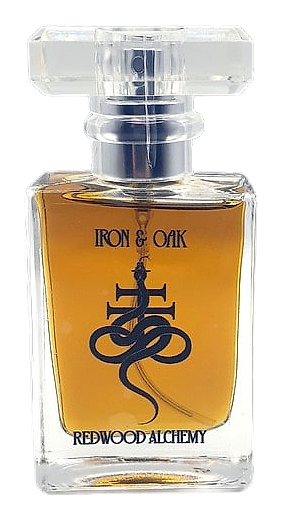
Redwood Alchemy has always worked the fog-soaked edge where nature turns industrial. What happens when you merge strength with suppleness, cold metal with living wood? Rain and wet soil. Ironwood and lily of the valley. Oakmoss settling into cashmere. The fragrance equivalent of hands that know what they're doing.
What makes this work is the restraint. Redwood Alchemy could have leaned fully into gothic atmospherics, and they have, elsewhere in the catalog. But Iron & Oak tempers that impulse. The ironwood heart gives it structural weight without heaviness. The lily of the valley keeps the middle from getting too serious. Cashmere wood and musk in the base create a warmth that stays close, intimate, earned. It's a composition that trusts the wearer to fill in the rest.
The evolution
The opening hits mineral and wet. Petrichor, soil tincture, a sharpness that reads as ozonic but earthier. There's no sweetness here, just the immediate sensation of rain on warm metal. The spicy notes arrive quickly, aromatic rather than warm, grounding the top before it can feel too fleeting. Then the heart takes over. Ironwood is the named protagonist, dense, faintly floral, with a woodiness that holds without overwhelming. Lily of the valley peeks through, soft and brief. The drydown is where oakmoss and cashmere wood do their work. Mossy, powdery, warm. Musk keeps it intimate, close to skin. What remains the next morning is a faint mineral-wood memory on fabric. Not loud. Just there.
Cultural impact
Redwood Alchemy crafts fragrances that smell like specific moods, not generic categories. Iron & Oak occupies a particular corner of that world, for people who want atmospheric without performing gothic. The brand attracts wearers who treat scent as personal ceremony rather than social signal. It's not trying to rival mass-market woody fragrances, and it doesn't need to.