The Story
Why it exists.
The beginning
Graines exists because Pour Toujours treats every fragrance as a short story rather than a commercial product. The 2015 release takes its name from the French word for seeds, plural, deliberate. Where most houses build outward from familiar materials, this one starts at the edge and stays there. Carrot seed is the pivot point: not a supporting note here, but the protagonist. It carries facets of dry apricot, iris, whisky, and hay, qualities that usually appear in drydown, tucked beneath more assertive materials. Here, they lead. The result is a fragrance built from a direction perfumers typically approach from behind.
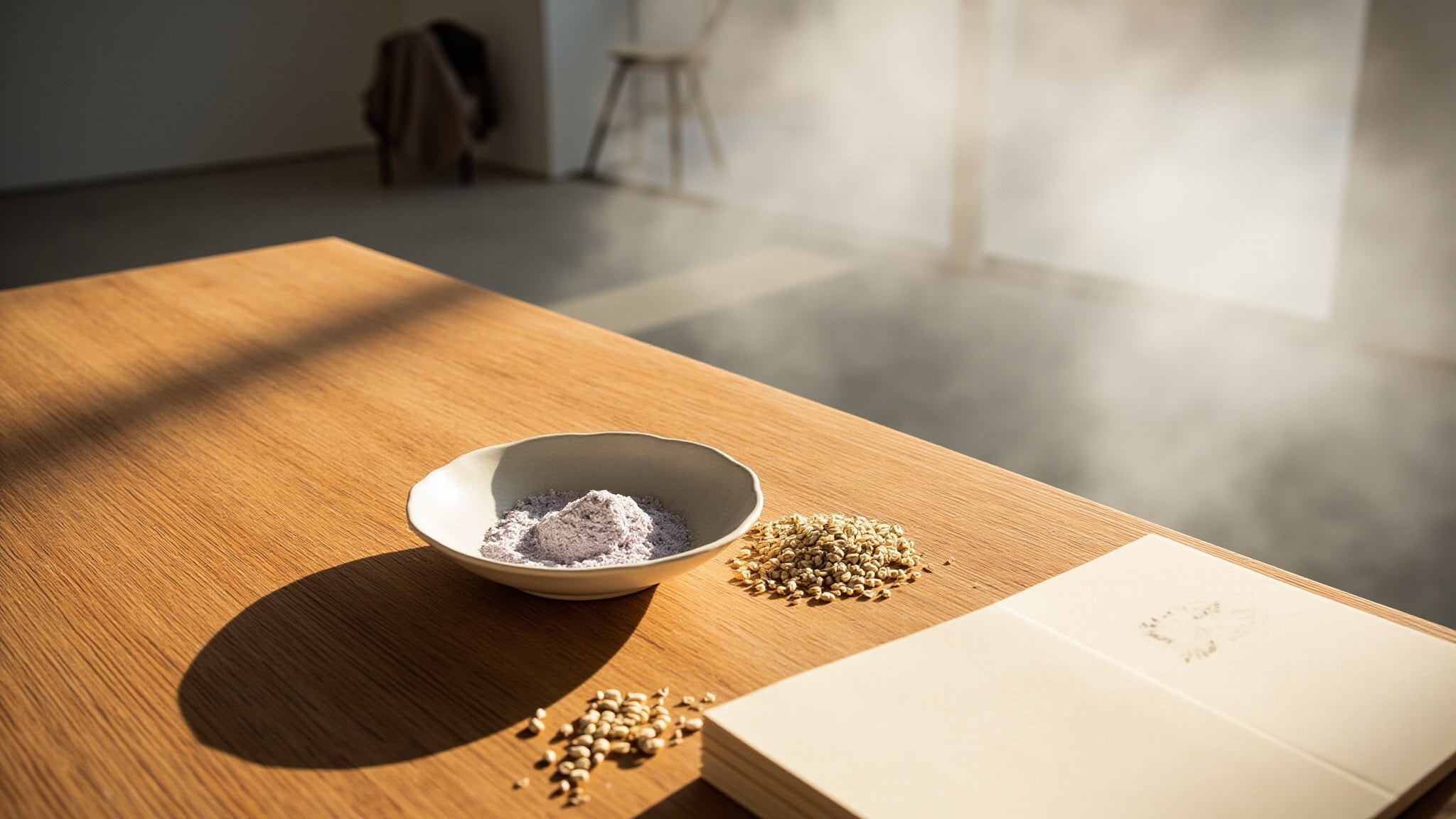
Carrot seed in perfumery is unusual as a featured material. Usually it plays a supporting role in oriental or woody drydowns, its whisky and hay facets adding depth to already-complex compositions. Osmanthus changes the conversation entirely, that soft apricot-leather note tempers the earthiness without sweetening it. Barley adds a green grain quality, dry and clean. Together, these materials create a texture that reads as powdery without being soft: grain and petal at once, something grown becoming something worn. The combination is rare enough that reviewers consistently cite it as the reason Graines stays with them.
The evolution
Bergamot and oregano open together, the citrus bright, the herb dry and slightly medicinal. No transition. They arrive in concert. The carrot seed follows within minutes, its apricot-iris facet reading almost like a pale floral before the whisky and hay qualities settle in around the thirty-minute mark. By hour two, the osmanthus has softened everything. This is the heart of the fragrance: powdery, grainy, slightly animalic in the best sense. No single note dominates. The cocoa stays quiet until the fourth hour, when it surfaces as a dark warmth beneath the iris and oak. The drydown is where Graines earns its eight-to-ten-hour reputation. Iris powder, cocoa depth, oak wood weight, intimate rather than announced, present without projecting. On fabric the following day: a quiet iris-and-grain trace that suggests the wearer more than announces them.
Cultural impact
Graines arrived in 2015 as a quiet statement against perfumery's reliance on familiar tropes. While the broader market chased oud and ambroxan, Pour Toujours embedded carrot seed, typically a supporting actor, into the narrative's center. The result sparked conversations about ingredient hierarchy and whether unconventional materials deserve starring roles. Independent fragrance communities embraced Graines as proof that accessible niche houses could challenge heritage brands' creative monopoly. The fragrance has since influenced a generation of perfumers who cite its grain-iris accord as a reference point.