
The Story
Why it exists.
The beginning
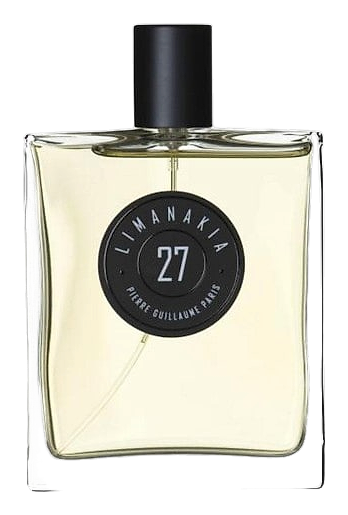
The name comes from Limanakia, a series of steep, rocky coves along Greece's Aegean coast, where narrow stone paths descend to mineral alcoves and salt-warmed rock. The concept takes those mineral alcoves as its starting point, translating the interplay of hard stone and sun-warmed surfaces into olfactory form. No beachy coconut accord. No aquatic blue synthetic. Instead, the fragrance captures the essence of those rocky passages, with floral notes threading through the mineral character like unexpected growths between stones. The composition draws from that landscape of sharp geometry and warm light, letting mineral notes provide the architecture while florals add unexpected softness.
The salicylate note is doing unusual work here. Usually it reads as aspirin-fresh, cold, but in Limanakia 27, Pierre Guillaume deploys it alongside flint and mineral notes to create something that smells like stone warming in the sun. The florals don't float above; they nestle into the mineral accord like they're growing from it. Cumin appears in small doses, lending a subtle animalic warmth that stops the mineral-floral balance from becoming clinical. It's a composition that asks you to reconsider what white florals can do when they stop being the main event.
The evolution
The opening hits flint-first: sharp, mineral, almost metallic. Salicylate amplifies that cool edge, a brief, clean astringency that clears the palate. Lily of the valley arrives quietly, not bursting but settling alongside the mineral foundation like it belongs there. The heart introduces jasmine and tiare, warmer and more tropical, but the mineral notes never fully surrender. Cumin threads through, adding a whisper of skin-warmth that makes the florals read as human, not architectural. The drydown holds the tension longest: woody notes and labdanum wrap around the mineral core, immortelle adding a faint honeyed resinousness, but that mineral character remains present throughout, lingering on skin and occasionally found on fabric the next day, like a trace you didn't expect to find.
Cultural impact
The composition positions white florals as counterpoint to a mineral-flint core, a structural choice that moves away from conventional white-floral conventions. Rather than placing blooms at the center, the fragrance builds around mineral intensity, letting jasmine and tiare exist within that framework. The mineral-floral tension creates something that reads less like perfume and more like atmosphere, evoking sun-baked stone and the quality of light along coastal passages. This approach offers an alternative to more straightforward floral compositions, appealing to those who appreciate structural complexity in fragrance.