The Story
Why it exists.
The beginning
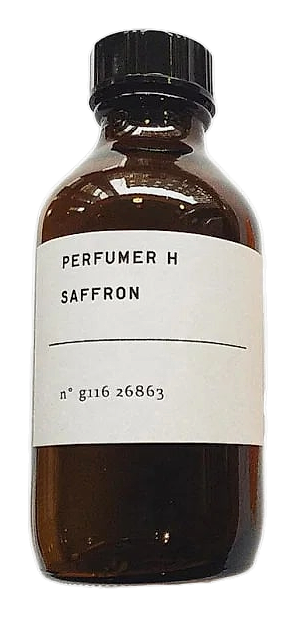
Lyn Harris built Saffron in 2016 as part of Perfumer H. The brief was narrow and deliberate: take a handful of ingredients she'd spent years thinking about and let them speak at full volume. Saffron and sandalwood anchor the composition, geranium leaf and Somali frankincense pull the temperature up. No narrative scaffolding, no theme-and-variations. One material studied deeply, then honored with a few trusted companions. The restraint is the point. Saffron isn't a maximalist riff on spice, it's a careful study where every note earns its place through sheer presence. The saffron threads through papyrus and cedarwood like ink through old paper, while geranium keeps the opening from turning too dark too fast.
What makes Saffron interesting is the restraint. Lyn Harris builds the simplest formula that lets each material show its character. Production keeps things small. So Saffron isn't a maximalist riff on spice. It's papyrus and frankincense treated like rare books, handled carefully, displayed without dust jackets. The ingredient list itself tells the story: bergamot and geranium leaf for lift, saffron and papyrus for the central texture, Somali frankincense and cedarwood for depth, sandalwood and vanilla for the soft landing. Nothing decorative, nothing there for marketing copy.
The evolution
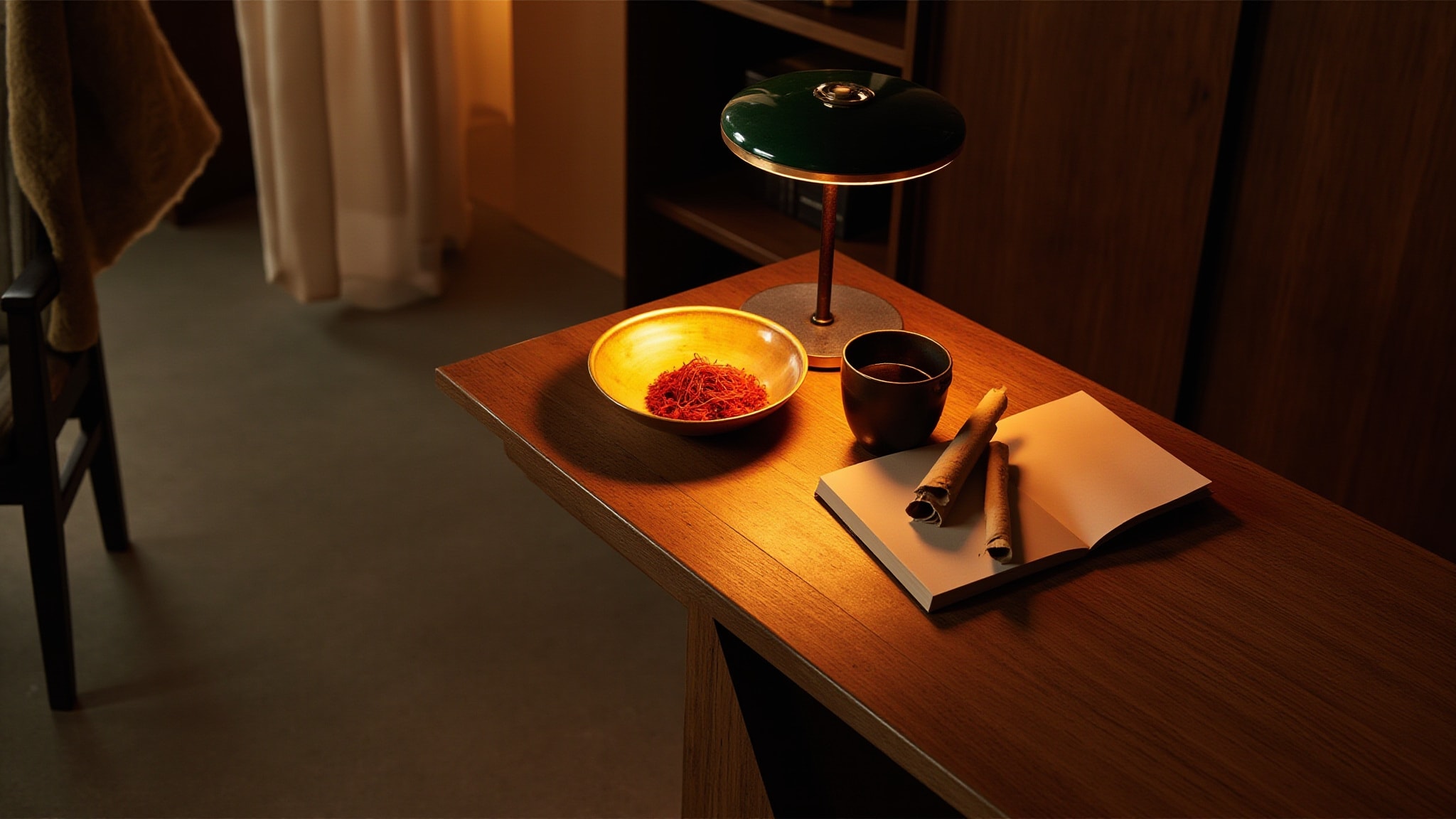
The first ten minutes are bergamot and geranium leaf, bright and green, almost crisp enough to pass for a cologne. Then the saffron lands, not sharp, more like a slow thread of smoke running through warm paper. Papyrus shows up next, dry and slightly sweet, the texture of old sheets stacked on a shelf. Somali frankincense thickens everything, resinous and meditative. By the second hour the cedarwood and sandalwood have taken over, creamy, polished, almost furniture-grade warmth. The vanilla doesn't announce itself; it just rounds the edges. What's left on skin later in the day is a soft woody-sweet haze, faint enough that you have to press your wrist to your nose to find it. Clings to fabric longer than skin, a ghost of saffron and incense in a scarf the next morning. The drydown trades projection for intimacy, so the fragrance shifts from something you wear into something you inhabit.
Cultural impact
Saffron occupies a particular corner of the woody-spicy category, the kind of fragrance that favors atmosphere over projection. It appeals to wearers who want incense and spice without the room-filling sillage of a heavier oriental, and it reads well in cooler weather where the papyrus and cedarwood can breathe. The composition sits closer to the skin than to the airspace around it, which makes it a choice for people who prefer their fragrance to be discovered rather than announced.