The Story
Why it exists.
The beginning
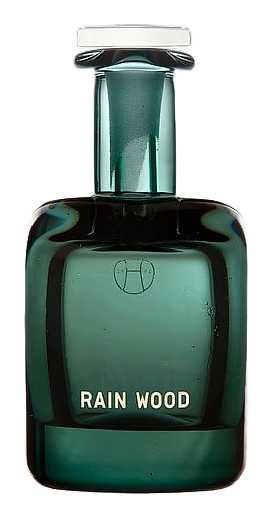
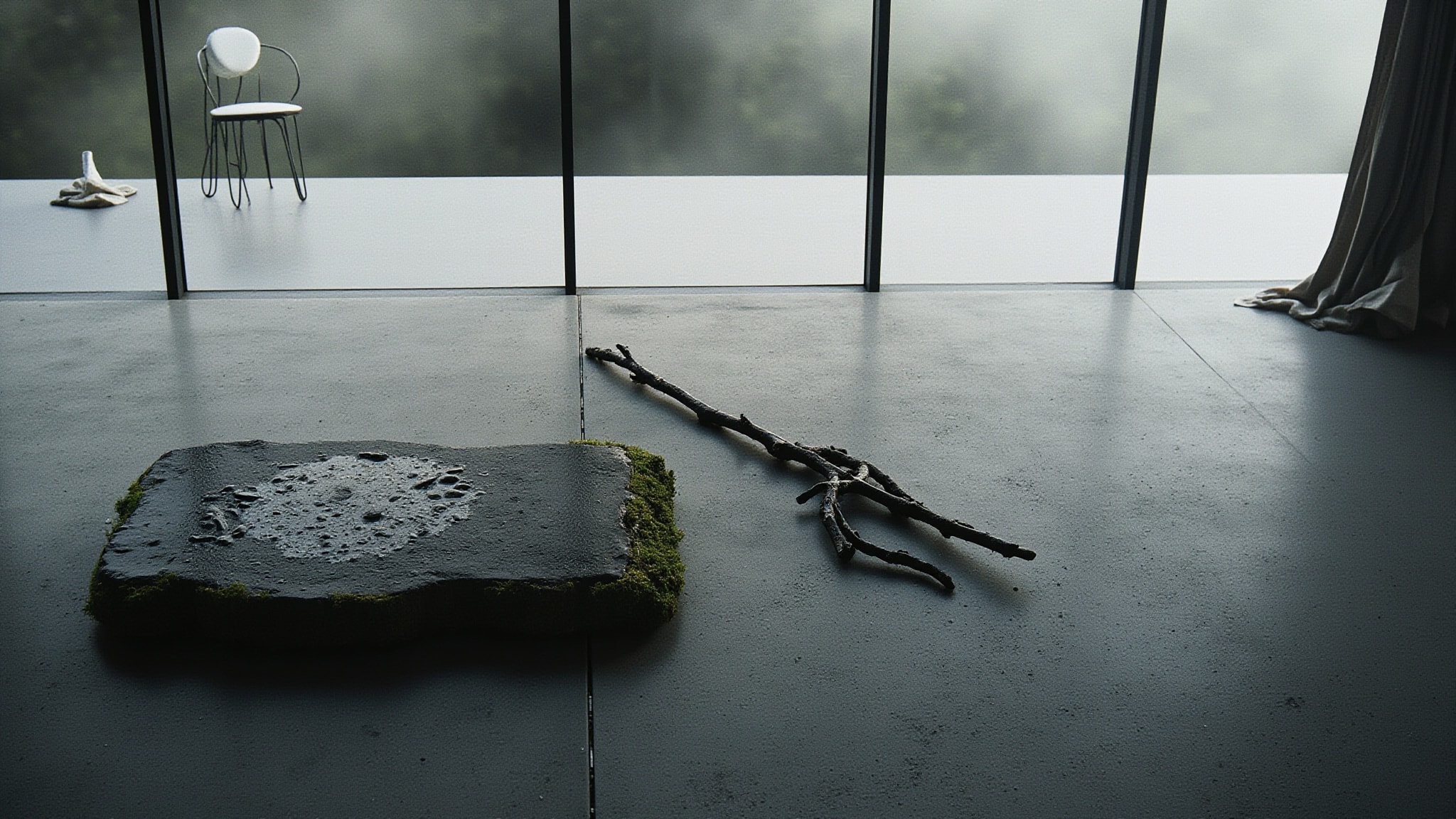
Rain Wood was not designed from a brief. It emerged from a deeper recognition of how certain landscapes hold themselves in memory, the way wet stone smells after rain, the particular density of forest air, the silence that settles when precipitation has stopped but hasn't yet evaporated. The fragrance translates these sensations into something wearable: mineral clarity, green depth, and a quiet woody presence that doesn't announce itself but lingers in the space between skin and air. The mineral quality of wet stone anchors the composition, giving it a crispness that feels less like perfume and more like atmosphere. Forest air density is woven through the heart notes, creating a weight that feels natural rather than constructed.
What makes this composition interesting is the way it handles contrast. Galbanum, bright, green, almost aggressive in its cleanliness, opens the fragrance. Then elemi adds a warm citrus-resin that softens the edge without losing the crispness. The two together create an opening that smells like cold air, not perfume. The heart builds from there: cedar and juniper, but this is forest cedar, closer to the bark than the wood. There's a rawness to it that feels unprocessed, as if you're standing near a tree rather than inside a room where its lumber has been installed.
The evolution
The opening arrives quickly: galbanum's bright green cut, softened by elemi's warm citrus-resin. You smell it before you expect to. The heart builds from there, cedar and juniper interweave, creating something that smells like the air in a forest, not the wood of a bottle. There's a density to this part of the development that feels atmospheric rather than linear. Patchouli arrives quietly, adding mineral depth rather than sweetness, extending the mineral character established at the opening. As the fragrance moves into its drydown, moss and myrrh complete the picture, giving the final stages an earthy, dry character that stays close to the skin. The wet stone quality doesn't disappear, it lingers, woven into the woody and mineral base that defines how this scent settles.
Cultural impact
Perfumer H has built a following for its minimalist, ingredient-first approach. Rain Wood fits squarely into that philosophy, a fragrance for people who know what they want from a scent and appreciate the mineral-woody character over sweetness or projection. The house's compact catalogue and transparent approach have made it a reference point for a certain kind of fragrance clarity. This is not a fragrance for everyone, and it doesn't try to be.