The Story
Why it exists.
The beginning
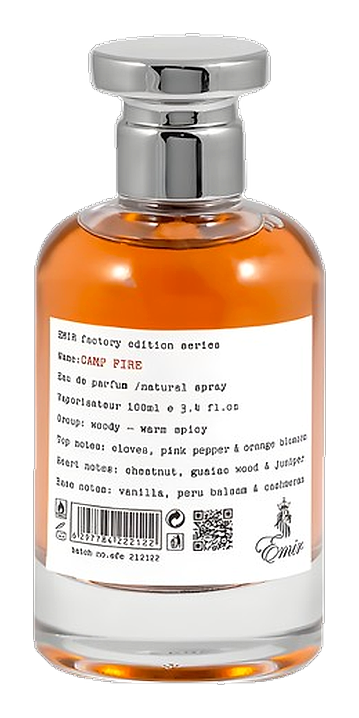
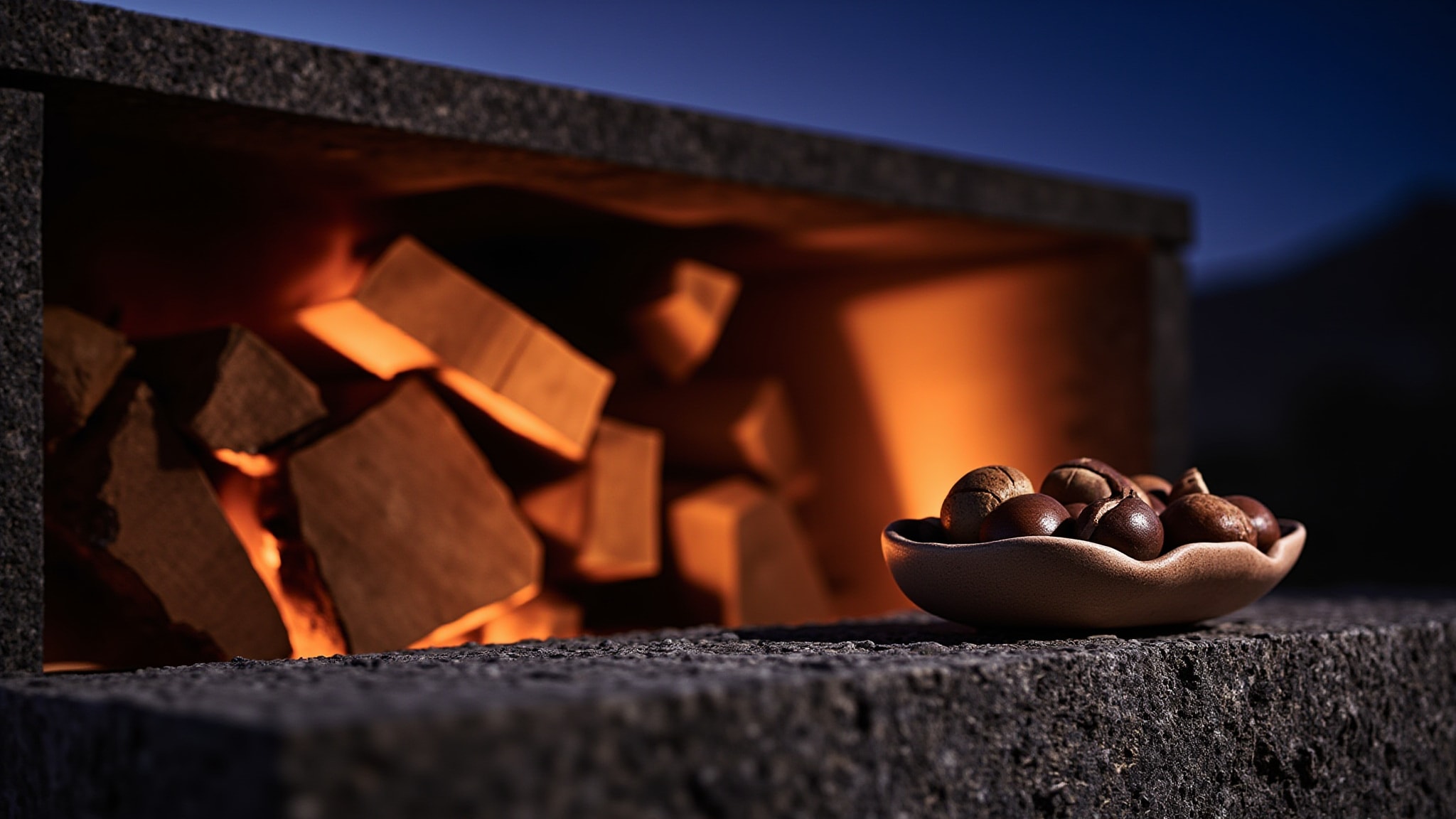
Camp Fire opens sharp and edible at once, smoke and sweetness braided together, before settling into something warm enough to wear when there's nothing else on the agenda but staying warm. The composition recreates that particular warmth that comes from sitting close enough to feel the heat of a fire on a cold night. What the perfumer landed on was a scent that knows what it is, balancing those contrasting elements into something inviting and present. There's a particular bittersweetness at play that evokes the feeling of charred materials and roasted nuts, achieved through careful selection of wood notes that add complexity. The overall effect is refined but never precious, warm without becoming overwhelming.
The composition brings together chestnut and peru balsam as anchoring elements. Chestnut brings a nutty, slightly charred quality that evokes the essence of embers and roasting nuts. Peru balsam adds a sticky, balsamic warmth underneath that holds everything together. Cashmeran acts as a distinguishing element in this formula, delivering a soft, powdery, slightly sweet quality that smooths the rough edges of guaiac wood and juniper, preventing the scent from becoming too heavy or resinous.
The evolution
The opening announces itself with a sharp, almost spicy quality. Cloves lead the way, followed by pink pepper adding a slight tingle. A brief flash of orange blossom appears before woodier materials take command, and the heart of the fragrance fully emerges with guaiac wood providing body and a smoky, leathery character, chestnut adding nutty warmth, and juniper keeping it slightly green and resinous. This middle phase delivers consistent, projecting warmth. As things progress, vanilla arrives softly with a charred marshmallow quality, the edges caramelized, the center still slightly soft, while peru balsam grounds everything with depth without heaviness. As it settles, the scent becomes quieter and intimate, lingering on skin and fabric long after the wearer has gone.
Cultural impact
Clones occupy a complicated space in fragrance culture, respected by some as smart economics, dismissed by others as derivative. Camp Fire belongs to a narrower category: clones that actually deliver. The comparison to Maison Margiela's Replica By The Fireplace is unavoidable, and that's the point. At a fraction of the cost, it delivers the same campfire memory, the same charred marshmallow sweetness, the same winter-season projection. What makes it culturally interesting is what it represents about accessibility in perfumery. The same sensory experience, the same cold-weather warmth, the same moment, just more reachable.