
The Story
Why it exists.
The beginning
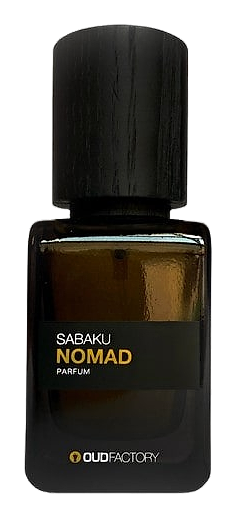
Sabaku, the Japanese word for desert. Oud Factory took it and made it their own. This is a house that refuses to stay in one cultural lane, pulling from Arabian perfumery traditions while casting an eye toward the broader world. Sabaku Nomad arrived in 2020, designed by perfumer Xenom, who called it the most complex formula in their career. Not the loudest. Not the most expensive. The most complex, a composition built from eight distinct notes that shift and reframe each other over hours. The name suggests movement, crossing borders, carrying something from one place to another. The fragrance does exactly that.
What makes Sabaku Nomad unusual is the combination of birch tar smoke and frangipani. Birch tar gives a sharp, almost medicinal smoke, the kind you'd find in leather-making traditions or certain Nordic preparations. Frangipani brings a creamy, slightly tropical sweetness. They shouldn't work together, but Xenom threaded them through sandalwood and amber, letting each note take a turn at the foreground. The result feels less like a linear scent journey and more like a landscape you move through. Peru balsam adds a resinous warmth that softens the edges without dulling them. Oakmoss gives it that earthy, mossy undercurrent that grounds the sweetness.
The evolution
Birch tar hits first. Not gentle smoke, sharp, almost acrid smoke, like hot embers catching air. It lasts longer than expected, maybe thirty minutes, before amber and frangipani arrive to soften the edges. The heart opens around the hour mark: sandalwood and oud settle in, warm and woody, while the frangipani keeps its sweetness just above the surface. Oakmoss adds a green, slightly dusty quality that keeps the whole thing from becoming too smooth. By hour three, the drydown takes over, musk and peru balsam, close and warm, with a lingering whisper of smoke that clings to fabric long after the initial application. On skin, expect four to six hours. On clothing, it can last into the next day.
Cultural impact
Birch tar has deep roots in Scandinavian and Eastern European perfumery, historically valued for its antiseptic properties and distinctive smoky character. Fragrances built around this note represent a bridge between traditional folk medicine and modern olfactory artistry. The raw, smoky aroma connects contemporary scent enthusiasts to ancient practices of preservation and ritual. These perfumes carry a primal, untamed essence that speaks to humanity's long-standing relationship with fire, wood, and natural aromatics. In recent years, smoky fragrances have experienced a renaissance, driven by a growing appreciation for bold, unconventional scents that challenge mainstream perfume conventions.