
The Story
Why it exists.
The beginning
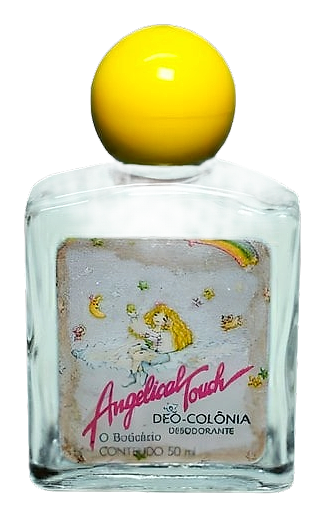
Angelical Touch arrived in 1990 as O Boticário built out its women's fragrance line. The brief was straightforward: an aromatic floral that felt fresh and approachable, anchored by lavender's herbal clarity and finished with a clean musk base. O Boticário had already proven it could translate Brazilian botanical heritage into wearable scent stories, here, the ambition was simpler. A daily fragrance. A composition that understood what most women actually reach for on a Tuesday morning. The name promised something gentle, almost celestial. The fragrance delivered something cooler and more grounded than the title suggested.
The pyramid is deliberately spare: lavender at the top, wildflowers in the heart, musk at the base. That's it. Three tiers. No tricks. What makes this structure interesting is the restraint, 1990 was an era when women's fragrances leaned into heady florals and orientals. Angelical Touch went the other direction. The lavender isn't sharp or camphoraceous; it's green and aromatic, softened by whatever wildflowers occupy the heart. The musk doesn't project or announce itself. It simply lingers, clean and intimate. This is a fragrance that understands the power of not trying too hard.
The evolution
Lavender opens, green, slightly herbal, immediately recognizable. Not the lavender of men's grooming products. Something softer, with a dewy quality that reads as morning rather than medicine cabinet. Twenty minutes in, the wildflowers arrive. Not a specific bloom but a collective impression: soft, slightly sweet, undefined enough to be dreamier than a named rose or jasmine. The hand-off is smooth. No sudden drop, no awkward gap. The wildflowers carry for the next few hours, their sweetness tempered by the herbal backbone that refuses to fully disappear. Then the musk. Skin-warm. Clean. The kind of drydown that stays close, intimate sillage, moderate projection. On fabric, it fades by evening. On skin, a faint trace might survive until morning.
Cultural impact
Angelical Touch arrived in 1990 during a pivotal period for O Boticário, when the Brazilian brand was building its identity in the women's fragrance market. The launch coincided with a wave of accessible, mass-market aromatics that appealed to everyday consumers seeking clean, non-intimidating scents. Lavender-forward compositions like this one stood apart from the heavier orientals and powdery florals that dominated the era's popular fragrances. The scent reflected a broader cultural shift toward understated elegance, where subtlety became a marker of sophistication rather than weakness. As one of O Boticário's earlier women's offerings, it contributed to the brand's positioning as a provider of approachable luxury for Brazilian consumers.