
The Story
Why it exists.
The beginning
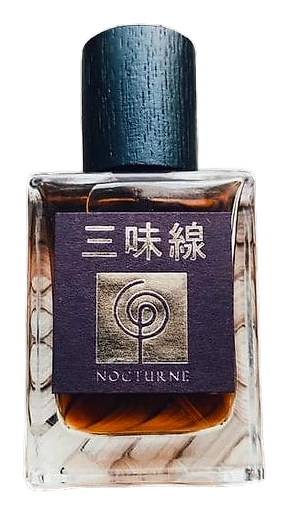
Shamisen arrives in 2026 with a name that points toward the atmosphere of the three-stringed Japanese instrument rather than a literal scent recreation. Its composition sets that musical association against a refined contrast: white rose and Aglaia soften oud, sandalwood, musk, and ambergris. The floral side gives the fragrance air and composure, while the woods lend it weight. Nothing here is fragile, yet nothing feels blunt either. It is a deliberate meeting of pale flower, polished timber, soft musk, and mineral warmth.
The unusual part of Shamisen is its balance of rose and oud. White rose can easily read as glamorous or traditional, but here it behaves more like a clean, powdery veil stretched over darker material. Aglaia adds a honeyed floral softness that keeps the woods from becoming severe. Meanwhile, ambergris brings a mineral, skin-like dimension and musk gives the composition its close-fitting finish. Together, the materials create tension without noise, floral enough to feel alive, woody enough to stay composed.
The evolution
The first impression is polished and pale, with white rose reading as the clearest point of focus. Oud gives it depth, while sandalwood smooths the edges into something creamy and tightly knit. As the opening settles, Aglaia brings a warmer floral note that makes the composition feel less stark, more like silk over dark wood. Musk then pulls everything closer to skin, and ambergris leaves a mineral trace that seems cleaner than salt and softer than stone. By the later hours, the floral notes recede and the woody-muskal base carries more of the scent. A controlled, moderate trail remains, suited to close settings rather than filling a crowded space.
Cultural impact
Shamisen draws on the cultural resonance of the shamisen, a Japanese stringed instrument associated with storytelling, elegance, and disciplined artistry. Its name gives the fragrance a Japanese-inflected identity without relying on obvious motifs such as temples or calligraphy. The pairing of white rose with oud joins floral softness and deep wood, reflecting a contemporary approach to scent culture in which contrasting materials can coexist within a controlled composition.