
The Story
Why it exists.
The beginning
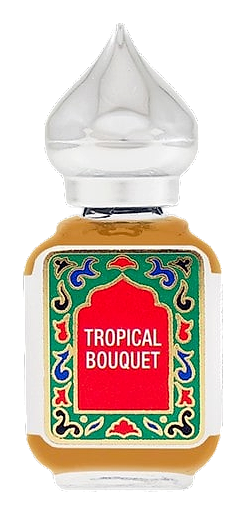
Tropical Bouquet arrived in 1991 from Nemat International, a fragrance house whose catalog sits within the Kohinoor collection, a range that draws on classical perfumery materials. The name promises something lush and blooming, but the composition tells a different story: woody, earthy, resinous oils with a balsamic overtone. There's no sharp citrus sparkle, no overt sweetness. Instead, it reads as an oil designed for someone who prefers depth over decoration. On skin, the opening registers cool and almost medicinal, with a green-woody character that recalls conifer branches rather than any beachside bouquet. As the hours pass, the balsamic heart loosens its grip and a warmer, more rounded quality emerges, the kind of slow-building warmth you get from aged resin and worn wood.
The composition leans on traditional aromatic categories rather than named botanicals. Balsamic notes anchor the structure, that sticky-sweet warmth reminiscent of aged tree resins and incense. Balsam fir adds a cool, almost piney counterpoint that prevents the blend from going purely sweet. Earthy notes ground everything, giving the fragrance a mineral, soil-like quality that distinguishes it from lighter tropical florals the name might suggest. Woody notes and resins tie it together, creating a composition that feels ancient rather than modern.
The evolution
The first minutes are the brightest the fragrance gets. Balsam fir leads with a cool, almost medicinal sharpness, like walking past a conifer in warm air. That green-woody note softens quickly as balsamic warmth moves in, carrying hints of vanilla-adjacent sweetness without actually going there. The earthy base asserts itself steadily, pulling everything down toward something grounded and mineral. The resins deepen as the wear progresses, settling into a close-to-skin warmth that smells like old wood and warm stone. Because this is an oil-based fragrance with no alcohol, there's no projection explosion. It stays intimate, hugging the wearer rather than filling a room, and the drydown unfolds in stages, each one a little quieter and a little more contemplative than the last.
Cultural impact
Tropical Bouquet occupies an unusual place in Western fragrance culture because it refuses to behave like a tropical at all. Marketed with the word tropical on the label, it instead leans into balsamic fir, earthy resins, and old-wood warmth, which has long puzzled first-time buyers and become part of its quiet charm. The disconnect between name and content is precisely what gives the fragrance its personality, a kind of gentle subversion of expectation. Buyers expecting coconut, pineapple, or tiare often find themselves surprised by something deeper and more contemplative, and that surprise has turned into a small ritual of discovery.