The Story
Why it exists.
The beginning
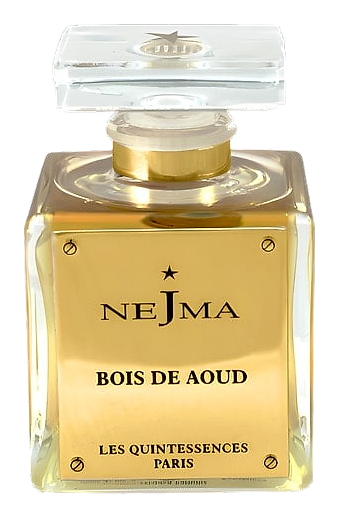
Bois de Aoud arrived in 2014, and the name tells you what to expect. Bois. Aoud. That's the whole sentence, in two words. It's a fragrance that doesn't negotiate its identity before you wear it, and that directness is part of the appeal. The composition is built around a stripped-down structure: an oud-led arrangement set against ebony and frankincense, three notes total, arranged into something minimal and complete. No filler. No detour. A scent built to be taken at face value, and confident enough to skip the preamble most modern fragrances insist upon. The oud itself takes center stage, and it's handled without apology.
Three notes. That's the entire pyramid. The composition is built on oud, frankincense, and ebony, and the simplicity of that lineup is what makes it worth wearing. There's no need for a supporting cast. Each material earns its place. Oud, frankincense, and ebony share a gravitational pull: all three are dark, resinous, and warm. They don't contrast each other. They stack. The result is a fragrance that reads as one material with three textures. The frankincense adds lift, that cool incense smoke curling through the denser base.
The evolution
On skin, the first ten minutes are frankincense leading the charge. It hits bright and sharp, almost mentholated, the way incense does when the coal is fresh and the smoke hasn't found its shape. The oud is underneath, dense and waiting. By the half-hour mark, the frankincense softens. It loses the chill and settles into the warmth it was always headed toward. The ebony starts to surface here, not as a separate note but as a deepening of the oud. Think of it as the wood grain showing through the resin. The composition gets heavier, quieter, more self-contained. Less aromatic, more architectural. Around the two-hour mark, the frankincense has mostly moved to the background. What's left is oud and ebony in conversation. The oud darkens, takes on a slightly leathery cast, and the ebony gives it something structural to lean against. Nothing in the composition has truly disappeared; instead, the notes have reshuffled into a new arrangement where the heaviest materials run the show.
Cultural impact
Bois de Aoud holds a specific place in the niche oud conversation, the kind of composition that rewards wearers who already have a relationship with oud as a material. It's not an entry point. It's a confirmation, a fragrance made for people who have moved past curiosity and into preference, who know what they want when they reach for something dark and resinous. The composition's appeal lies in its refusal to soften. There are no concessions to accessibility here, no gentle introductions or warm-up acts.