
The Story
Why it exists.
The beginning
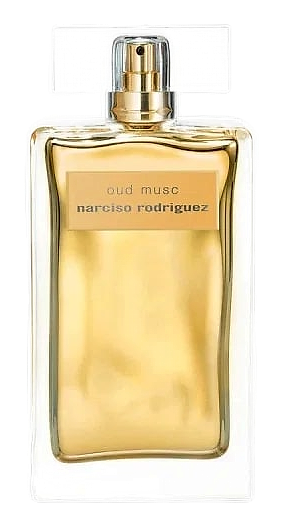
Oud Musc is Narciso Rodriguez bringing two of perfumery's most storied materials into conversation. The name says it all, it's a marriage of oud and musk, built by perfumer Caroline Sabas in 2019. The house has spent two decades refining what musk can do, and this is the most ambitious interpretation yet: taking the cool clarity of Middle Eastern oud traditions and threading them through the brand's signature clean musk. It's a fragrance for someone who wants the depth of oud without the performance.
What makes Oud Musc interesting is its restraint. Oud fragrances often announce themselves, loud, resinous, sometimes confrontational. Here, the oud is almost shy, supported by frankincense's subtle smoke and a musk so clean it borders on abstract. The black pepper and myrtle in the opening provide just enough structure to keep things interesting, but they're gone within the first hour, leaving the skin-musk and warm oud to do the real work. It's a composition that rewards patience, and one that proves oud doesn't have to shout to be felt.
The evolution
The opening announces itself with black pepper's sharp clarity and myrtle's green, slightly bitter edge. Thirty minutes in, the musk arrives, clean, intimate, like skin rather than perfume. The oud and frankincense don't compete; they settle beneath the surface, adding warmth without weight. By hour three, the fragrance has simplified into something close and quiet, a warm hum against the skin that persists for hours. The drydown is subtle but persistent, you'll catch traces of it the next morning, which is exactly when this fragrance wants to be noticed.
Cultural impact
Since its 2019 launch, Oud Musc has found its audience among those who want oud's depth without its typical intensity. The fragrance occupies an interesting middle ground, too refined for fans of bold Middle Eastern ouds, too warm for those seeking pure musk freshness. It's become a quiet favorite for evening wear, particularly in cooler months, where its subtle projection rewards close proximity rather than demanding attention.