
The Story
Why it exists.
The beginning
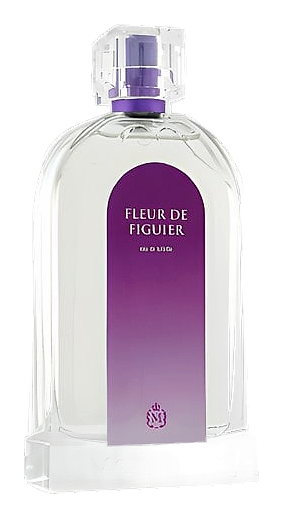
Les Fleurs Fleur de Figuier arrived in 1999 as part of Molinard's Les Fleurs de Provence collection. The fig tree is a fixture of the Provençal landscape, its fruit hanging heavy in summer heat, its leaves dense and waxy. This fragrance captures that leaf, not the sweetness of the fruit, but the green architecture that holds it. The result is a fragrance built around fig leaf as a protagonist, not an afterthought, paired with galbanum's sharp green and grounded in cedar. Sparse. Specific. A 1999 vision of what green could be.
What makes this composition unusual is the restraint. Where many fig fragrances lean into the fruit's milkiness or sweetness, Fleur de Figuier stays in the leaf, that slightly bitter, aromatic green that smells like the moment before something ripens. Galbanum amplifies this: a resin known for its turpentine-like intensity. The pyramid is short but intentional. Orange opens bright and brief, then steps aside. The real conversation is between fig leaf and galbanum, resolved by cedar.
The evolution
The orange arrives first, quick, citrus-bright, then recedes. Then the hand-off: fig leaf unfurls with that waxy, slightly bitter green, and galbanum enters with something sharper, almost herbal. The combination smells like a garden after rain, green and alive. As the fragrance develops, the galbanum settles, the fig leaf softens, and cedar finally arrives, dry, woody, patient. The drydown is quiet cedar that lingers. By the end, it's the smell of green that refused to apologize. The transition between notes feels natural, each element yielding to the next without abrupt shifts, creating a cohesive narrative from bright opening to grounded finish.
Cultural impact
Fleur de Figuier occupies an interesting space in fig fragrance history. Released in 1999, it arrived before the wave of fig interpretations that would follow in the 2000s. Some wearers find it rougher, greener, less forgiving than later fig interpretations. Others find that rawness exactly what they've been searching for. It's been discontinued, which adds another layer, a 1999 composition preserved now only in the collections of those who held onto it.