The Story
Why it exists.
The beginning
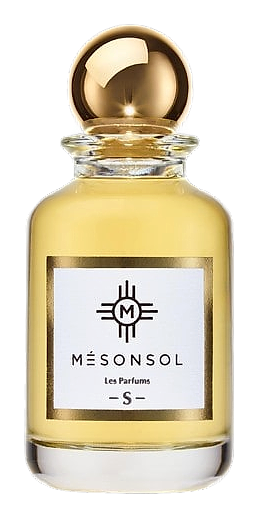
-S- arrived in 2019 as a composition from Mesonsol, the French house whose team developed an innovative method where the traditional top-heart-base note pyramid loses its importance. Sophie Truitard is credited as perfumer, alongside Cyrill Rolland. The letter-coded naming strips away narrative and poetry on the label, leaving nothing but a designation. -S- reads as a saffron-forward oriental that treats smoke and resin as structural elements rather than finishing touches. The saffron arrives with a metallic intensity, dry and almost burnt at the edges, while labdanum brings its animalic warmth into the same breath. There is no easing in, no citrus lift, no aromatic bridge to soften the landing.
What makes -S- structurally unusual is the absence of a traditional top. There's no citrus to lift the opening, no green or aromatic bridge to ease the transition. Saffron, labdanum, incense, and benzoin arrive together, already in formation. The fragrance commits to its identity from the first minute and asks you to meet it there. Ambramone and Ambrarome reinforce the warmth without adding sweetness, keeping the resin character smoky rather than candied.
The evolution
The opening feels confrontational: saffron's metallic heat paired with incense smoke and labdanum's animalic warmth. There's nothing polite about it. As the fragrance settles, benzoin starts rounding the edges, introducing a soft balsamic sweetness that tempers the saffron without burying it. The oud and immortelle gradually take over the conversation, with the immortelle contributing its distinctive maple-and-curry undertone that some wearers find addictive and others find challenging. The drydown brings a quieter phase as vanilla and mate emerge from underneath, adding a dry, slightly grassy sweetness that clings to skin and fabric well into the next day. On clothes the following morning, what remains is a ghost of smoke, amber, and something faintly herbal, the saffron long gone but its warmth still detectable at the edges.
Cultural impact
Wearers consistently describe -S- in religious or ceremonial terms, language that signals the fragrance reads as ritual rather than accessory. It draws comparisons to established orientals like Tom Ford's Black Orchid and Sahara Noir, as well as to Frederic Malle's Portrait of a Lady. The incense and saffron combination places it firmly in conversation with smoky-resinous compositions that prioritize atmosphere over approachability. Collectors gravitate toward it for its unconventional structure, the absence of a traditional opening acting as a statement of intent.