The Story
Why it exists.
The beginning
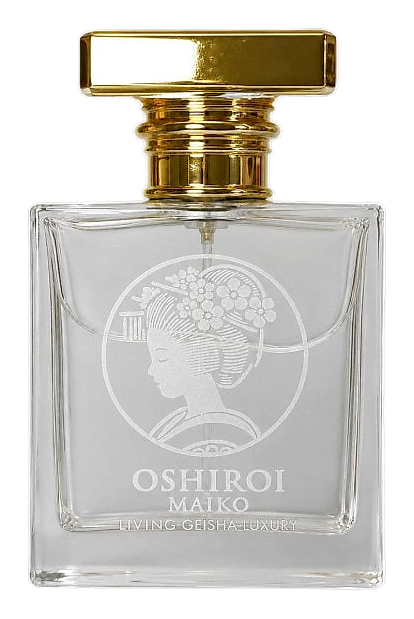
Oshiroi takes its name from the traditional white makeup once applied to the faces of Maiko and Geiko in Kyoto, a cosmetic paste layered onto the skin before color, before character. Matthew Meleg, the nose behind Meleg Perfumes, built this composition around that blank-canvas moment, the suspended breath before identity is drawn onto a surface. The collaboration with Umeno Okiya in Kamishichiken, Kyoto's oldest Geisha district, gave the project cultural grounding rather than costume, an exchange rooted in respect for a specific lineage of practice. Five hundred bottles were produced worldwide, a figure that shapes how one approaches the juice: not as something abundant, but as something measured, allotted, and presented with intention. The name itself does heavy work.
What makes the formula unusual is its refusal to dilute the orris. Florentine orris butter, violet enfleurage, and ylang-ylang extra form a triangle where nothing hides, each material speaking at full register without a synthetic veil between them. Orris alone, in this concentration, carries a powdery gravity that grounds the entire composition, drawing every other note toward its earthy axis.
The evolution
On skin, the first ten minutes belong to violet. Cold, slightly metallic, and unmistakably green at its edges, a chill that reads as crushed petal rather than as flower. The powder hasn't settled yet, and the composition still carries a nervous, raw energy as the violet unfurls. Heliotrope and ylang-ylang arrive next, softening the metallic edge into something almondy and dense, the way a room changes when warm light replaces the early gray of morning. This is the window where Oshiroi feels closest to its name, the part that recalls a cosmetic compact being opened in a quiet room, that suspended breath before color is applied. After ninety minutes, the violet recedes almost entirely and orris takes the floor. What remains is dry, rooty, faintly sweet, and surprisingly persistent, a scent that seems to settle into the skin rather than sit on top of it.
Cultural impact
Oshiroi occupies a rare category: a perfume built in direct dialogue with a living cultural tradition. The collaboration with Umeno Okiya in Kamishichiken, Kyoto's oldest Geisha district, anchors the work in a specific practice of craft and presentation, giving the composition a context that reaches beyond the bottle itself. Oshiroi, the white paste applied before color, becomes a guiding idea: a surface prepared to receive detail, a blank state that nonetheless carries intention.