The Story
Why it exists.
The beginning
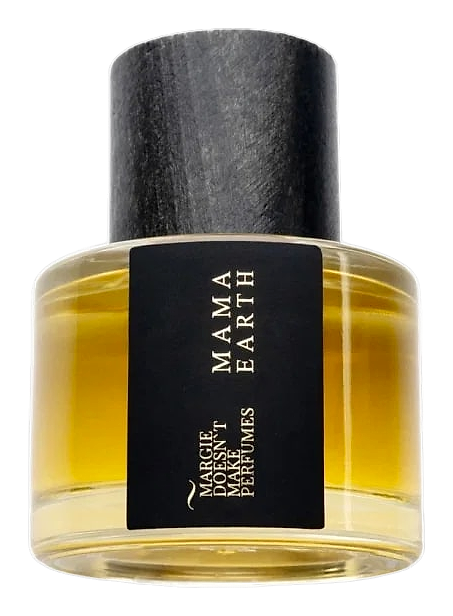
Maria Ruban built Mama Earth in 2024 as a portrait of the planet rendered in scent, and she did it the only way her brand works: alone, start to finish. The idea starts wide and gets specific fast. August. Herbs going heavy in the fields. Wormwood cutting gray through everything green. Davana turning almost liqueur-warm in the heat. It is a fragrance that wants to smell like a season rather than a moment, and the whole composition bends toward that ambition. Working out of Ukraine under her Margie Doesn't Make Perfumes label, Ruban treats each release as a single-author project, concept through bottle, and Mama Earth reads like her most grounded statement yet.
What makes this composition unusual is how it stacks resin against greenery without letting either side dominate. Tolu balsam and benzoin bring the dense, almost ambered sweetness of old apothecary jars. Hay and dried leaves pull the whole thing down toward the soil. Buckwheat honey bridges them, dark and molasses-adjacent, doing the work a vanilla usually does in fragrances this sweet. Gaiac wood and wild herbs hold the perimeter. The accord reads smoky-sweet because none of the parts apologize for being what they are.
The evolution
The first ten minutes are greener than expected. Wormwood and wild herbs push forward, slightly bitter, almost medicinal, the kind of opening that makes you tilt your wrist and check. Then the davana arrives and the whole picture tilts warm. It moves through a long heart where tolu balsam and benzoin coat everything in low amber light, buckwheat honey thickening underneath like something slow-cooked. Hay stays present the entire run, dusty and dry against the resin, keeping the composition from sliding into pure sweetness. The drydown is where it earns its name. Gaiac wood, hay, and a trace of vanilla settle into something that smells less like a perfume and more like the ghost of a late-summer afternoon, the warmth that lingers after the sun has dropped. It sits close to skin for hours rather than projecting, moderate sillage that rewards the wearer more than the room. On fabric the next morning, the honey and hay are still there, quieter, drier, the memory of a season that hasn't quite ended.
Cultural impact
Maria Ruban built her house around a particular question in 2023, and Mama Earth, launched in 2024, reads as a thesis statement. The composition opens with a grassy, sun-warmed sweetness, like hay drying in a late-summer barn, layered against the dark, bitter green of wormwood. As it breathes on skin, that bitterness softens and a honeyed warmth moves forward, sticky and resinous, threading into the balsamic depth of benzoin. There is a dusty, herbal undertone throughout, a sense of dried leaves and crushed stems rather than polished florals or jammy gourmands.