
The Story
Why it exists.
The beginning
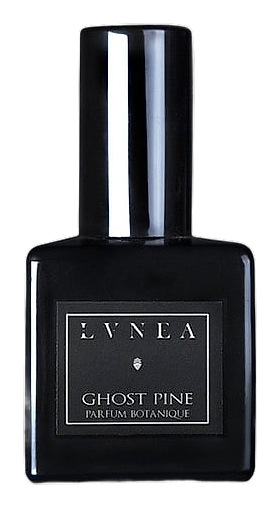
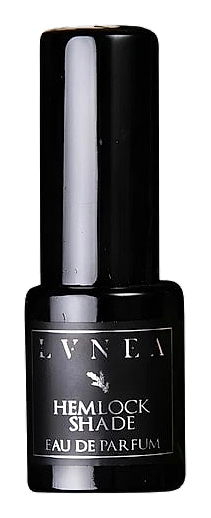
Hemlock Shade arrived in 2024 from the atelier of April Engloner. The scent draws its name from the hemlock tree, a conifer long tangled with mythology. Poison in one tradition, shelter in another, always shadowed. Engloner built the composition to live in that ambiguity: a dark coniferous solid that doesn't resolve into something safe. The house's catalogue includes pieces that lean into shadowed, wooded territory, from La Forêt Dormante to Ghost Pine. Hemlock Shade extends that lineage, less haunted than spectral, more grounded than ghostly. A forest at dusk rather than at midnight. There's a botanical weight to the release, a sense that every element was selected for its texture and temperature rather than for immediate appeal.
What sets this composition apart is its refusal to soften the green. The conifer stays sharp, undiluted by anything bright or candied. Black spruce and hemlock absolute anchor the structure, while birch brings a smoked, leathery quality to the mid-development. Oakmoss adds the damp undertone of forest floor, and sandalwood provides the only real warmth, sitting low and slow rather than glowing. The result reads less like a perfume and more like a botanical study. Fir rounds the edges just enough to keep it wearable, but the dominant impression is resin and bark, not confection.
The evolution
The first 15 minutes are sharp and green, almost mentholated, as black spruce and fir needle push past the opening. Not sweet, not bright. Cold, like snapping a young branch in winter air. Around the 30-minute mark, the composition thickens. The hemlock absolute starts to deepen, pulling the scent from green to smoked. The resinous quality builds steadily. By hour two, the heart has settled into something dense and quiet: sandalwood underneath, oakmoss grounding everything, the smokiness now reading more like burned wood than incense. The drydown stays close to skin, with above-average longevity that carries through the evening. No projection theatrics, no sudden sweetness. Just bark, faint smoke, and the last trace of green resin. On fabric the next morning, it smells like a coat that's been hung in a woodshed. Familiar. A little wild. Hard to place.
Cultural impact
Hemlock Shade fits the identity of its house precisely. It's a scent for wearers who want their fragrance to smell like a place, not a product, and who don't need sweetness to justify the bottle. Compared to Lvnea's own Ghost Pine, it's less spectral and more earthen. Against broader woody-aromatic peers, it reads more austere, more coniferous, less gourmand. The kind of composition that rewards attention to material and structure, where every note feels deliberate and nothing exists purely for decoration. It appeals to those drawn to botanical, resin-driven work, to fragrances that feel extracted rather than constructed.