The Story
Why it exists.
The beginning
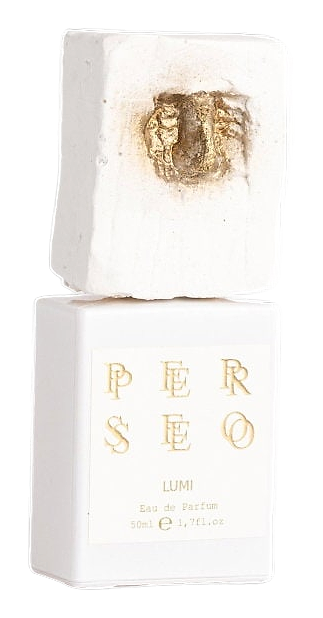
Perseo draws its name from Antonio Canova's neoclassical sculpture of Perseus. Lumi's Artistico collection translates that sculptural reference into scent, a composition that pairs the cool authority of stone with something warmer underneath. The reference is deliberate. Canova's Perseus is a study in contained energy, the kind of figure that looks composed because every ounce of effort has been internalized. That's the territory the composition works in: how does restraint feel when the adrenaline hasn't quite worn off? The answer lives in a remarkably tight pyramid of five notes, none of them ornamental. Almond and saffron form the opening, a nuttiness against leather-dry heat. Vanilla and white rose hold the heart, and oakmoss anchors the base.
What makes the structure interesting is what got left out. Perseo uses five materials, and each one carries disproportionate weight in the architecture. Almond and saffron open together, the nuttiness of one against the leather-dry heat of the other. Vanilla and white rose form the heart, which sounds obvious until you smell it: the vanilla isn't behaving like vanilla, it isn't sweet-dominant, it's structural, almost resinous, more reminiscent of a pod than a confection. Then oakmoss anchors everything. In a composition this sparse, the moss does more than close the base.
The evolution
The opening belongs to almond at full volume, creamy and slightly marzipan-tinged, with saffron threading through like a low current. This saffron sits closer to leather, closer to suede, warmer than the bright, papery saffron of some compositions. As the hours pass, the white rose surfaces, but it's a rose with weight on it, almost waxy, more reminiscent of a rose petal pressed between book pages than a fresh bouquet. The vanilla weaves through everything from the first hour onward, but it takes its time arriving fully, asserting itself as structure rather than sweetness. Eventually the composition pivots: the almond recedes, the saffron becomes a memory, and oakmoss steps forward with its cold, damp authority. What's left on skin in the later hours is a thin ribbon of vanilla-stained oakmoss, mineral and grounding, a trace that seems to live in fabric as much as on skin.
Cultural impact
Perseo sits within Lumi's Artistico collection, a series that translates specific artworks into scent. For the wearer, that means engaging with fragrance as a vehicle for artistic interpretation rather than a purely decorative choice. It's the kind of fragrance that rewards someone who thinks about what they're putting on, who wants the composition to carry a referential weight beyond pleasant smell. The Artistico project treats perfume as a medium capable of holding cultural conversation, and Perseo is one of its clearest examples of that ambition in practice.