The Story
Why it exists.
The beginning
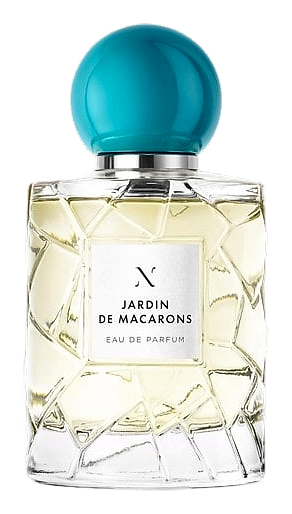
The brief arrived with a single image: the Lenôtre gardens at Versailles, early morning, light filtering through hedges that had been precisely trimmed for centuries. Two perfumers, Jérôme Epinette and Pierre Wulff, were tasked with translating that visual into something wearable. The name came first: Jardin de Macarons. But the gardens came before the patisserie. The challenge was bridging the gap between formal French garden aesthetics and something sweet enough to eat. The perfumers worked from the outside in, beginning with the cool green geometry of the grounds, then finding where the sweetness hid inside it. The result isn't a literal translation of either gardens or macarons. It's what happens when the two ideas occupy the same bottle and neither one wins.
The orris root is the quiet decision here. In a composition built on blackcurrant, plum, and cotton candy, all of which trend loud and sweet, orris arrives to do something different. It doesn't compete. It reframe. The powdery, slightly earthy quality of orris transforms the sweetness from obvious to elegant. Without it, Jardin de Macarons would smell like someone who eats macarons. With it, it smells like someone who knows why they're called the Lenôtre gardens. Violet helps carry this work, adding a soft floral layer that keeps the whole composition feeling delicate rather than heavy. Neither material shouts. Together, they keep the top notes honest and prevent the drydown from dissolving into pure sugar.
The evolution
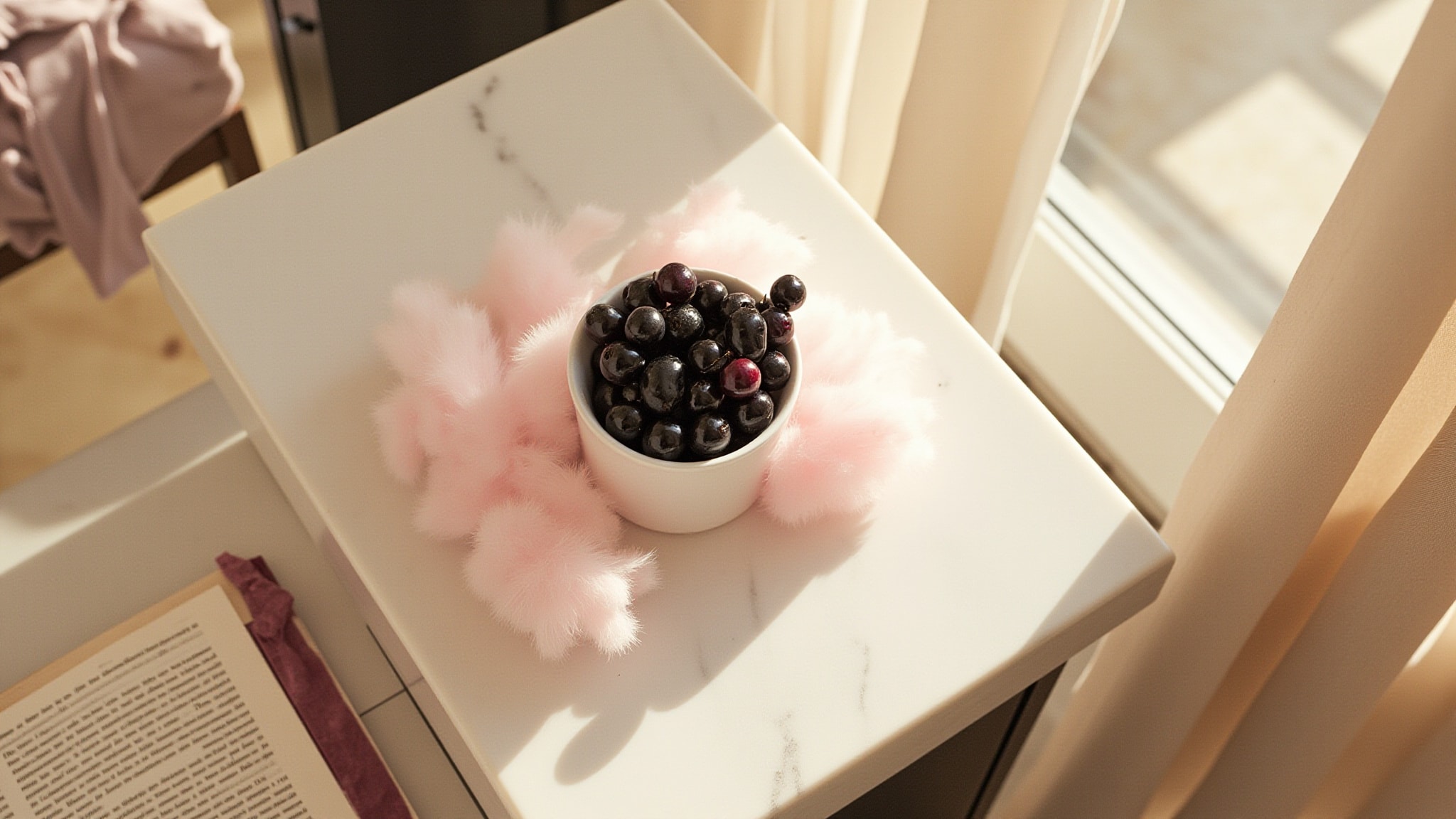
The opening announces itself quickly, blackcurrant and black plum arrive simultaneously, the cassis giving a tart, slightly medicinal lift that prevents the plum from becoming syrupy. There is about thirty minutes of brightness here, the kind that makes someone lean in. Then the violet and orris begin to assert themselves, and the tartness recedes into something powdery and precise. By hour two, the composition has settled. The top notes fade without disappearing entirely, a ghost of that initial brightness still audible underneath. Cotton candy, Palo Santo, and patchouli take up residence in the base, an unusual combination that stays cleaner and more grounded than expected. The Palo Santo brings a faint smoke and warmth, the patchouli keeps it from floating away entirely. Cotton candy, being inherently fleeting, does exactly what it should, it doesn't announce itself, it cushions. The drydown lasts well into the evening, intimate and skin-close, occasionally surfacing from fabric long after the spray.
Cultural impact
This is a niche fragrance from a young French house that has not yet built the kind of community discourse that surrounds heritage brands. What has been said aligns around one consistent observation: the iris-and-violet heart is where this fragrance lives. Those who respond to powdery florals tend to respond to Jardin de Macarons. Those who do not tend to bounce off the cotton candy in the drydown. The positioning, between patisserie sweetness and formal garden elegance, is distinctive enough to interest anyone who has ever stood in front of a Lenôtre window and hesitated.