
The Story
Why it exists.
The beginning
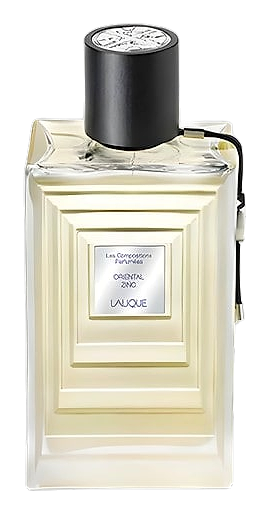
The Compositions Parfumées collection began as a thought experiment: what if precious metals became olfactive material? Lalique's perfumers looked at zinc, not a noble metal, but indispensable in the jeweler's palette, and found warmth hidden in something cold. Karine Dubreuil-Sereni built Oriental Zinc around that contradiction, launched in November 2016 as a study in what a base metal can do when paired with spice.
What makes this work is the fig leaf in the opening. Lavender and bergamot are familiar territory, easy to render generic. The fig leaf intervenes, gives the top a green, slightly sweet edge that prevents the freshness from going antiseptic. The pairing of lavender with cardamom in the heart is where Oriental Zinc earns its name: the herbal meets the warm, and neither backs down.
The evolution
The opening hits fast, bergamot bright, lavender sharp, fig leaf barely there in the background keeping things honest. Within twenty minutes, the pink pepper and cardamom arrive together, pushing the lavender back. The warmth spreads across the skin like something warming from friction. The base builds slowly, cinnamon first, then tonka bean swells beneath it. By the third hour, patchouli and cedar have settled into something close and warm, the kind of scent that lives in the collar of a coat. It doesn't disappear. It oxidizes. On fabric, it lingers into the next day.
Cultural impact
Oriental Zinc represents Lalique's exploration into the oriental fragrance genre, drawing inspiration from traditional Middle Eastern perfumery while incorporating modern European sensibilities. The blend of lavender with fig leaf and bergamot creates a bridge between Western aromatic preferences and Eastern exotic spice traditions. This fragrance emerged during a period when perfumers began experimenting with cross-cultural note combinations, reflecting globalization's influence on the fragrance industry. The use of zinc as a thematic element nods to traditional perfumery practices where materials were stored and processed in zinc containers, connecting contemporary scent creation to historical craftsmanship.