
The Story
Why it exists.
The beginning
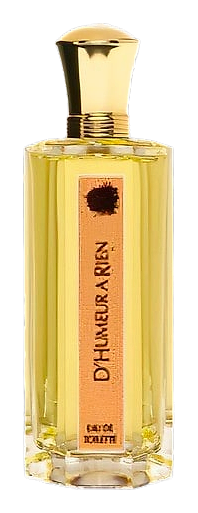
D'Humeur à Rien landed in 1994 as part of L'Artisan Parfumeur's "Sautes d'Humeur," a limited collection of five fragrances built around shifting temperaments. The title translates loosely as "in no mood," a state of withdrawal that reads less like complaint and more like deliberate stillness. The composition was rendered as an exercise in restraint: incense and spice, and almost nothing else. Where the era's oriental compositions piled on amber, vanilla, and resin, this one stripped the formula back to its bones. The gamble was that frankincense alone, given enough air and patience, could carry an entire composition.
What makes the composition unusual isn't any single material, it's the refusal to sweeten what incense naturally resists. Frankincense carries a resinous bitterness, a slight sharpness on the edges that most perfumers smooth with benzoin, vanilla, or labdanum. Giacobetti let that bite stand. The spice notes at the top and heart function almost like seasoning salt, adding warmth without sweetness, giving the incense a flicker of heat without converting it into something edible. The result is a fragrance that smells closer to a stone-walled chapel than to anything sold in a glass bottle.
The evolution
The first ten minutes are the spiciest this fragrance ever gets. A quick flash of warmth at the collarbone, the kind that registers almost as heat rather than scent, then it calms. The frankincense takes over within the first half hour, rising into the room in slow vertical waves rather than radiating outward. It sits close, which suits its monastic character, a skin scent that prefers the wearer's own airspace to anyone else's. Two hours in, the incense has thinned but not disappeared. What's left underneath is a woody, almost papery dryness, the smell of stone warming in late afternoon sun. On fabric, particularly wool or heavy cotton, it lingers well into the next day, faded but unmistakable, like the memory of a candle that burned down hours ago. Sillage stays moderate throughout. This is not a fragrance designed to be smelled across a room.
Cultural impact
D'Humeur à Rien occupies a peculiar place in L'Artisan's catalog. Within the house's wider collection, it stands apart as one of the most reductive compositions ever released under its banner, a near-monothematic study that refuses to compete with the richer, more opulent launches around it. It is a piece designed for wearers who treat fragrance as private territory, something worn close to the skin rather than broadcast into a room. The composition reads almost as an argument: that a single high-quality material, handled with enough care, can carry an entire structure without ornamentation.