
The Story
Why it exists.
The beginning
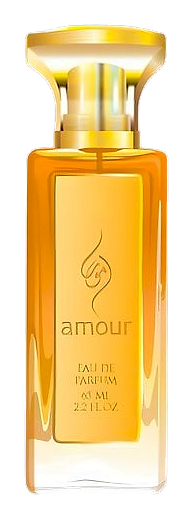
Amour translates a French word into a Gulf perfumery vocabulary. The name points directly to its meaning in French, love, and Khaltat places that idea inside a regional tradition where oud has long served as a building block of hospitality and ceremony for centuries. Khaltat, a house operating under the Mohamed Hilal Group in the UAE, builds the composition around familiar Gulf materials while using a name that travels easily across languages. Amour is part of a catalog that includes names drawn from many languages, Liebe, Ljubovj, Hob, Aşk, all circling the same idea of love rendered through different cultural lenses.
The composition works because it refuses to overreach. Three notes, one each from top, heart, and base, and nothing competing for attention. Lavender arrives with the clean, slightly medicinal clarity of a Provençal field at midday. Jasmine takes over with its indolic sweetness, the kind that reads warm rather than white-petaled. Then oud grounds the entire structure with its resinous depth, giving the airy florals something to settle into. Most oud-forward fragrances announce themselves loudly. This one keeps the oud restrained, more as architecture than statement.
The evolution
The opening is almost shockingly clean. Lavender dominates the earliest phase of the wear, reading crisp and slightly cooling, the way a cologne splash feels on a warm morning. There is a faint sweetness underneath it, but the overall direction is herbal and bright. As the hours pass, jasmine starts to surface, and the composition shifts from cologne territory into something softer. The lavender doesn't disappear, but it makes room, becoming a supporting note rather than the lead. The jasmine here is not the sheer white-flower kind. It carries warmth, a honeyed undertone that feels closer to skin than to a bouquet. As the wear continues, oud begins to surface from underneath. It doesn't announce itself with the unrefined intensity some oud compositions deliver. Instead it arrives as a low hum of wood and resin, something that makes the jasmine feel deeper and more grounded.
Cultural impact
Amour sits within a catalog that circles the theme of love across cultures, with sibling fragrances named Liebe, Ljubovj, Aşk, and Hob. Each title draws from a different language, and together they trace a quiet map of how different cultures have named the same feeling, with Amour's French rendering placed alongside the German, Russian, Turkish, and Arabic versions. The fragrance itself leans on the lavender-jasmine-oud combination as its core identity, offering a softer reading of regional perfumery through materials often associated with bolder compositions.