The Story
Why it exists.
The beginning
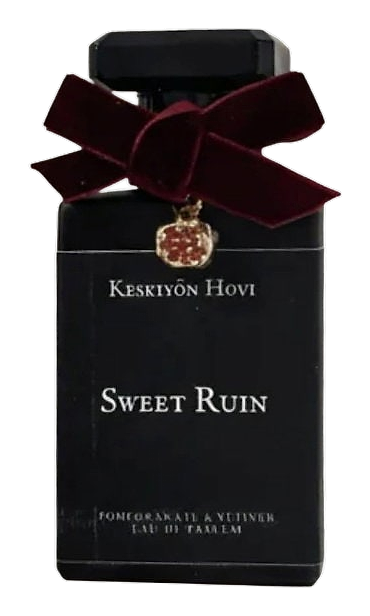
Sweet Ruin arrived in 2025 from the studio of Keskiyön Hovi, composed by Natasha Washabaugh as part of the house's House of Midnight collection. The brief reads simple on paper: champagne, pomegranate, wild currant. Three notes, no filler. But the tension lives in how those three things meet. The brand frames it as fruit you bite into without thinking, an offering built on restraint and the careful interplay of three ingredients rather than a sprawling pyramid of supporting players. It belongs to a house where composition matters, where each element earns its place through what it does to the others rather than through standalone beauty.
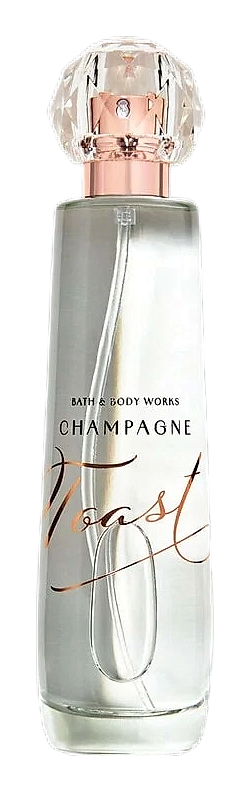
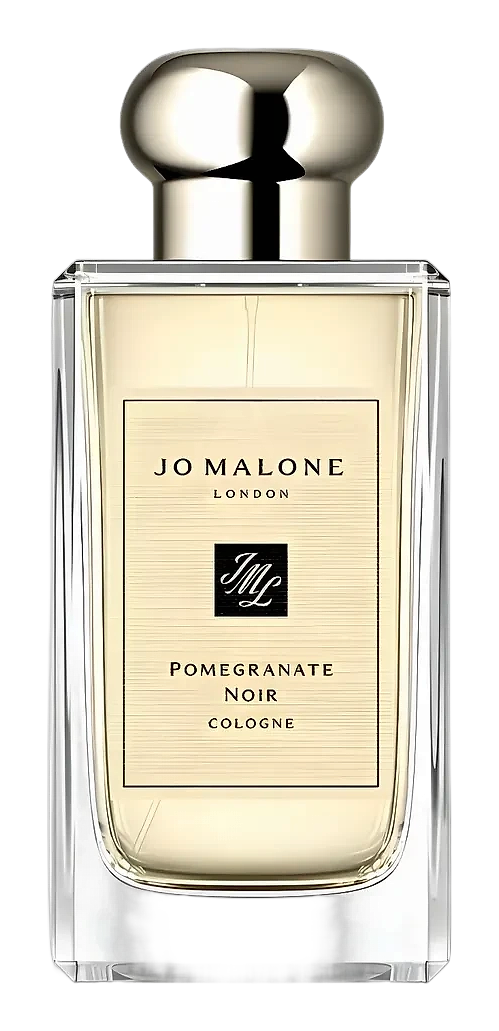
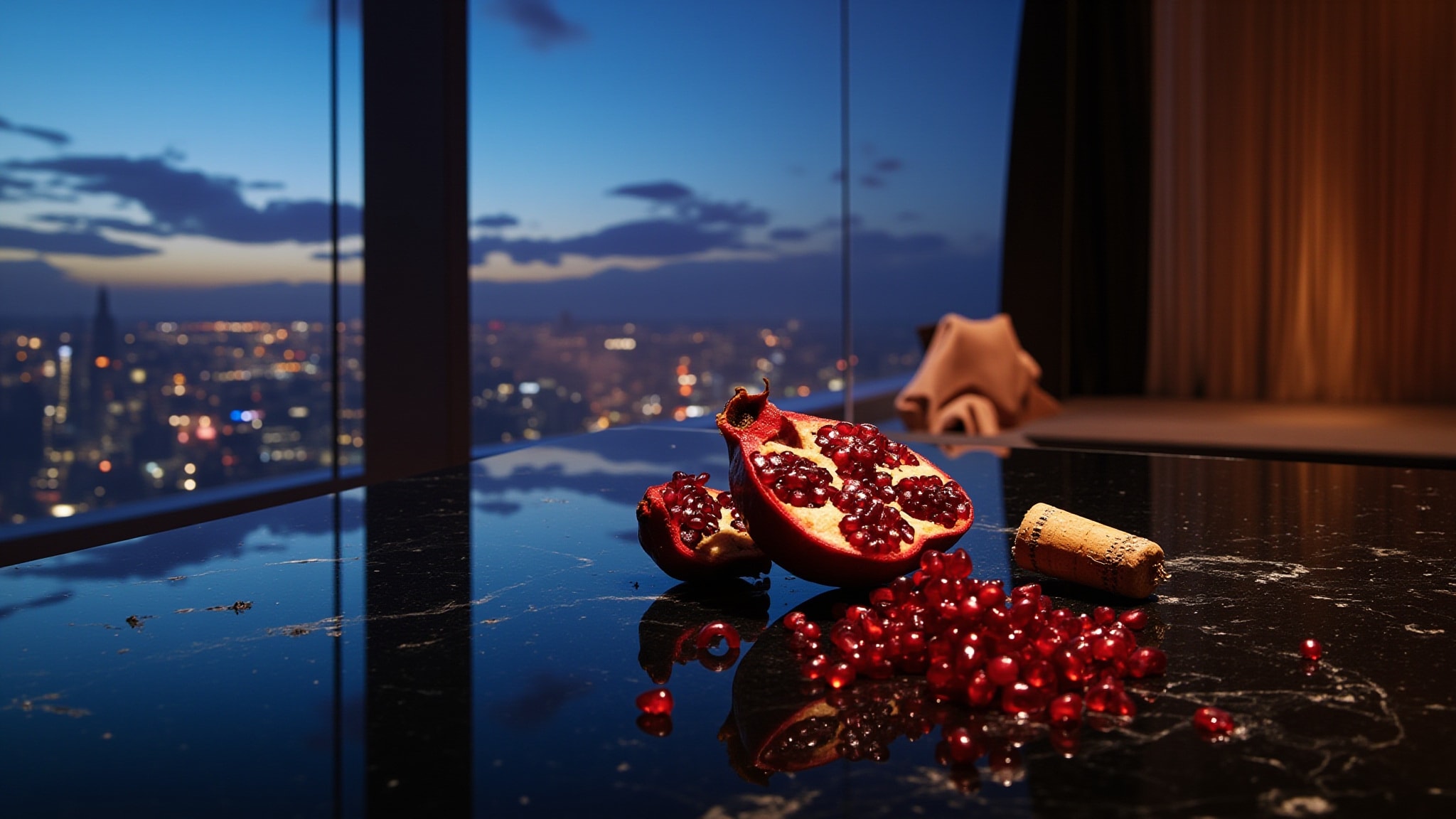
Three ingredients is a small canvas, and that restraint is where the interest lives. Champagne reads bright, cold, and carbonated, a top-note flicker that catches light before it settles. Pomegranate brings the bruised wine-stain depth, the slightly metallic edge that keeps the composition from tipping into dessert territory. Wild currant threads through with its leafy tartness, sharper and less sugary than its black cousin, cutting the sweetness before it has a chance to settle. Together they describe one complete moment: celebration tipping into recklessness, sparkle curdling into stain.
The evolution
The first ten minutes are all fizz and glass-clatter energy. Champagne fizzes sharp at the surface, almost carbonated-cold, lifting the pomegranate into something that smells almost like a cocktail with a garnish too pretty to eat. Wild currant keeps things tethered to reality, its tartness cutting the sweetness before it cloys. By the thirty-minute mark the bubble goes flat. The fruits stop sparkling and start staining. Pomegranate darkens into something closer to wine reduction, that sweet-tart throb you get when sugar has been on heat too long. The currant recedes but never disappears. It haunts the edges, a leafy thread that refuses to fully let go. At the two-hour mark the composition is warm, close to skin, and significantly less festive than it started. The sweetness has settled into something amber-adjacent, still recognizably fruity but heavier, almost candied.
Cultural impact
Sweet Ruin occupies an unusual corner: a fruity composition from a house whose House of Midnight collection gathers atmospheric, mood-driven work. This one pours champagne, and that contradiction is the point. It reads as a departure within the collection, though not an abandonment of the kind of tension that runs through the house's work, light still meeting dark, sweetness carrying an undercurrent of something unresolved. For wearers who find the typical fruity space too clean or too obviously gourmand, it offers an entry through a less-guarded door. The scent doesn't announce itself as fruit in the conventional sense.