The Story
Why it exists.
The beginning
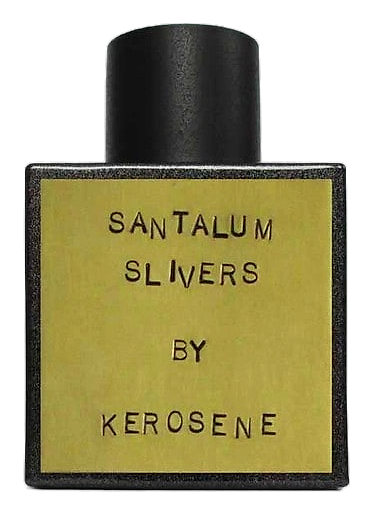
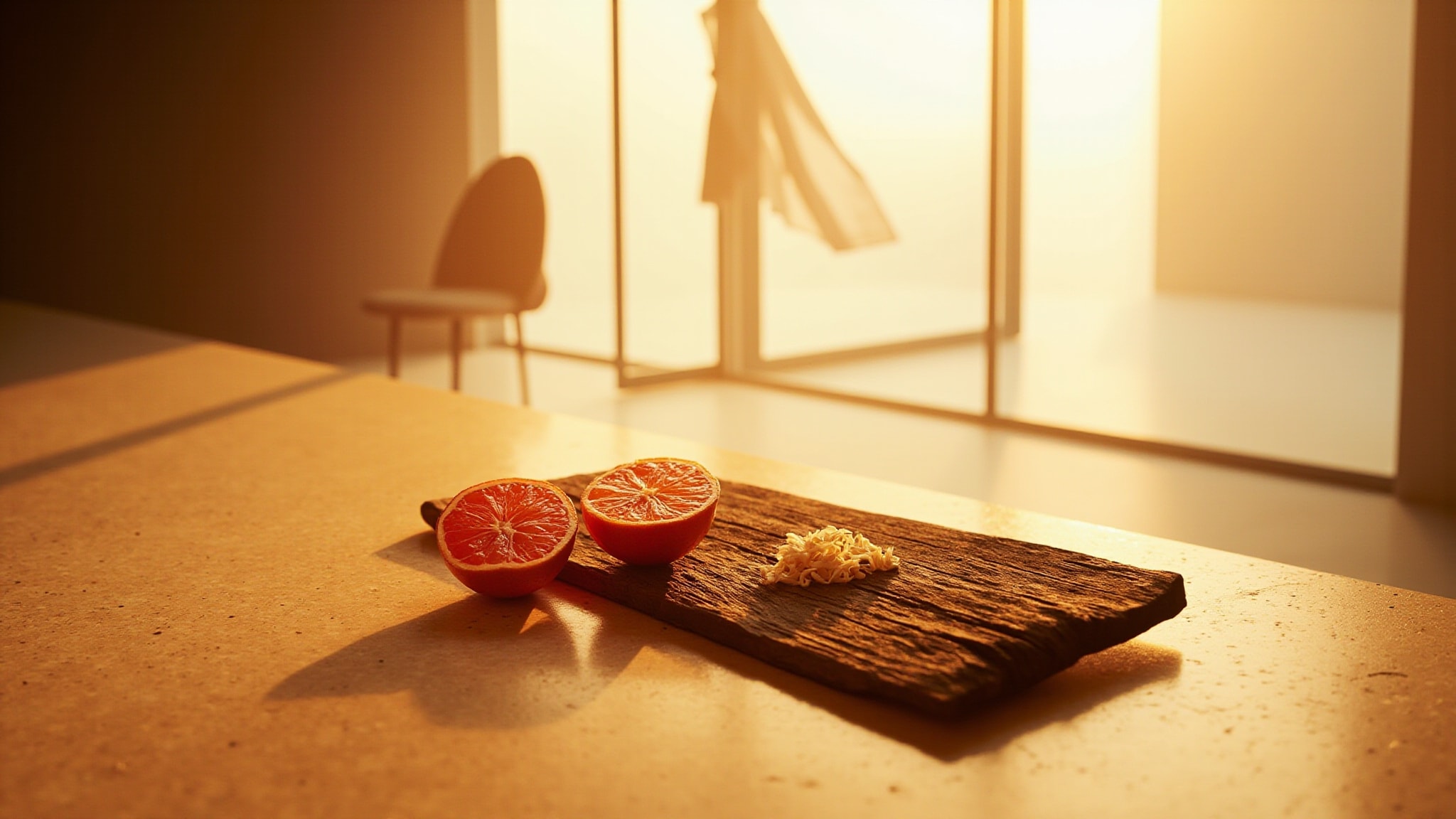
Santalum Slivers arrived in 2012, when John Pegg was still building Kerosene's vocabulary of raw and unexpected. The name itself is a confession, 'slivers' suggests something shaved thin, taken down to its essential grain. Not a wall of sandalwood. A sliver. A slice of something you can actually feel. Pegg had been working with industrial materials, with the scents of a working Michigan life, but this one pulled in a different direction: summer light, citrus brightness, the juice of a season that didn't fit the brand's darker reputation. The official description frames it plainly: summer citrus juices driven into the depths of sandalwood. That word 'driven' matters, it's not a gentle blend. It's a push. The citrus goes in, and the wood catches it.
What makes Santalum Slivers unusual is the cucumber. Not a common player in perfumery, it reads as almost medicinal in too-high doses, or as fresh-water clean in the right hands. Here, it bridges the citrus and the wood. The bergamot and grapefruit open sharp and wide, but the cucumber keeps things green, keeps them from getting too sweet or too resinous. Then the sandalwood breathes. It doesn't overpower the citrus so much as it pulls it inward, letting the juice settle into the wood rather than evaporate off the skin. The result is a fragrance that smells like summer but doesn't evaporate like one. Moderate sillage, yes. But it lasts through an afternoon, and on some skin types, well into the evening.
The evolution
The opening hits immediately, bergamot, orange, grapefruit arriving in quick succession. The citrus is bright, almost acidic, but the cucumber softens the edges within the first five minutes. By minute fifteen, the grapefruit has settled and the sandalwood begins to announce itself, not as a base but as a counterweight. The rose appears quietly, threading through the wood rather than blooming on top. By the second hour, the citrus has largely moved aside and what's left is cedar, vetiver, and that breathing sandalwood. The drydown is clean but not empty, musk and hay hold the structure. On fabric, this one lingers. The citrus fades but the wood stays close to the skin, intimate rather than projecting. Lasts four to six hours on most skin types, occasionally longer on the well-moisturized.
Cultural impact
Santalum Slivers represents a turning point in American niche perfumery, arriving when mass-market fragrances still dominated with sweet patchouli and amber overload. Kerosene built a following by stripping scent profiles down to bright, transparent materials without sacrificing depth. This fragrance sits at the intersection of that philosophy and mainstream accessibility, appealing to people who wanted something more refined without appearing pretentious. Its enduring popularity comes from how it handles citrus without turning sharp or synthetic, how it threads sandalwood as a supporting player rather than a dominant soli-note.