
The Story
Why it exists.
The beginning
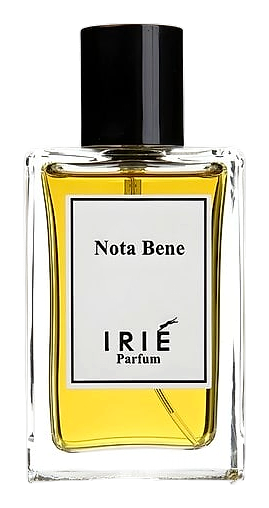
The name says it all. Nota Bene, 'note well,' a phrase borrowed from Latin manuscripts, the kind of marginalia scholars left when something deserved extra attention. Irie, a Broward County fragrance house founded in 1999 and operating as both distributor and creator, released this in 2014 from perfumer Julien Rasquinet. The brief was clear: make something worth underlining. Twice.
What makes the composition unusual is the way it stacks two contrasting appetites. Licorice, anise-forward, slightly bitter, the kind of note that polarizes before it even dries, sits in the top alongside grapefruit's citrus brightness and pink pepper's soft prick. Most fragrances use licorice as an accent in the drydown. Here, it's the opening statement. The structure rewards patience: the sweetness arrives later, slower, earned by the papyrus and white honey in the heart. You have to wait for the honey. That's the point.
The evolution
It opens sharp. Grapefruit and pink pepper announce themselves first, clean and tart, but underneath the licorice is already pushing, anise, dark and slightly medicinal. Within ten minutes the papyrus arrives, dry and papery, and the honey hasn't announced itself yet but you can feel it waiting. The benzoin smooths the transition. Then the tobacco comes in, Bulgarian and light but present, and suddenly the whole thing shifts from aromatic to warm. The drydown is where this lives. Vetiver, amber, tobacco, earthy, slightly animalic, the kind of base that gets into fabric and stays. On skin, expect above-average longevity. The next morning it's still there, quieter, less talkative but refusing to leave.
Cultural impact
Released in 2014 as part of Irie's broader creative output alongside five other proprietary fragrances, Nota Bene occupies a specific niche: powdery-resinous with a bold tobacco-vetiver drydown that performs above average in projection and longevity. It doesn't have the brand footprint of a heritage house, but the composition itself has earned a small, opinionated following who appreciate the licorice-forward structure, uncommon in Western perfumery, where anise typically plays support rather than lead.