
The Story
Why it exists.
The beginning
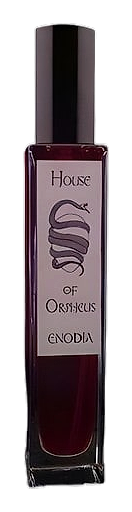
Enodia arrived in 2014 from House of Orpheus, with Marcus R. McCoy serving as its perfumer. Its name points to Enodia, the ancient goddess of streets, a figure associated with the moon, Artemis, Hekate, and Persephone. That mythology gives the composition its particular sense of movement: not a bright, public scent, but something guided through shadow, ritual, and change. Marcus R. McCoy built the fragrance around Styrax, Agarwood (Oud), Myrrh, and Vanilla, materials that bring resinous warmth together with a darker, almost smoky gravity. Styrax lends a sharp aromatic depth, myrrh adds a dusty sacred quality, and oud draws the composition toward wood and smoke.
The striking part is the collision between vanilla's soft sweetness and the resinous weight of styrax, myrrh, and oud. Vanilla can make a composition feel familiar, even dessert-like, but here it shares space with materials associated with incense, wood, smoke, and earth. The result is sweet without becoming innocent, spicy without announcing itself, and woody in a way that feels close to skin rather than freshly sharpened.
The evolution
Enodia begins with a warm, sweet-spicy impression that quickly gathers resinous depth. Styrax gives the early trail a dark, slightly medicinal edge, while vanilla keeps the composition from becoming stark. As the scent settles, myrrh brings a dusty, aromatic hush, and oud deepens the center into something woody, earthy, and smoky. The surprise is how much the sweetness stays present while the darker materials continue to take over. On skin, the fragrance moves from an inviting warmth to a quieter resin cloud, with vanilla lingering as a soft trace inside the oud. The opening spice and sweetness make it approachable, but the Styrax and myrrh steadily draw it inward. With time, oud becomes the clearest structure, carrying a dry woodiness that is softened by vanilla and the lingering sweetness of Styrax.
Cultural impact
Enodia draws on a mystical fragrance language shaped by House of Orpheus, where incense, sacred materials, and ritual are treated as a serious subject. Its name connects streets with lunar mythology, giving the scent a sense of nocturnal movement and passage through shadow. That cultural frame is reflected in its materials: myrrh introduces a dusty, incense-like quality, oud builds a deep woody and smoky center, Styrax adds resinous darkness, and vanilla softens the composition with persistent sweetness.
The House
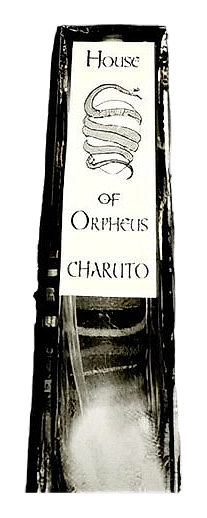
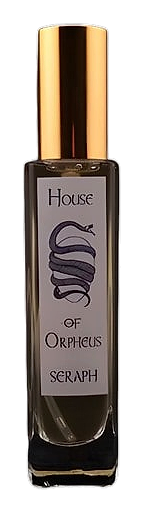
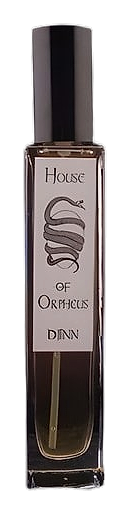
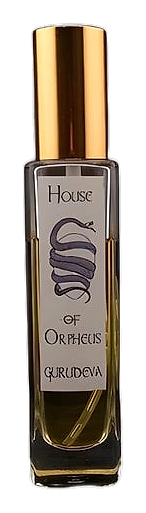
House of OrpheusHouse of Orpheus is an independent American perfume house founded by Marcus R. McCoy, whose fragrances draw on sacred incense traditions, alchemical practice, and a deeply personal study of aromatic plants. Launched in 2014, the brand's debut collection included seven compositions: Cyprian, Enodia, Djinn, Arktos, Seraph, Charuto, and Guru Deva. A second wave followed in 2015 with The Cunning Man, Verum, and The Black Goat, giving the line a total of ten fragrances known to date.
The Creator
Marcus R. McCoyMcCoy's hand shows up most clearly in botanical and resin-driven compositions, where natural extracts, tinctures, and distillates carry the structure rather than synthetic shortcuts. He works with alchemical metal oils, exotic florals uncommon in mainstream perfumery, and ince…