






Heritage
A house, in its own words
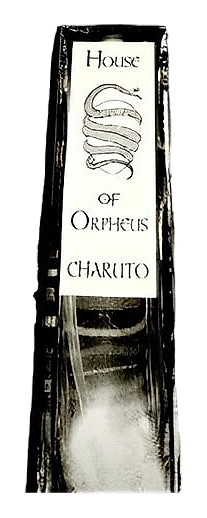
The house takes its name from Orpheus, the mythical poet and prophet credited as the progenitor of the Orphic mysteries, whose hymns to the Greek gods were traditionally concluded with the burning of sacred incense. Founder Marcus R. McCoy has described incense as the thematic backbone of his creative work, a thread that runs from the brand's name to the materials that anchor its compositions. McCoy's path to perfumery began outside the traditional European fragrance industry. Before creating his own house, he trained with a South American shaman, an apprenticeship that introduced him to Amazonian botanical materials and to the idea that plants communicate through their scent. He then immersed himself in the technical disciplines of plant distillation and extraction, building the foundation for what would become House of Orpheus. The brand launched in 2014 with an initial release of seven fragrances, establishing a catalog that drew on incense, smoke, resinous woods, and esoteric references. A second cluster of three compositions followed in 2015, expanding the lineup to ten known fragrances. Fragrantica, the largest publicly indexed fragrance database, lists Marcus McCoy as the perfumer behind the entire collection, a level of auteur control that defines the house's small-scale, single-nose identity. Independent perfume directories and reviewers have consistently treated House of Orpheus as the work of one creator rather than a collaborative or commissioned brand. House of Orpheus positions its fragrances within a framework the founder describes as high alchemical perfumery, a practice in which scent is treated as a tool for transformation rather than a decorative accessory. The brand's self-described aim is to evoke the atmosphere of a gnostic mass or temple ritual, compositions designed to, in the founder's words, elevate the practitioner and wearer to their highest will. This spiritual framing is not incidental marketing. It shapes ingredient selection, naming conventions, and the overall trajectory of the catalog. McCoy's earlier work with a South American shaman informs a core belief that plants possess an active voice, a kind of botanical language that a perfumer's role is to translate rather than override. The result is a philosophy in which the creator listens to the material first and builds the composition around what the plant offers. Names like Djinn, Seraph, Guru Deva, and The Cunning Man reinforce a vocabulary drawn from mythology, mysticism, and the occult, signaling that each fragrance is conceived as a character or entity rather than a simple scent profile.